We Were Cool Kids

I’m not sure how it started. I guess I was just looking for some old background music while I worked. Next thing you know, I’m listening to this:

[youtube http://www.youtube.com/watch?v=KQMwY66HdLk&fs=1&hl=en_US&rel=0]

That’s right. Kix.

Those of you who are familiar with this band will think of songs like “Don’t Close Your Eyes” and “Blow My Fuse.” Those came off the one platinum album they were able to muster in the late 1980s. Once they went platinum, I started to lose interest.

Here’s the thing: When you’re a metal-head outcast like I was (or aspired to be, anyway), you cling to the bands few people know about. It makes you feel like you’re part of a secret society where the rest of the more popular kids don’t belong. I makes you feel COOL.

I have Sean Marley and Dan Waters to blame for this mindset. They always pushed the more obscure bands on me, and when I’d express my excitement over the latest album from Motley Crue or Def Leppard, both would look at me like parents who just caught their kid setting fire to the dining room furniture. Sean turned me on to Motley Crue, too, but once the “Theater of Pain” album came out he was all done with them.

I remember when Motley’s “Dr. Feelgood” album came out. I wanted Sean to like it so badly. I kept telling him it was a return to the band’s roots. I brought the cassette to his house and we sat there listening carefully to each track. He seemed to like what he was hearing.

Then, somewhere in the middle of the song “Sticky Sweet” he got a pained look in his eyes, like he was about to pass gas. He looked at me and lamented: “Man, I hate Vince’s singing now. It’s awful.”

I was crushed. I had failed to lure him back from the dark side.

Since I was always trying to be more like him, I dove head first into the pile of cassettes he was collecting: Ministry’s “Land of Rape and Honey,” Nine Inch Nails, which was still an underground act at that point, and Skinny Puppy. Sean and Dan were pathetically in love with Skinny Puppy. It was all they’d talk about. I didn’t quite understand that one. I still get bored if Skinny Puppy is playing.

But Kix. There was a band I could sink my teeth into. Before the “Blow My Fuse” album made them somewhat famous, they were releasing killer albums like “Midnight Dynamite,” “Cool Kids” and their 1981 self-titled album.

Sure, some of their music veered dangerously close to bubble-gum pop, but they were obscure. They were therefore mine. Sean was nuts about Kix, and it rubbed off on me in a big way.

After the “Blow My Fuse” album, I pretty much forgot about them. This week was the first time I listened to them in more than 20 years.

And I haven’t been able to stop.

Am I being pathetically nostalgic? Perhaps. But I had forgotten how good their double-barreled, layered guitar sound was.

Sean turned me on to other bands that people knew of, but not nearly as well as bands like Kiss or Led Zeppelin.

One band was Riot. Not Quiet Riot. They are (or were) two separate bands.

The other was Thin Lizzy. I never lost my love affair with that band, and I still listen to them all the time. 

My kids have even gotten hooked on Thin Lizzy. When we’re in the car, Sean (we named him for Sean Marley) always asks me to put “Jailbreak” on. Not bad for an almost 10-year-old. Duncan always sways his head back and forth in approval.

The man my oldest son got his name from would be proud of me for pulling that one off.

Let’s see if he takes a liking to Kix.

The OCD Fidget, Caught on Video

I went back and forth with myself on whether I should do this. Sure, I’ve made this blog about exposing my quirks so the masses can get a better understanding of disorders like OCD. But did I really want to show a video of me showing the signs in a work setting?

Well, yeah. Not because I want you to see me as a freak or feel sorry for me, but because there’s something for you to learn in all this.

http://youtu.be/VwMUvMJnNcQ

I recently wrote about some of these quirks, most notably my need to put the feet up on the desk when I work. It keeps me still. When I sit like a normal person my legs start to bounce up and down as if I had a couple bass drum pedals strapped on. The feet on the desk started with a crippling back problem several years ago. I found that was the only way I could get comfortable. The back pain is long gone, but I still can’t seem to sit normally. In work meetings it would obviously be rude of me to put my feet on the table, so I sit with the feet on the ground.

I’ve also written about the windmill hands. Those who know me well have seen it at one time or another, usually when I’m sitting at a desk engaged in a project. My face gets slightly contorted and I start shaking my hands around like they’re on fire.

I call it my Windmill Hand Syndrome.

When I’m doing it, I don’t realize it, though I just noticed myself doing it just now. It tends to happen when I’m sketching or writing. Sometimes it happens when I’m editing.

So in the following video, recorded when I participated in a panel discussion at last month’s RSA security conference in San Francisco, the stuff I’ve written about is on full display. I tug at my shirt a lot. My head bounces back and forth. I have to shift positions after a few minutes.

If you were there, you probably didn’t notice it, and when it was my turn to speak, the words came out in a coherent fashion, so it’s all good, really.

Usually when I do a speaking gig I stand up and pace around a bit so the fidgeting doesn’t happen. I simply feel more in control when I’m in motion.

At the Fortinet event I was sitting in a chair that didn’t allow for putting the feet up. Doing so in front of an audience would be rude, anyway. I also spent a lot of time being quiet as other panelists made their points. When that happens, the itch starts, then the fidgeting. It’s the same when I’m in a long business meeting. It’s nobody’s fault. It’s not because I think someone is saying something stupid or blathering on for too long. It’s simply my inability to sit perfectly still for more than a couple minutes.

I have no complaints. If looking like a restless knucklehead is the worst that happens after some of the deeper, more painful OCD incidents I’ve lived through, it’s all gravy.

View this more as a scientific case study. Next time you see someone do weird things with their head, mouth, nose or limbs in public, you’ll be less inclined to stop and look in puzzlement.

Boston Rock: A History of Survival

My friends from the local band Pop Gun have finally put some performance video online. Listening to it takes me to a happy place, when life was tough but Boston-based rock kept me sane and strong.

Boston has always been fertile ground for rock n roll. The obvious comes in the form of Aerosmith, The Cars and Godsmack (the latter actually has roots in my home turf — the Merrimack Valley). But the lesser-known bands really gave me the shot of coping power I needed whenever the chips were down, which was quite a bit in my 20s.

Back when Pop Gun was still a relatively new band and it was looking like The Neighborhoods just might make it big, I was working at a wonderful little hole in the wall called Rockit Records in Saugus, Mass.

I’ve mentioned before how Metal music as one of my most important coping tools for OCD and related disorders. Though I was still many years away from a diagnosis, the year I worked in that cramped little dive was one of the best therapy sessions ever. It was a particularly perfect place to get exposed to some of the best Boston bands at the time.

When I was an angst-filled teenager bent on self-absorbed periods of depression — and before I became an angst-filled grownup bent on self-absorbed periods of depression — it was a place where I could escape.

Located off of Route 1 northbound, Rockit Records was literally a hole in the wall, not much bigger than a walk-in closet. It later expanded in size, but even then it seemed small. But the sounds booming from speakers above were always big.

It was the perfect safe house.

The store was crammed with cassettes, vinyl and eventually CDs. You could sell and buy used music. You could buy all the hard-to-get metal fanzines.

True story: On Aug. 3, 1987, I was the first kid in the store to buy Def Leppard’s just-released and long-awaited “Hysteria” album. The band was already spinning in a downward spiral toward candy-coated pop. I just didn’t realize it at the time. And in those days, I was a BIG Def Leppard fan.

A year later, I believe I was the second or third kid to buy Metallica’s “And Justice for All” album.

In 1992, just as I was transfering from North Shore Community College to Salem State College, a job opening became available and I applied on the spot. I thought the place was so cool at the time that  such a job was beyond my reach. No way they’d hire me. I wasn’t covered in tattoos or wearing nose and ear piercings. All I had going for me was the long hair, I thought.

But they called me in, and Al confirmed to the owner that I was a longtime shopper. They hired me, and I worked there for the next year, until new owners took over and I had decided to get too serious about my journalistic studies to work a retail job.

It was a tough year in a lot of ways. A family member was beginning to sink into some serious clinical depression and a suicide watch was on. I had turned North Shore Community College into a refuge of sorts, hiding for hours in the smoking room of the Lynn campus instead of facing my demons at home. I was uneasy about transferring to Salem State, though it turned out to be the best decision I could have made.

So for a year I manned the register as all my old school friends came in to shop. We smoked cigarettes at the front door and sometimes smoked other things out the back door. If we wanted a pack of smokes or something to eat and were short on cash, we borrowed from the register, putting index cards in place of the missing cash with such notes as “Bill borrowed $5, will return Thursday.”

I’m still not sure how we got away with that. It was a different time, I guess.

There was an Italian buffet restaurant across the parking lot called Augustine’s. The food wasn’t very good, but for a binge eater like me it was perfect.

If we liked the music that came in we would play it constantly. House of Pain was in the CD drive a lot. So was the Henry Rollins Band. Sometimes we’d get in promos for not-yet-released albums. If the staff didn’t like what they heard, the CD would quickly be converted into a Frisbee we’d whip across the store. One of the Poison albums suffered this fate.

I’m not sure if Al or the owner knew this was happening, but I wouldn’t be surprised if they knew and tolerated it.

The owner eventually sold the place and that essentially meant I was out of the job. I wasn’t exactly in the new owner’s good graces. But by then, it was time for me to move on.

There’s now a Subway sandwich shop where Rockit Records once stood. A pity, really. But a lot of music stores suffered the same fate as the iTunes age dawned.

For me, it served its purpose. A jewel of an escape closet from a world of hurt.

It was also a great place to hook into the Boston music scene. I remember going through the used CDs and cassettes making sure everything was in alphabetical order as Letters to Cleo, the Mighty Mighty Bosstones, Tracy Bonham, Slapshot and Sam Black Church poured from the speakers.

Many of these bands don’t fit the mold of many of the heavy metal songs I’ve shared on here. But they spoke to me all the same, though my wife was always a much bigger Bosstones fan than I ever was.

I survived on music. I never grew proficient at playing guitar, bass or drums and as singer of Skeptic Slang I was only so-so. But the music shaped me as a writer and carried me through the bad stuff.

Whoever said God has no use for rock ‘n roll in His Kingdom was wrong.

boston_rocks_1

Good Grief, Bad Grief

TIME Magazine book reviewer Mary Pols wrote an excellent review of two books about grief in the February 2011 issue. The points she makes are exactly in keeping with how I try to conduct myself in this blog.

Mood music:

[youtube http://www.youtube.com/watch?v=hkRYWZ_lhqE&fs=1&hl=en_US&rel=0]

She reviews two books about grief — “History of a Suicide: My Sister’s Unfinished Life” by Jill Bialosky, and Joyce Carol Oates’ “A Widow’s Story.” She finds a lot more value from the former than the latter for the simple reason that Bialosky does something useful with her grief and gives the reader a map for moving on. Oates, on the other hand, wallows in her grief throughout her book without taking it to the next, necessary level.

Of “History of Suicide,” Pols writes:

At what point does an individual’s grief move from the chaos of misery to a vessel of wisdom worth passing along? In 1990, Jill Bialosky’s half sister Kim committed suicide, asphyxiating herself in the garage of the Cleveland house where they’d grown up. She was 21, beautiful and tenderhearted, and Bialosky was left heartbroken and haunted by the riddle of Kim’s inexplicable decision. A book editor, novelist and poet, Bialosky took nearly 20 years to process this history into something she felt ready to publish. The result is her searing memoir, History of a Suicide: My Sister’s Unfinished Life. In it, Bialosky serves as detective, analyzing police and autopsy reports, reading Kim’s journals and developing a psychological profile of her. Pursued by the survivor’s “fear of disgrace,” Bialosky struggles to answer the unbearable question — Could I have stopped her? — and to illuminate the brief life of her sister, a girl cherished by her mother and siblings but broken by her father’s absence.

With Kim’s story at its heart, History of a Suicide probes larger issues, like the possibility of a genetic susceptibility to suicide, and examines the question of how any young person can really know he or she wants to die. In an age when youth suicide is spoken of as an epidemic, Bialosky’s memoir feels extraordinarily useful. Her language is plain (“Suicide should never happen to anyone. I want you to know as much as I know. This is the reason I am writing this book”) but enveloping. There is a remarkable lack of self-pity in these pages, even as the author recounts more tragedy on the heels of Kim’s death: her loss of two infants at birth.

She contrasts that to “A Widow’s Story” this way:

The careful, mature craft of Bialosky’s memoir stands in stark contrast to Joyce Carol Oates’ A Widow’s Story, which arrives three years to the month after the death of her beloved husband of 47 years, Raymond Smith, at 77. Reeling from the loss, Joyce Smith — that is how she sees herself, not as the well-known author but as Ray’s wife — falls apart, even contemplating suicide. The book reflects that: it is shockingly raw and messy, filled with weirdly exclamatory, heavily italicized writing and teeming with such fresh hysteria that one feels the urge to slip it a sedative. “I haven’t been able to comprehend my experiences in any coherent way,” Oates writes in early March, a month after Ray’s death. In August, when the book ends, we still feel that incoherence. By then she had met a new man, to whom she is now married. The depth or length of someone’s grief should never be judged — and few could begrudge Oates the joy of finding fresh love after 70 — but for the reader, still caught in her depression, such a quick turnaround is jarring.

If only Oates had waited, if not on the writing then at least on the editing. Both memoirs are filled with truths of human suffering, but while Bialosky’s offers a source of solace and understanding for the bereaved, Oates piles her grief onto the page and walks away — a reminder that sharing does not always mean giving.

Sharing does not always mean giving.

That is so true.

When I write about the bad stuff I’ve been through, I always try to frame it around some core lessons I’ve learned and how life today is so much better than it was during the darker periods I write about. I always try to share for the sake of suggesting a better way forward.

Do I ever fail to do that? I’m sure I do, especially when writing about  another suicide that’s haunted me for 14-plus years. It can be easy to spend just a little too much time wallowing in that one. But in recent months I’ve had plenty of reason to take joy in my memories of him — and in the other friends I have thanks to him. If there was no hope to give, writing this blog would be pointless. 

There are plenty of people out there who will wail about their lot in life and never move beyond it. Facebook gives them a pretty big microphone to do it with.

Why be part of that endless, mournful sound if you can avoid it? At the same time, you can’t bury the feelings that come with adversity and pretend it’s not there.

There’s a balance to be had, and Bialosky finds it in her book.

It inspires me to follow her example.

Erin

Erin’s been on a business trip to Arizona for nearly a week and I miss her terribly. She’s due home today, and I can’t wait to see her.

Mood music (This was the song we danced to at our wedding):

[youtube http://www.youtube.com/watch?v=BHBvksGdhxA&fs=1&hl=en_US&rel=0]

I’ve written a lot about her in this blog. The best place to catch up on that is a compilation post I did a few months ago called “How Marriage Saved Me.” To say she saved me is not an exaggeration. She gave me two beautiful sons who remind me every day that this life is not all about me. I still fail to remember that frequently, but this family has without a doubt brought me a lot closer to salvation than I ever could have hoped for without them. She has challenged me to be the best person I can be. She never lets it slide when I act like an ass, and she is THE reason I found God. An old priest friend once said a married couple’s job is to get each other into Heaven, and she’s done more for me on that score than I have in return.

But you’ve heard all that from me before. Right now my thoughts are of the much simpler sort. I’m thinking about some of the adventures we’ve had in our nearly 13 years of marriage.

There was the honeymoon to Ireland. We flew into Dublin, rented a car and traveled all over the country, staying at various bed-and-breakfast places along the way. I was 280 pounds and a ball of anxiety who was always worried about finding trouble around every foreign street corner. But the trip was still a dream, and my quirks didn’t drive her away. We enjoyed some romantic dinners out there, including the night in Wexford when, in a restaurant, a little girl sitting a couple tables over puked all over the floor. As the puddle expanded and the air grew foul, the wait staff just kept delivering food to various tables, stepping over the vomit instead of rushing to clean it up. It was like that sort of thing happened every day. Maybe it did.

We were more amused than horrified. I was, anyway. And the food quality improved by the time we reached the west coast of the country.

We lived in Chelmsford, Mass. for the first two and a half years of our marriage, and it was a blissful time for me. It was a lull period between emotional meltdowns. We both made shit for pay at our respective jobs, but it didn’t seem to matter at that point. She switched jobs during the Chelmsford years and worked at IDC, part of IDG, the company I work for today. I used to drive to her office in Framingham for lunch once a week, never expecting that I would work just a couple buildings away years later.

Parenthood was a huge wake-up for both of us, but she handled it a lot more gracefully than I did. She was not as panicky as I was, including on the first night Sean was home. He screamed that whole night, and I felt like the world around me was going to explode. It got better, and while Duncan’s arrival was stressful in other ways, we had a better idea of what to expect from newborns that time around. I was reminded of all this today when me and the kids went to the hospital to meet their new cousin and my new nephew, Owen. I told my brother-in-law to expect a wild first night at home with Owen, though my first impression is that he’s going to be a much quieter baby than my boys were.

We eventually learned to get away now and then. A favorite getaway spot for us has been in the Franconia Notch region of New Hampshire. Another favorite has been Newport, R.I., which is where we spent our anniversary in 2009. We went to the Newport Folk Festival, where we were introduced to the awesomeness of Gillian Welch, The Avett Brothers and The Decemberists. Not the metal I’m usually drawn to, but music I love all the same. 

For our 10th anniversary we traveled some eight hours north to New Brunswick, Canada. I wanted to see the summer cottage of the Roosevelts at Campobello Island, which is where FDR was in 1921 when he was stricken with polio. It poured the whole time we were there, but we were so happy to just be together, away from it all. A couple years before that, I dragged Erin to Hyde park, N.Y. in the upper Hudson Valley because I wanted to see Springwood, FDR’s home. I’d like to think my affinity for history has rubbed off on her. My love of metal? Not so much.

Last year we had a getaway of a different sort. We put the boys in the car and drove to Washington D.C. for a private tour of the White House West Wing. We returned to the area a couple months later, though that time I was there for work. Both times we got to spend time with Erin’s Cousin Charron and her family in southern Maryland.

All these moments are what makes my life blessed, and Erin is central to it all.

I’ve said before that marriage is work, and that’s true. There are times when we get on each others’ nerves or cross the line (me much more than her). But you know what? It’s worth every second, and I love her more and more each day.

I can’t wait for her to get home.

[youtube http://www.youtube.com/watch?v=7TvHrzQJ0NE&fs=1&hl=en_US&rel=0]

To My Nephew…

The family has been blessed with a new addition: Owen Patrick Coughlin, born last night. His mom is my sister-in-law Robin and his dad is my brother-in-law Tim. This is a letter to my new nephew. He won’t be able to read or understand it for several years, but hopefully it’ll serve him well when he’s ready.

Hi, Owen,

I’m you’re Uncle Bill, the one who’s going to show affection by teasing you a lot. I’ll do my best not to go too far. I listen to really loud and offensive music. I just can’t wait to expose you to that.

Your cousins have been eagerly awaiting your arrival. Sean, Duncan and Madison are going to love having you around. It won’t be long before the four of you are racing around my house, trashing the place. Your cousins Duncan and Madison are kind of like Godzilla and Tokyo when they’re together. Once I caught them trying to roll one of the living room side tables up the stairs. I usually put my coffee on that table, so I was not amused. At the same time, I loved their cleverness and went in the other room to laugh once I was done lecturing them on why rolling a table up a flight of stairs is a dumb idea.

Sean’s more reserved than that, but he’s already declared that you’re his boy. Expect to learn everything there is to learn about Legos and Star Wars.

You’re going to love your aunts. All three are amazing women who have been through a lot. They’re going to be a constant presence in your life, and you’re going to be better for it. Aunt Erin, my wife, literally saved your Uncle Bill’s life. Your uncle went through a lot of dark periods and she’s the one who brought him to a better place. She’s going to help you gain a love of books, and as you get older she’ll be the one who you’ll go to when you need school papers edited. Aunt Sara is going to be the one who cuts your hair and takes you on trips to the local farm with Madison and, many times, the boys, in tow. You’ll have a lot of fun sleep-overs in her house, too. Aunt Amanda is the youngest among us adults, and she’s very handy with the camera. She’s going to be your personal photographer. She’s also going to make you laugh a lot.

You have loving grandparents on both sides of the family, and Grandpa Bob is going to teach you a lot about cars, especially the older models. Grandma Sharon is a quiet, steady presence who brings peace and calm to wherever she is. That’s a quality you won’t often find in people, and trust me: You’re going to learn to appreciate it. Expect to go on many camping trips with them. Try to go easy on them. 😉

I’ve known your parents for a very long time, and I can tell you that you are one lucky kid. Both have gentle personalities and lots of love and patience. When your computer breaks, your dad will fix it easily. When you’re upset and in need of comfort, your mom will help you along. Both of them will. You’re in good hands. Your mom has a lot of your grandma in her personality. Did I mention that you’re one lucky little man?

Life won’t be easy. You’ll go through plenty of ups and downs. But let me share a little secret with you: The key to getting through the down periods with your overall happiness intact is to simply recognize up front that life is supposed to be hard. It’s what helps us grow. And there’s no such thing as never having a care in the world. Some folks still reach for that state of mind and they’re almost always crushed when reality fails to meet their expectations.

If you want, I can help you navigate through that stuff. I’ve developed some coping skills along the way. You’re going to screw up along the way. Don’t worry about it. We all do.

One more thing, my young friend: If you ever want to do something big in life and those around you tell you it can’t be done, ignore them. You can accomplish anything if you put your mind to it. That’s a cliche of a statement, but it’s the truth.

As I write this you’re only a few hours old. Sean and Duncan can’t contain their excitement and we’re all dying to meet you. I’m looking forward to that.

You’re going to be great, kid. Welcome home.

–Uncle Bill, March 18, 2011, 7:30 a.m.

Nephew Is On His Way

Learned a bit ago that my sister-in-law Robin has gone into labor. Expect future installments of “Stuff My Kids and Niece Say” to include the nephew…once he learns to talk. In the meantime, the other kids will no doubt continue to run their mouths off enough for a few more sequels.

What’s This Freakin’ Blog Really About, Anyway?

I’ve gained several new readers in the past month. They have a lot of questions for me, which I like and appreciate. The most common question goes something like this: “What exactly is the focus of this blog?”

Mood music:

[youtube http://www.youtube.com/watch?v=N4eVul99m50&fs=1&hl=en_US&rel=0]

It’s a fair question. Here’s the explanation. In this case the embedded links are important to seeing the whole picture. But don’t try to read them all at once. That would be insanity.

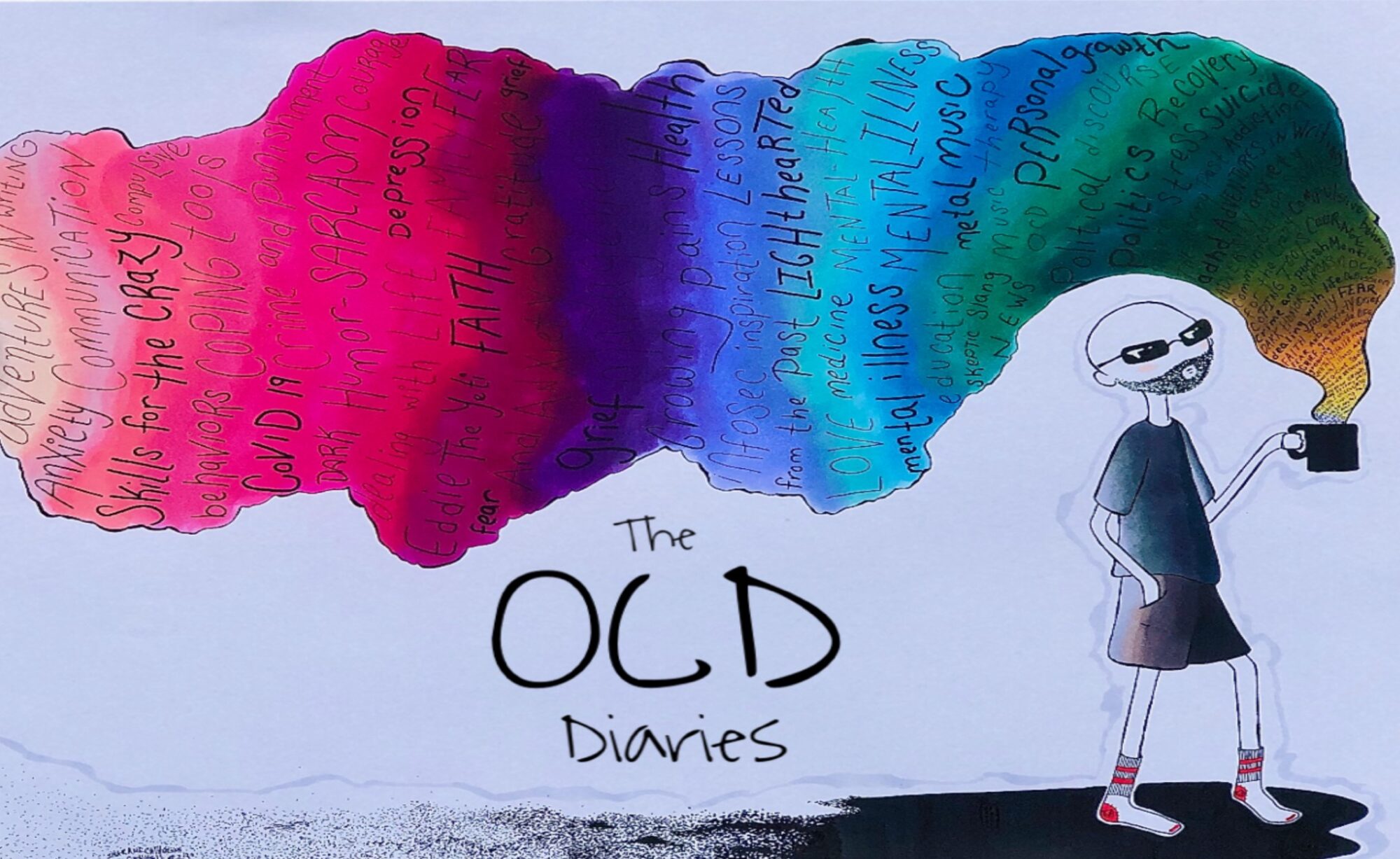
I call it THE OCD DIARIES because it’s primarily about my struggle to manage the disorder. If I have an OCD moment, I write about it. Where I’ve had success in gaining the upper hand, I share what I’ve learned so other sufferers can try it for themselves. Where appropriate, I laugh at what it makes me do. Sometimes, the result of an OCD incident is humor. But this isn’t a blog that tosses the acronym around to loosely describe every hyper moment of my existence. A lot of people say they have OCD to describe their Type-A personalities. This blog is about the real thing and why it’s so insidious.

It’s also about my upbringing in Revere, Mass., my childhood battle with Crohn’s Disease and how those things helped shape the manifestation of OCD within me. Every person’s struggle is shaped by where they’ve been in life. Historical perspective is important.

It’s also about the byproducts of my OCD, specifically addictive behavior and, even more specifically, my struggle with a binge-eating addiction. Part of that means telling you about how I brought it under control, which is why you see a lot about the 12 Steps of Recovery and Overeater’s Anonymous. I also tell you about all the stupid behaviors that goes with being an addict, including the secondary addictions that surface after you’ve put a lid on the main, most disruptive addiction.

It’s also about relationships, specifically with my wife and children, extended family members, colleagues, friends and the legions of nameless souls who have come and gone, helping me along the way. It’s about relationships that were destroyed along the way, and about broken relationships I’ve been able to repair in my recovery.

It’s about my Faith, which is all over the 12 Steps and is central to my ability to get honest with myself and get the help I needed. You’ll see a lot about my church community, the beauty as well as the warts, which we all have. 

It’s about daily learning experiences. Sometimes the mood of the writing is depressed and sometimes it’s joyful. It’s merely a reflection of all of us.

Finally, it’s a blog about metal music and why it’s so important in helping me with all of the above struggles. Most posts include musical selections that capture my emotions at the given moment.

Some posts will reassure you. Many will make you uncomfortable.

In the end, it’s just a collection of my experiences.

Physical & Mental Health: Not Two Different Things

I got a note this morning from an old friend that brilliantly illustrates how tightly physical and mental health are intertwined.

Mood music:

[youtube http://www.youtube.com/watch?v=FLrxQ2Cdwho&fs=1&hl=en_US&rel=0]

I’ll share his note, but keep the name out:

Went to see a chiropractor yesterday (after the urging of my wife) to help with my anxiety. Went in very skeptical. After a thorough diagnosis, she discovered I have trouble with my cranial nerves and have an “over excited” nervrous system which contributes greatly to my anxiety and makes it worse when I start “freaking” out about things (trouble breathing, headaches, etc…) I guess the point is that I never would have attributed my anxiety to my nervous system.

I just thought it was due to me “not being strong enough” to handle things and was the cause for me becoming a nervous wreck when anxiety builds up. I just met with the chiropractor this week, so not sure exactly what the treatment will be, but she said it’s pretty intensive. The chiropractor compared it to a computer, I have all the information, my body is not processing things correctly.

Just thought I’d share that with you. All the time, I thought my anxiety was mental, but seems like it’s more of my body’s nervous system not working quite right.

The notion of back and nerve trouble fueling mental illness doesn’t surprise me at all. Though a lot of people would fail to see the connection, I have my own experiences to draw from.

I used to have brutal back trouble and at the time I was a ball of anxiety on fire, rolling off a cliff. It’s no accident that when I started getting the proper chiropractic treatment in 2006, a lot of that started going away. That’s also around the time I started taking Prozac, but it was a good trade-off. One bottle of that replaced various bottles of painkillers. I was hooked on the painkillers after a point, and that sucks. Especially when they no longer touch the pain and you’re taking them simply to keep from hurting more.

I think the biggest point is that mental and physical health are not separate things. One ALWAYS affects the other.

There’s no question whatsoever that depression can cause physical pain.

I’ve heard a lot of people argue over whether this person’s or that person’s aches and pains were “all in their head.” You know the types: Never any real underlying disease, but they’re always calling out of work with a headache or some intestinal discomfort.

It’s all in their head, you say?

Well, yeah.

It’s called psychosomatic illness, when mental anguish leads to physical sickness.

http://www.rodale.com/files/images/458870.jpgI’ve been there. Migraines. Brutal back pain. A stomach turned inside-out.

But it wasn’t always clear that what ailed me was in my head. Childhood illness confused matters. A huge chunk of my digestive track was in flames and spewing blood because of  Chron’s Disease.

I’m told by my parents that the doctors came close to removing the colon more than once, though I don’t remember that myself; probably because the doctors had that conversation with the parents instead of the patient.

To throw it into remission, they used the maximum dose of a drug called Prednisone, which caused another kind of body blow in the form of migraines. These headaches came daily; always making me sick to my stomach.

Later in life, I developed severe back pain, the kind that would knock me onto the couch and keep me there for weeks.

All legitimate physical problems. But at some point my brain lost the ability to differentiate a real Chron’s flare-up or back spasm from an imagined one.

In the end, though, it doesn’t matter. It may as well have been one of those things. Because when the mind thinks it is, it has a habit of BECOMING real.

It’s a little different for my friend.

He’s learning that a back and nerve problems are actually messing with his nervous system. The effect for him is what feels like anxiety. And in living with the knowledge that something is physically wrong, anxiety attack symptoms blossom into real anxiety attacks.

Funny how the body works.

I’m not telling anyone anything new. Everyone has an example of times when physical sickness left them in a depression, and vice-versa.

But it’s easy to forget the connections when we’re only dealing with one or the other.

How Does He Work In Those Conditions?

A friend and reader wants to know how I’m able to focus at work, given the OCD person’s tendency to be consumed by worry. Here’s my answer.

Mood music:

[youtube http://www.youtube.com/watch?v=D1QR8c0Ns2Y&fs=1&hl=en_US&rel=0]

Her specific question:

I know that at times, I have a hard time not letting one thought consume me. I pray, read etc. but sometimes that thought will be all consuming and (obsessive). Just curious how you plow through that moment.

I know where she’s coming from. Obsessive thinking used to paralyze me. Sometimes it still does. But oddly enough, it never got in the way of work. It got in the way of everything else.

Part of the reason is that my obsessive concerns were often about work. I used to be such a people-pleaser that I’d burn myself out over whatever job I had at the time. When I was away from the office, worries about work would consume me. I couldn’t just clear my head of it for the weekend and enjoy time off. My family suffered deeply because of that.

I’m much better now. When I’m not working, I’m not working. But sometimes, the OCD gets the better of me at work.

Last year, for example, I came into work itching to post two articles I wrote and did so even though my editor hadn’t had a chance to read them yet. In my head, it was safe to post them because I hadn’t heard back about any changes being necessary. Which meant I had the green light to push them live. So I did. Now, the editor was very cool-headed about it. He’s one of the nicest guys on the planet and doesn’t yell. But I could tell he wasn’t happy. Not realizing what I had done, he had started doing his own edits. I went back to my desk, feeling like a first-class asshole. I immediately sent him an e-mail apologizing profusely. He told me not to worry about it. But I worried about it anyway. I knew I had just allowed the OCD to run wild.

But the real question should be how I plow through the obsessive moment when I’m at home.

I’m not sure I have an answer. It’s complicated, because today I have years of therapy, coping skills and medication to draw from. But I still put up a wall from time to time.

One thing that’s pretty important is that somewhere along the way, I gained the ability to not let obsessive thinking paralyze me. Today I can still focus on other parts of my life even when something is on my mind. I can focus on my family and enjoy the moment. If I’m busy with an activity on the weekend, I don’t have work worries banging away at the back of my head like it used to be. Most of the time. Sometimes it does still happen. 

I honestly think the medication is responsible for easing that kind of obsessive thinking. It corrected the traffic flow in my brain.

That probably doesn’t answer my friend’s question. But I hope I came close.

The lesson being that years of working on the problem has made me better. But the things I obsessed over were different from what she probably obsesses over, and that makes a difference, just as different people need different kinds of therapy and medication for their unique issues.