Be a Hard-Ass, Lose Every Time

I used to think I had to be a tough-talking, pushy bastard to get ahead in life. Instead, that behavior nearly destroyed me. I’ve learned a lot since then.

Mood music:

[youtube=http://www.youtube.com/watch?v=3Mn-3EqaO0E&fs=1&hl=en_US]

When I worked at The Eagle-Tribune, some of the editors carried on with the mindset that reporters always needed an ass kicking. If a sentence wasn’t written perfectly, the story got rewritten and the writer got a knuckle sandwich by way of e-mail.

Once, when the obituary writer was out with the flu, my bosses decided he was faking the whole thing and ordered me to call the guy and let him have it. I made the call, and the obit man, Danny Goodwin, was taken aback. Today he’s a close friend and we laugh about that call frequently.

No disrespect toward my former colleagues intended. I made some of my most lasting friendships there. And most newsrooms can be a cut-throat environment. It’s just the way it is.

The point of this post is really about how I tried to be the hard ass some bosses wanted me to be, and how — fortunately for me and everyone else — I failed miserably.

Before I go further, I should point out that this isn’t all about The Eagle-Tribune. When I was an editor for Community Newspaper Company, I thought I was really something. I treated reporters like my personal whipping boys. It didn’t make them better reporters. It just made me a bigger asshole.

When I worked for TechTarget, I had the same problem. I was nobody’s boss there, but I had the feeling I was superior to writers in other groups because someone stuck the word “senior” in my title.

Why did I carry on this way? Because I worried about everything all the time — as OCD cases are known to do — and I couldn’t control my addictions.

This made me feel like the scum of the Earth. Somehow, I reasoned, trying to be — or at least pretending to be — better than others would help me feel better about the absence of control in my life.

If I was going to suffer, I figured, I at least deserved something out of it, like being seen as the golden boy by everyone around me.

How’d that work out? Not so well.

You see, it’s one thing to hurt yourself. But when you hurt someone else to mask your insecurities, an evil is let loose that you can never control.

One New Hampshire reporter from the E-T days, Sally Gilman, got a taste of that evil.

In late 2000, early 2001, I was the assistant editor of the paper’s New Hampshire edition and reported to a manging editor who made my brand of control-freakism look like a minor, passing cold.

His attitude was that all the reporters were children who needed their ears slapped back on a regular basis, and he expected me to carry out his will. It was against my instincts, because I wanted to be known as a nice guy. But I pushed on. When he told me to take a reporter to the woodshed because that person wasn’t performing as he felt they should be, I did.

Sally was one of those reporters who was always in his sights. It was ridiculous, because she was older and wiser than we were. She had been covering New Hampshire for many years. She lived there. We should have just let her do her thing, because it was good enough.

But he wanted more. If an idea wasn’t something you could turn into a multi-story enterprise package with seven sources per story, then it was crap. Community journalism was a mark of laziness, apparently.

He was always on Sally to come into the North Andover, Mass. office to work more often. She resisted, because New Hampshire was where the action was. She lived there. She once noted that the New Hampshire plates on her car increased her credibility with sources, and she was right.

Still, it became my job to push her to come to the office. It seems absurd in this day and age, where you can easily work from anyplace that has a wi-fi connection. But even back then, e-mailing in a story was simple enough.

But we wanted the stories inputed directly into the newsroom’s Lotus Notes-based system. We felt we shouldn’t have to reformat copy on deadline. Perhaps we were the lazy ones.

One morning, Sally filed an incomplete story. I can’t remember exactly what the problem was. But the boss was pissed off about it, and he told me to give her a kick in the ass. Her husband was having some serious surgery that day and we both knew it. But he ordered and I got on the phone and gave her a talking to.

An hour or so later, Steve Lambert, the top editor, called me to his office. I went in there to find him, my direct boss, and editor Al White. Considering what I had done, they went pretty easy on me. There was no yelling. Steve just asked me what happened and I told him. The N.H. managing editor sat there with a very red face. It was always red, mind you. But it was particularly glaring in Steve’s windowless office.

It turns out that Sally had called to complain. She was really upset. How dare an editor call her early in the morning to give her a hard time about something trivial on a day when her husband’s life was hanging in the balance.

Steve agreed with her, as well he should have. But he was still calm about it. He told me I needed to ease up. He didn’t want reporters to see me as the newsroom ass-clown. I said I’d keep that in mind and left his office, feeling like I had just been simultaneously stabbed in the side of the head and slammed in the gut with a brick.

Ten-plus years later, the way I treated her is one of my biggest regrets.

It would be easy for me to blame that managing editor, and make no mistake about it: I’ve spent most of the last decade thanking my lucky stars that I don’t have to work with him anymore.

But I always had the choice to behave the right way, and I did the opposite because being the office rock star was too important to me. I needed that status to fill the hole in my soul.

I thought it would fill the hole. Since I did a ton of binge eating back then, it’s safe to say being a hard-ass didn’t fill the hole the way I thought it would. I binged away and worried about every little thing to the point of paranoia. I started to see conspiracies against me all around. I started getting sick a lot.

Here’s the other problem with being a hard-ass: The world becomes a lonely place.

People don’t want to hang out with you. And on the rare occasions that they do, you don’t have the slightest idea of what to talk about. When you try to be superior to people on the job, you have nothing to relate to outside the building.

Somewhere in my recovery program, I lost my appetite for all this stuff. Out of pure exhaustion, I just started treating people the way I WANTED TO BE TREATED. I just didn’t have the energy to be a hard-ass anymore.

My spiritual conversion was a big part of this, too. My religious beliefs were simply no longer compatible with riding people and trying to control them.

Do I slip up today? Probably. I’m still a control freak to some extent. I guess I always will be.

I’ll always have to work on it, reminding myself that I’m no better than those around me.

All I know is this: When I’m treating people with respect, I feel free. I’m not weighted down by animosity. 

More people want to be in my life.

A lot of problems take care of themselves.

You don’t have to take what I say as Gospel. In the end, I can only explain where I’ve been and what I’ve experienced.

And what I’ve experienced since changing my attitude is all good.

How Parenthood Saved Me

When I first became a parent, I’m pretty sure I sucked at it. I had no patience for the things babies do because, back then, it was all about me. That’s how it is when you have OCD and out-of-control addictions. You’re too self absorbed to see the blessings around you. But my wife and kids helped me break the cycle.

Mood music:

[youtube=http://www.youtube.com/watch?v=AcfTpHa0nOw&fs=1&hl=en_US]

That’s the thing about children. When God puts them in your care, the only way to succeed is to surrender the “it’s all about me” attitude. Many fail. Some succeed. In the beginning, I worried that I’d fail. Nearly a decade later, I guess the jury is still out.

This much I know: Sean and Duncan have taught me a lot about life.

This collection of posts is about my kids. Hopefully, the writing adequately expresses what they mean to me.

To Sean on his birthday

http://www.theocddiaries.com/2010/04/21/happy-birthday-my-sweet-boy/

To Duncan on his birthday

http://www.theocddiaries.com/2010/09/14/happy-birthday-precious-boy/

Things my kids say, Part 1

When life gets you down and you feel like shutting out the world, a child’s perspective will always give you a mental boost. That’s what Sean and Duncanhave taught me.

http://www.theocddiaries.com/2010/10/21/things-my-kids-say/

Things my kids say, Part 2

Sean and Duncan continue to give me a fresh perspective on a world that can be full of trouble. Life getting you down? Feel like shutting out the world? Read this instead.

http://www.theocddiaries.com/2010/10/26/stuff-my-kids-say-part-2/

Duncan likes Pink. So What?

My 7-year-old son is raising a few eyebrows in church and school because his favorite color is pink. Apparently, it’s only OK for girls to like this color. Right off the bat I’m annoyed, because girls don’t get the same crap for wearing a so-called boy’s color like blue.

http://www.theocddiaries.com/2010/11/09/duncan-likes-pink-so-what/

Too Young for the Truth?

Sean learns more about the man he’s named for than the author intended at this young age. All things considered, he took it well.

http://www.theocddiaries.com/2010/06/09/too-young-for-the-truth/

Fear of Loss

The author remembers a time when fear of loss would cripple his mental capacities, and explains how he got over it — mostly. Also, how Sean and Duncan helped.

http://www.theocddiaries.com/2009/12/20/ocd-diaries-snowpocalypse-and-the-fear-of-loss/

Like Father, Like Son

The author finds that OCD behavior runs strong among the men in his family.

http://www.theocddiaries.com/2010/04/07/like-father-like-son/

The Brenners Invade The White House

The author on returning from a journey that would have been impossible a few years ago.

http://www.theocddiaries.com/2010/05/17/the-brenners-invade-the-white-house/

Parental overload is no big deal

Nothing like a week of screaming kids to realize OCD aint what it used to be.

http://www.theocddiaries.com/2010/04/25/parental-overload-no-big-deal/

Happy and Productive in the Debris Field

A work-at-home morning with Duncan goes better than it used to.

http://www.theocddiaries.com/2010/04/20/happy-and-productive-in-the-debris-field/

Black Rain

Rain is pelting my living room window as I write this. As a child, the sound was comforting. Today, it’s the opposite.

Mood music:

[youtube=http://www.youtube.com/watch?v=663L-GWQdws&fs=1&hl=en_US]

As a kid, I found comfort in a cloudy sky and rain. I suppose it made me appreciate the inside of my house and gave me a cozy feeling. The overcast sky was like a blanket. I wanted to hide from a lot of things back then: the Crohn’s Disease raging inside me, the unhappy chatter coming from my parents as their marriage fell apart, the sound of my brother gasping for air during one of his asthma attacks. The sound of my mother yelling at my sister and slapping her around.

For some reason, the clouds felt like a blanket I could pull over my head to blot those things out.

Somewhere along the way, something changed.

Now the sound of rain hitting the window makes me feel uneasy and a gray sky fills me with gloom.

This time of year it’s worse because it gets dark so early.

Part of it is age. As I get older, I prefer hot, dry weather and maximum sunlight. Deprive me of that and my mood tanks.

The rest of it is about the twists and turns my mental health has taken with time. 

Does weather impact one’s mental health? You bet your ass it does. My moods almost always hit the depths when there’s too much rain, snow, cold and darkness.

In the book Lincoln’s Melancholyby Joshua Wolf Shenk, we see how long periods of gloomy weather drove Lincoln to suicidal thoughts in the 1840s, two decades before he was president.

I’m doing what I can to combat the weather problem. My medication helps. My program of recovery from compulsive overeating helps a ton. Occasional visits to the therapist help. Writing helps. And yes, the happy lamps Erin bought help.

I feel much better overall than I have in past Novembers.

But in the end, you can only do so much. So despite all the work I’ve done on myself, this morning’s weather has me in a rut.

It’ll be a brief rut. I don’t fall over from depression for days and weeks at a time like I used to. Now it’s more like minutes and hours. That’s progress.

The best medicine is to move along and get to work.

And if I can get a nap in somewhere, all the better.

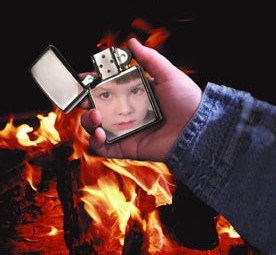
A Love Affair With Fire

A couple days ago when I wrote about that OCD screening test I found, something from childhood came back to me. I’ve never forgotten about my fascination with matches and fire. But one of the questions made me realize that the childhood fascination may have been one of my earliest OCD habits.

Mood music:

[spotify:track:0ydzdWYWIFlGBurhjEXwit]

The question was if I ever had an “overconcern with keeping objects (clothing, groceries, tools) in perfect order or arranged exactly.” Here was my answer:

As a kid I always had to have my Star Wars action figures arranged just right. I guess I got over that when my obsession turned to fire and I decided lighting the figures on fire was more important than having them arranged just right.

Funny thing about Star Wars. It always seemed to trigger my impulse to start a fire. One morning when I was in fourth grade, I was up at 5 a.m. playing with a model I had of the Millennium Falcon. It was one of those models assembled with highly flammable glue. I wasn’t thinking of that when I decided it would be cool to burn some battle scars into my ship.

I lit it on fire, right at the dining room table. Once it was blazing and black smoke from the burning plastic started wafting up to the chandelier, I decided it was time to put it out. I dumped a glass of water on it. Nothing. Imagine that? Burning plastic needs more than a glass of water to be snuffed out.

I panicked and threw the ship onto the cement floor of our front patio. Then I ran into my father’s room and told him I had opened the door to see something burning. He opened the front door and pitch-black soot came pouring into the house, staining everything in its path.

He grabbed a box of baking soda and dumped it on the burning ship, which managed to put it out.

Surprisingly, he didn’t beat the shit out of me. He did punish me, though. Looking back, the image of him in his underwear on the front porch cussing up a storm ALMOST made the punishment worth it.

When I hit puberty, I turned my attention to the rest of the Star Wars toys. I remember smiling as I put the match to Han Solo and watching his face bubble and melt. Most of the other Star Wars toys suffered a similar fate.

I also had an obsession with these big bonfires they used to have in the Point of Pines every July 3rd (I think they still do). The older kids would throw everything they could find into a pile: Old bed frames, pallets, chairs, logs. On the night of one such bonfire, a friend’s brother pulled out a large box of fireworks and brought it onto the beach across from his house.

We started by lighting them off one at a time. Then, somewhere in there, I decided the results weren’t spectacular enough. I picked up the still half-full box and tossed it into a barrel fire we had going. Fireworks exploded and shot out of the barrel in every direction.

One of my friends, a kid named Corey,  half-smiled as he yelled, “Billy…Billy…You’re  crazy Billy!” I was, of course. I just didn’t know it at the time. Some of the fireworks lit the dune grass on fire, and for the first time I worried that my fascination might someday land me in jail.

Looking back, I was using fire to feed all the aggression I was feeling over everything that had gone on in my life up to that point. It was sort of a precursor to the binge eating addiction. At least when I turned to that, I was only hurting myself. When I think back at the damage I could have cost, to people and objects, I cringe.

I was a miserable little bastard in junior high, around the time Def Leppard’s “Pyromania” album came out. That album was great, but it probably wasn’t the best thing for a teenage pyromaniac to be listening to.

[youtube=http://www.youtube.com/watch?v=tIlgciJ8DTs&fs=1&hl=en_US]

Fortunately, I grew out of this obsession as I got older. I moved on to other insidious obsessions, but like I said, those were more damaging to me than anyone else.

I still love the look of a roaring fire and the sound of a match striking sandpaper. But it doesn’t go further than that.

Over the years, as I worked on my struggles with OCD and addiction, I found better things to fill that hole in my soul with. The right treatment for OCD. Abstinence from the addictions that almost destroyed me. A beautiful wife and children. Above all, God.

Fire? It just can’t hold a candle to those other things.

Not anymore.

14 Years to Put Suicide in Perspective

I’ve written a lot about my old friend Sean Marley in this blog. Some of you may be sick of it, but I really have no choice. His death is too intertwined with my own struggles to avoid it. Today is the 14th anniversary of his death, and I’ve learned a lot of painful lessons since then.

Mood music:

[youtube=http://www.youtube.com/watch?v=vwPaMQ-3mFo&fs=1&hl=en_US]

In the weeks leading up to his suicide, I knew he was badly depressed. I even had a feeling he harbored suicidal thoughts. I just never thought he’d do it. Or it could be that I thought I had more time to be there and help him through it. Instead, I stayed wrapped in my own world as he deteriorated.

On Nov. 15, 1996, he decided he’d had enough. It was a sparkling, autumn Friday and I was having a great morning at work. But early that afternoon, I got a call at work from my mother. She had driven by Sean’s house and saw police cars and ambulances and all kinds of commotion on the front lawn. I called his sister and she put his wife on the phone. She informed me he was dead. By his own hand.

He introduced me to metal music, taught me to love life, and his death has been one of the cattle prods for my writing this blog.

I had known Sean for as long as I could remember. He lived two doors down from me on the Lynnway in Revere, Mass. He was always hanging around with my older brother, which is one of the reasons we didn’t hit it off at first.

Friends of older siblings often pick on the younger siblings. I’ve done it. It happens.

Sean always seemed quiet and scholarly to me. By the early 1980s he was starting to grow his hair long and he wore those skinny black leather ties when he had to suit up.

On Jan. 7, 1984 — the day my older brother died — my relationship with Sean began to change. Quickly. I’d like to believe we were both leaning on each other to get through the grief. But the truth of it is that it was just me leaning on him.

He tolerated it. He started introducing me to Motley Crue, Ozzy Osbourne, Van Halen and other hard-boiled music. I think he enjoyed having someone younger around to influence.

As the 1980s progressed, a deep, genuine friendship blossomed. He had indeed become another older brother. I grew my hair long. I started listening to all the heavy metal I could get my hands on. Good thing, too. That music was an outlet for all my teenage rage, keeping me from acting on that rage in ways that almost certainly would have led to trouble.

We did everything together: Drank, got high, went on road trips, including one to California in 1991 where we flew into San Francisco, rented a car and drove around the entire state for 10 days, sleeping and eating in the car.

This was before I became self aware that I had a problem with obsessive-compulsive behavior,  fear and anxiety. But the fear was evident on that trip. I was afraid to go to clubs at night for fear we might get mugged. When we drove over the Bay Bridge I was terrified that an earthquake MIGHT strike and the bridge would collapse from beneath us.

I occupied the entire basement apartment of my father’s house, and we had a lot of wild parties there. Sean was a constant presence. His friends became my friends. His cousin became my cousin. I still feel that way about these people today. They are back in my life through Facebook, and I’m grateful for it.

There is a hero in this story, and that’s his wife, Joy. She was there with him day and night, holding him through every agonizing moment. She did everything to keep his spirits up. It didn’t work in the end, but she did her best.

I first met Joy 19 years ago. Sean had just severed what I thought was a poisonous relationship, and when he told me he was seeing this girl Joy, my eyes rolled into the back of my head. Here we go, I thought: Another fucked-up pairing.

It was nothing of the sort.

From the moment I met her, Joy was true to her name. She always made you feel good about yourself and treated you like an old friend even if she didn’t really know you.

She married Sean in 1994, knowing he had a sickness brewing inside. It didn’t matter. Love won out. I was best man, though they could have done far better with someone else in that role.

I was so self-absorbed that day, obsessing about the toast the best man is supposed to give, that I forgot the glass of champagne. The room stared back at me, puzzled. It was more of a speech than a toast, and a bad one at that.

I didn’t trick out their car with the “Just Married” stuff, either.

Fast-forward to the present. Thankfully, Joy found someone else to love and remarried. She has three kids and you can tell how much love she pours into them.

Her parents knew what they were doing when they picked that name.

Thank you, Joy.

The months following Sean’s death were among the worst of my life. I started binge-eating with vicious abandon, and just hated myself. I wrote a column about his death in the paper I wrote for at the time, and I left all the actual names in there. His mother and sister haven’t spoken to me since then. I can’t say I blame them.

I think I had to go through my own depression, mental breakdowns and addiction to understand what was going on in his soul.

Suicide is a tough concept for a Catholic like me. But I’ve learned a few things along the way:

–Blaming yourself is pointless. No matter how many times you replay events in your mind, the fact is that it’s not your fault. For one thing, it’s impossible to get into the head of someone who is contemplating suicide. Sure, there are signs, but since we all get the blues sometimes, it’s very easy to dismiss the signs as something close to normal. When someone is loud in contemplating suicide, it’s usually a cry for help. When the depressed says nothing and even appears OK, it’s usually because they’ve made their decision and are in the quiet, planning stages.

–Blaming each other is even more pointless. Take it from me: Nerves in your circle of family and friends are so raw right now that it won’t take much for relationships to snap into pieces. A week after my friend’s death I wrote a column about it, revealing what in hindsight was too much detail. His family was furious and most of them haven’t talked to me since. They feel I was exploiting his death to advance my writing career and get attention. I was pretty screwed up back then, so they’re probably right. In any event, I don’t blame them for hating me. What I’ve learned, and this is tough to admit, is that you’re going to have to let it go when the finger pointing starts. It’s better not to engage the other side. Nobody is in their right mind at this point, so go easy on each other. Give people space to make their errors in judgment and learn from it.

–Don’t demonize the dead. When a friend takes their life, one of the things that gnaws at the survivors is the notion that — if there is a Heaven and Hell — those who kill themselves are doomed to the latter. I’m a devout Catholic, so you can bet your ass this one has gone through my mind. What I’ve learned though, through my own experiences in the years since, is that depression is a clinical disease. When you are mentally ill, your brain isn’t firing on all thrusters. You engage in self-destructive behavior even though you understand the consequences. A person thinking about suicide is not operating on a sane, normally-functioning mind. So to demonize someone for taking their own life is pointless. To demonize the person, you have to assume they were in their right mind at the time of the act. And you know they weren’t. My practice today is to simply pray for those people, that their souls will still be redeemed and they will know peace. It’s really the best you can do. 

– Break the stigma. One of the friends left behind in this latest tragedy has already done something that honors her friend’s life: She went on Facebook and directed people toward the American Association of Suicidology website, specifically the page on knowing the warning signs. That’s a great example of doing something to honor your friend’s memory instead of sitting around second guessing yourself. The best thing to do now is educate people on the disease so that sufferers can help themselves and friends and family can really be of service.

–On with your own life. Nobody will blame you for not being yourself for awhile. You have, after all, just experienced one of the worst tragedies there is. But try not to let it paralyze you. Life must go on. You have to get on with your work and be there for those around you.

Life can be a brutal thing. But it IS a beautiful thing.

Seize it.

OCD Screening Quiz

The Psych Central website has a very thorough, pretty cool test you can take to see if you have OCD. Is it wrong that I had fun taking this screening? Perhaps. Let’s see how I did…

Mood music:

[youtube=http://www.youtube.com/watch?v=9tBaMlAUj08&fs=1&hl=en_US]

1. concerns with contamination (dirt, germs, chemicals, radiation) or acquiring a serious illness such as AIDS?

I used to worry myself into a frenzy over colon cancer. Given my history with Crohn’s Disease, I’m at a much higher risk of getting it someday. I don’t really worry about it anymore, though. I get the test every couple years, so chances of early detection are better than average.

2. overconcern with keeping objects (clothing, groceries, tools) in perfect order or arranged exactly?

As a kid I always had to have my Star Wars action figures arranged just right. I guess I got over that when my obsession turned to fire and I decided lighting the figures on fire was more important than having them arranged just right.

3. images of death or other horrible events?

All the time. Losing a brother and two best friends really exacerbated this problem. When I had kids, I worried to the point of rage that something bad might happen to them.

4. personally unacceptable religious or sexual thoughts?

That one’s complicated. The short answer is yes. I’ll have to describe it more thoroughly in a future post.

Have you worried a lot about terrible things happening, such as…

5. fire, burglary, or flooding the house?
Yup. Ever since the flooding we got during the Blizzard of 1978, I had a major fear of a repeat scenario. As a kid my mood hinged very delicately on each weather report. I must be better now, because my first instinct with a storm is to go out and get pictures.
6. accidentally hitting a pedestrian with your car or letting it roll down the hill?
Not really. I have hit my share of squirrels, but that was their fault for running into the street.
7. spreading an illness (giving someone AIDS)?
Yup. Specifically, spreading Crohn’s Disease and OCD to my children.
8. losing something valuable?
Fear of loss extends to material objects. But since I’ve found something much more valuable in my recovery program, the materials don’t matter as much.
9. harm coming to a loved one because you weren’t careful enough?
See question 8.
10. Have you worried about acting on an unwanted and senseless urge or impulse, such as physically harming a loved one, pushing a stranger in front of a bus, steering your car into oncoming traffic; inappropriate sexual contact; or poisoning dinner guests?
More than once I thought of beating the guts out of a former boss. I’ve also had repeated thoughts of punching my mother in the face. I’d never really act on these thoughts, though. I worry about hitting my kids. But 9-plus years into parenthood, I’ve kept my hands to myself. ‘
Have you felt driven to perform certain acts over and over again, such as…
11. excessive or ritualized washing, cleaning, or grooming?
Of course.
12. checking light switches, water faucets, the stove, door locks, or emergency brake?
All of ’em. Not so much today, but in younger years it consumed me.
13. counting; arranging; evening-up behaviors (making sure socks are at same height)?
Yes, but not socks. More like pens and objects on my desk. Also, couch pillows and curtains. And the kitchen tablecloth.
14. collecting useless objects or inspecting the garbage before it is thrown out?
Not really.
15. repeating routine actions (in/out of chair, going through doorway, re-lighting cigarette) a certain number of times or until it feels just right?
Yup. Checking the laptop bag to make sure the laptop is in there (I’ve left the office late many times over that one), checking my desk to make sure everything is just so, checking the clothes I’ve put out for the next day to make sure all garments are accounted for.
16. need to touch objects or people?
This one kinda ties into the last question.
17. unnecessary re-reading or re-writing; re-opening envelopes before they are mailed?
I used to take three times as long to file an article at work because I would repeatedly re-read what I wrote. Unfortunately for my colleagues, I did it out loud. I never do that now. I bang out my article, hit send and go for more coffee. Or, on occasion, a cigar.
18. examining your body for signs of illness?
There was a mole on my arm that always consumed me with worry, but I was always too scared to have it checked out. I thought I was growing skin cancer. It became a moot point when the mole came off in the shower one day. Maybe it wasn’t a mole after all. 
19. avoiding colors (“red” means blood), numbers (“l 3” is unlucky), or names (those that start with “D” signify death) that are associated with dreaded events or unpleasant thoughts?
Not really. And we did name one of our children Duncan.
20. needing to “confess” or repeatedly asking for reassurance that you said or did something correctly?
I used to always beat myself for not measuring up on the little things at work. I stopped that about three years ago. My work has NOT suffered as a result. In fact, it’s better.

Songs to Help You Pick Up the Pieces

This week’s soundtrack is about rising from the ashes of adversity. I’ve had more than my share of tough times, and these songs always gave me the extra shot of strength I needed to move forward…

I’m a huge fan of NIN and Henry Rollins, and someone out there was brilliant enough to fuse both into this:

[youtube=http://www.youtube.com/watch?v=2CPIT4nsT24&fs=1&hl=en_US]

This song was perfect for the “fuck you” attitude I had in the early 1990s, when I was having one of my estrangements with my mother and my sister was on a suicide watch:

[youtube=http://www.youtube.com/watch?v=2KkEHm8aKcM&fs=1&hl=en_US]

When I went through a serious bout of my own depression in the summer of 1990, my spirits were lifted by a film called “Pump Up The Volume.” This song jolted me out of the darkness, and in the many waves of depression I’ve experienced in the 20 years since then, I’ve always returned to this song:

[youtube=http://www.youtube.com/watch?v=GtnSrmNGWJ0&fs=1&hl=en_US]

During some of my most vicious fights against my addictions, music has given me something to relate to, and one of the best examples is the Sixx A.M. Heroin Diaries soundtrack. In fact, there was a time where it was the ONLY album I listened to. This song really resonated because it was the best perspective ever presented on the pain of relapse:

[youtube=http://www.youtube.com/watch?v=Nan4Kdtz-9w&fs=1&hl=en_US]

Whenever I’ve come out of a depression or a period of binging, this song has always reminded me that I have to get over what has happened and move forward:

[youtube=http://www.youtube.com/watch?v=wsDpwb3ILxM&fs=1&hl=en_US]

I end this installment with another Sixx A.M. song that pretty much describes what life is all about, whether you’re going through pain or the highest of highs:

[youtube=http://www.youtube.com/watch?v=1ICav7ieJwQ&fs=1&hl=en_US]

Music will always get me through my struggles. It always has.

May it do the same for you.


Facebook Follow Friday: Nov. 12

Welcome to week three of this new tradition of mine: Giving the nod to some of my Facebook friends for giving my spirits a lift and teaching me new things.

A reminder on what this is about: There’s a thing we do on Twitter called Follow Friday, where we list people we follow and suggest others do the same. I figured Facebook should have something similar, so here it is.

Let’s face it: There’s a lot of crap on Facebook. Some people might consider me part of the problem and unfriend me over it. That’s OK. My brand of insanity isn’t for everyone.

But there are a lot of giving folks on there as well; friends that lift the spirits and teach me something daily. Here are those who make the list this week:

Queue the mood music:

[youtube=http://www.youtube.com/watch?v=6YzKLRM-pr4&fs=1&hl=en_US]

Ralphie Hubble: A fellow classmate at The Voke, Ralphie always lifts the spirits with his Friday lyrics for the soul. He was always one of the cooler kids in school, and that coolness has gotten cooler with time.

Jason-and Gretchen Grosky: Two former colleagues that always inspire me with posts about their family life. To me it doesn’t matter that Gretchen is a Pulitzer-Prize winning editor and that thanks to her The Eagle-Tribune still kicks plenty of ass. What’s important to me is that she always puts her family first, and it shows in just about all of her posts. When I need a reminder that work isn’t everything, I get caught up on the adventures of the Grosky household. Pretty freakin’ ironic, given that we met through work.

Stephanie Chelf: Another former Eagle-Tribuner, I never actually worked with her. She came along after I left. She gets a mention because in her latest job, one of her accounts is an organization that’s near and dear to me: The International OCD Foundation. Given my struggles with OCD, the organization has been a valuable resource. And I learned about it from her. 

Mary Ann Davidson: She’s the chief security officer for Oracle, and that’s how I met her, but the reason I love being a Facebook friend is that she is an enormously spiritual person whose Faith rubs off on me. I also enjoy keeping track of her surfing adventures in Hawaii and the exploits of her dog Thunder.

Michael Tranfaglia: I’ve been friends with this guy for many, many years. We met in the North Shore Community College smoking room in 1989, and haven’t been able to shake each other since then. He’s one of the few people who know how to use sarcasm effectively. It’s a complicated art, and if done wrong it’ll blow up in your face. The man knows what he’s doing. He’s also been a good friend since day one.

Stacey Scutellaro Cotter: Another longtime friend, she is also Sean Marley’s cousin, which earns her a place in my heart for life. Her Facebook posts always reflect her love of friends and family, and I need to see that on days where I might be tempted to tell the world to go screw.

More to come next week!

Tragedy Follows Service

Perhaps because it’s a day to honor veterans, I find myself thinking back to an encounter I had on a street in Brooklyn a couple months ago. The guy had a hole in his head where his left eye used to be and he had burn scars up and down one arm.

Mood music:

[youtube=http://www.youtube.com/watch?v=zld2cSIVUO4&fs=1&hl=en_US]

I was puffing on a cigar, so he approached me for a light. Then he told me he had been maimed in Afghanistan during military service. He asked for some change so he could get a train to somewhere; can’t remember where. He told me he was in New York looking for work and was stranded without money.

I gave him the change I had in my pocket and he was gone.

Was he telling the truth? I have no idea, and I don’t really care. He just looked like a guy in pain who needed a few quarters to survive the next few hours, and that’s all that mattered at the time.

It also reminded me of all the homeless veterans I’ve seen in my hometown of Haverhill over the years. There’s always evidence that the guy on the street is a veteran. There are the service tattoos and the jacket patches. Many of them saw things that were hard to live with, and they were rendered mentally ill. Instead of getting help, they wound up on the street because they couldn’t hold a job or stay off drugs and booze.

It would be high-minded of me to say we need to do better for our veterans. But it’s been said so often it’s pretty much lost it’s meaning. We like to praise our veterans on Veterans Day or July 4. But once the holiday is past, we go back to treating them like shit. Because they’re homeless and, as a result, they’re dirty, scary and unpleasant to those who have lived far more comfortable lives. And, don’t you know, we LOVE to judge people even though we know nothing about them.

I single myself out for ridicule, because back when fear, anxiety and addiction had me by the balls, I used to walk or drive the other way when these guys approached.

I’ve had my struggles. We all have. But I have no idea what it’s like to be on a battlefield.

I do know that a lot of people — good people who have sacrificed for God, country and family — have taken tragic turns in the line of duty. It’ll always be this way because life’s unfair.

Do these guys deserve better from the rest of us? You bet your ass they do.

When someone is on the street and hungry, we like to say they did it to themselves. Or we say we gotta help them and then do nothing. I’ve done both.

They did drugs. They stole and lied to people.

But the fortunes of man are never, ever so simple.

There’s always something in the history of each of us that shapes the decisions we make and how we live otherwise. I’ve made many bad choices in my day. But God’s Grace has carried me through.

May the vets on the street find that same Grace.

Most of all today, I’m thinking of the guy I bunked with and was on team with for last month’s Cursillo retreat.

He’s a Vietnam vet who has been through the wringer over the years. He saw terrible things in Vietnam, and he came home to people who were spitting on soldiers instead of praising and thanking them. 

He has Post Traumatic Stress Disorder, and that has also cost him dearly. I thought it was appropriate that a guy with PTSD would be rooming with Mr. OCD. We had a lot of laughs over that.

But here’s the thing: This guy doesn’t bitch about his lot in life. He’s retired, but he spends his days helping fellow veterans.

And he’s active with the Cursillo movement.

The tragedy of service bent him in every direction. But it didn’t break him.

There’s hope for all of us.


The Joyless Happy Meal

I’ve been hearing a lot of stink over this toyless Happy Meal story. Maybe I can put the whole thing in perspective.

Mood music:

[youtube=http://www.youtube.com/watch?v=oU16EBurb1Q&fs=1&hl=en_US]

First, here’s the AP to tell you what happened to the beloved Happy Meal in San Francisco:

Unhealthy kids’ meals to get less ‘happy’ in San Francisco

San Francisco has become the first major American city to prohibit fast-food restaurants from including toys with children’s meals that do not meet nutritional guidelines. The city’s Board of Supervisors gave the measure final approval on Tuesday on an 8-3 vote. That is enough votes to survive a planned veto by Mayor Gavin Newsom. The ordinance, which goes into effect in December next year, prohibits toys in children’s meals that have more than 640mg of sodium, 600 calories or 35 per cent of their calories from fat. It would also limit saturated fats and trans fats and require fruits or vegetables to be served with each meal with a toy.

The horror. The frakkin’ horror. This isn’t the first time I’ve seen the Happy Meal come under assault.
When I worked at The Eagle-Tribune, Gretchen Putnam — then the features editor — got a little present in the mail from P.E.T.A.  She opened the package and out popped a “McCruelty Meal.” There was the Happy Meal-like box, with a blood-splatter pattern. You open the box to find P.E.T.A. literature and the toy — A Ronald McDonald doll covered in blood with a knife in its back.
The idea was to convey that Ronald was a murderous bastard for chopping up cattle for those world-famous burgers.
I checked out the “McCruelty” website and it appears they’ve modified things, shifting attention to the genocide of poultry.
Gretchen, if you read this and still have that lying around, I’ll buy it from you.
So now a few government officials decided to suck the joy out of any Happy Meal that doesn’t meet their nutritional standards.
It takes a recovering compulsive overeater to put this in the proper perspective, and I have a couple thoughts on this whole affair:
For one thing, banning the toy isn’t going to do a thing to keep kids away from McDonald’s food.
Kids know they can always find a toy someplace else, and at the end of the day it’s the fatty food they’re really after anyway. Maybe they won’t get the Happy Meal, but they will still go there and get the same stuff: The burgers, fries, chicken nuggets, etc.
And if you think it’ll keep parents from feeding their children junk, just remember that parental stupidity is one of the things that sends children down the unhealthy path to begin with. If I’ve learned anything on my long journey to recovery, it’s that addicts can almost always trace their behavior back to their parents.
That’s certainly the case for me. My mother was always pushing food on me. She did it out of love and meant no harm, but that and the Crohn’s Disease battle certainly tilted my addictive behavior toward the compulsive binge eating.

If a parent drinks or drugs to excess, there’s a better-than-average chance their kids are going to do the same thing in adulthood.

Recovering addicts have noted this thread in their own lives time and again at the 12-Step meetings I go to.

Chris Hoff, a good friend of mine from the Internet security industry and perhaps one of the most prolific presences on Twitter, saw a good example of this brand of parental failure in a coffee shop over the summer. I’ll share his tweets on the subject, since his content is all public record at this point:

Noticing a fat guy feeding his obese son three doughnuts and yelling at the poor kid for being too slow, Hoff (Twitter handle is @Beaker) wrote:

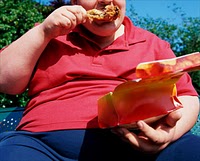
Hint: If your 4-foot-something 8-year-old weighs more than me, you’re doing it wrong. Makes me want to cry. F’ing up your life is one thing, but his? :( It’s not that I’m insensitive to his plight; been there. However he’s helping end his kid’s life early by poisoning him with junk and mean words.

He noted, correctly I think, that kids inherently know what’s healthy but they still fall into bad behavior that parents either can’t or won’t stop. Often, they enable it.

Banning the toys in Happy Meals won’t change this one bit.
I see this as another example of trying to regulate addictive food — it may be well-intentioned but it never works. I’ve mentioned this before, most notably in the post “Regulating Addictive Food: A Lesson in Futility.”
Since I know what it’s like to be deep in the muck of a binge-eating addiction, my wife thought I might find interest in an article from The Environment Report suggesting that the regulation of foods that are bad for you — same way as with cigarettes — might help some sufferers.

The cattle prod for this item was book called “The End of Overeating.” The author is David A. Kessler, MD, and a former commissioner of the US Food and Drug Administration under presidents George H. W. Bush and Bill Clinton. I actually have a lot of respect for this guy, whose tenure included the successful push to enact regulations requiring standardized Nutrition Facts labels on food.

That, in my opinion, was a huge win for those of us who want truth in advertising.

In “The End of Overeating,” Kessler makes a compelling argument: Foods high in fat, salt and sugar alter the brain’s chemistry in ways that compel people to overeat.

“Much of the scientific research around overeating has been physiology — what’s going on in our body,” The Washington Post quoted him as saying in a story brilliantly headlined “Crave Man.”

http://starvingwritersbooks.com/bookstore/images/endofeverlasting.jpg

The real question is what’s going on in the brain, Kessler says.

His theory on food as an addictive substance is as on the mark as you can get. Trust me. I’ve lived it. Binge eating is all about addiction for me.

It’s tied directly into the same corner of the brain where my OCD resides.

He is also right that sugar, salt and fat are addictive substances, though for a lot of people, the components of our poison boil down to sugar and flour.

Of course, most of the food that has flour and sugar also tends to be high in salt and fat.

The first and most important tool in my OA recovery program is a plan of eating. Flour and sugar are off the table — period. Almost everything I eat goes on a little scale. 4 ounces protein, 4 ounces raw vegetable, 6 ounces cooked vegetable, 2 ounces potato or brown rice, etc. Every morning at 6:15 I call my sponsor, someone who hears my food plan for each day and gives me the necessary kick in the ass.

But salt and fat are not forbidden for me. In fact, I’m allowed to substitute 4 ounces of meat with 2 ounces of cheese or nuts.

To some, this may sound like a typical fad diet, but people in OA have used a plan like this since the beginning. And the plan isn’t the same for everyone. If you have diabetes, for example, removing every scrap of flour from the diet isn’t usually an option. No matter. The only requirement of the program is to stop eating compulsively, no matter how you get there.

This isn’t something I pursued to drop 65 pounds, though I did lose that amount pretty quickly. This is a food plan for life — a key to my getting all the nutrition I need and nothing more. Just as an alcoholic must put down the booze or a narcotics addict has to put down the pills, I have to put down the flour and sugar.

This is the plan that got me out of the darkest days of addictive behavior and I’m a true believer.

Flour and sugar mixed together becomes a toxin that knocks the fluids in my brain out of balance. Kessler’s research is definitely in line with what’s happened to me.

But the idea of regulating food the same way as something like cigarettes? It won’t do much good.

It certainly couldn’t hurt. The nutrition labels at the very least gave us an education on what we put in our bodies, and it’s been especially helpful to parents who are trying to raise their kids healthy. Regulating cigarettes has certainly made it harder for minors to buy them.

But for the true addict, regulation is a joke.

Knowing what’s in junk food won’t keep the addict away. I always read the labels AFTER binging on the item in the package. And the labels have done nothing to curb the child obesity pandemic.

If you smoke, it’s certainly more expensive to buy a pack than it used to be. But if you crave the nicotine, you’ll find a way to get your fix. It’s the same with drugs, and with food.

I have nothing against the government types in San Francisco who want to do something about this nightmare by targeting the Happy Meal. I just don’t think their approach is going to work.