You Don’t Need Rage to Be a Badass

When I was in my teens and early 20s, I let my rage flow freely in public. I’d drop f-bombs, flip people off and deliberately cut people off in traffic. That I couldn’t control myself was only part of it. In my young and stupid mind, I thought these attributes made me cool.

Mood music:

[spotify:track:3xMZrNrfyKUUqQVtoR13ml]

Funny thing about having a chip on your shoulder: It obstructs the flow of sanity and common sense to the brain, resulting in you act like an asshole. This is especially true when you’re young. Being seen as a badass is a long-sought-after goal among the youth. Hell, I still go for the badass vibe, and I’m 42 years old. I just try to restrict it to the glowering in my Facebook profile pics. Other than that, I’ve found that it’s better to treat people as you want to be treated — with kindness. For me, some days are better than others in that department.

I bring this up because I see the attitude I had in my teens and 20s in a lot of 30-somethings these days. Maybe it’s the Facebook phenomenon. People tend to act out more on Facebook because they have a captive audience. There are folks who complain about everyone who’s not like them. Folks who prattle on about how shitfaced they are, about how people with religious and political beliefs different from theirs are trash, and so on.

This kind of carrying on isn’t badass. It’s just being an ass.

You want badass? Here are some real examples:

  • The mom with the special-needs child who leaves the security of a crappy job and launches her own business in the monstrous face of risk, finding a way to balance the success of that business with the needs of everyone around her, including the special-needs child.
  • The hospital nurse who wipes the puke off your face and empties your bedpan without batting an eyelash, then goes home and cleans up the bodily fluids their babies toss around.
  • The 50-something musician who never made it big but continues to play to half-empty bars because they’re happy as long as just one person gets something from it.
  • The person who got hit by two different cars over the course of a few days, sustaining serious injuries, and who started documenting not only their own recovery process but also those of others, showing the world that nothing is impossible.
  • The congresswoman who survived a gunshot to the head and became a national hero capable of attaining higher office but who chose to leave the limelight and focus on her physical and spiritual growth instead.
  • The guy who put down the bottle and pills and rebuilt his life.
  • The cancer patient who who tells you everything they’re grateful for and tells a few jokes when they could be sulking and despairing.

I could go on, but you get the point.

If you’re dissatisfied with your life and compensate by trying to be a badass through trolling, insults and braggery about how fucked up you got the night before, you’re doing it wrong.
Pretty Badass

The White Stripe of Dissapointment

An old friend from Revere went to NYC to see Jack White perform at Radio City Music Hall this past weekend and walked away crushed. She waited an hour and a half to meet him, but he blew past everyone and hopped into a waiting van. No hellos. No autographs.

“What a disappointment. Just waited an hour and a half for him to just dash out and jump in his van,” she said on her Facebook page.

Then he put on a dismal performance, insulted the crowd repeatedly and stormed off stage after barely an hour of performing.

“Wow! Just can’t get any worse. As if earlier wasn’t bad enough, JW decided to blow off his entire audience and killed his show and walked after an hour because the crowd wasn’t loud enough for him,” she posted.

And so went the latest lesson of how our musical heroes sometimes fail to live up to their gifts when the human being behind the rock god armor is exposed.

Mood music:

[spotify:track:09QZAEmdbq28OaNyqTOEvY]

I’ve never been snubbed by a favorite rock star, but I’ve been disappointed by my musical heroes over the years and it sucks. A couple examples:

  • Vince Neil. I wanted to believe the Mötley Crüe vocalist learned something after his 1984 DUI accident, which killed Hanoi Rocks drummer Nicholas “Razzle” Dingley and injured two others, leaving at least one of them with permanent brain damage. Neil was unharmed, did 30 days in prison, did 200 hours of community service, and paid millions in restitution. Over the years, his drinking has remained on full display, but I assumed his days of drunk driving were over. Then, two years ago, he was sent to jail for drunk driving in Las Vegas.
  • Axl Rose. The Guns N’ Roses vocalist regularly shows contempt for his fans, going on stage hours late, storming off stage before the show is finished and, in some cases, sparking riots in the process.

The common element for me is that both men front bands that were very important to me as a disgruntled teen. Instead of taking all my anger, grief and sorrow out on other people and stealing cars, I listened to Mötley Crüe and Guns N’ Roses. The music wrung out all of the violence within me and kept me sane. Because their music did this for me, I assumed the artists were the nicest guys on Earth, living on some higher level of existence.

Sadly, in the case of these two, it didn’t turn out to be that way.

But I still listen to the music. It still speaks to me and keeps me grounded. I feel the same way about Jack White’s music.

I’ve learned to divorce the personalities from the music. Maybe that’s a survival instinct. I know people who refuse to listen to a band that includes musicians they consider assholes.

Part of my reasoning is that these stars are flawed human beings like us, not gods. They have good days, when they are nice to everyone they come in contact with. And they have days when they treat their fellow human beings with contempt. It could be that White was simply having a shitty day. Maybe he got some bad news or simply wasn’t feeling well.

Whatever the case, he should apologize for his NYC clusterfuck. We’re all human, but fans are paying customers, and you have to make things right with your customers if you want them to stay customers.

Even so, I hope my friend doesn’t stop listening to White, especially if the music has helped her in times of need.

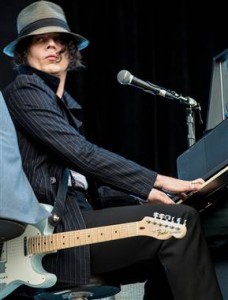
Jack White
Photo credit: Douglas Mason/Getty Images Contributor
Did George Takei’s OCD Humor Fall Flat?

The Facebook page of George Takei — Mr. Sulu from the original Star Trek series and subsequent movies — has become one of my favorites. The actor has made a second career for himself on there, plastering his page with some of the funniest photos/memes I’ve seen.

Today, I noticed one such meme that pokes fun at OCD:

I didn’t think much of it at first. I see all kinds of OCD-based humor on the Internet every day, and this meme struck me as typical. I was more amused with Takei’s comment: “This strikes a cord with me.”

Then I remembered a post I recently wrote about how OCD humor cuts both ways. [See: Is Humor Reinforcing The OCD Stigma?] It occurred to me that this meme straddled that shaky, hard-to-see line that separates the funny from the offensive. To most people it’s a quick chuckle before moving on to something else. But to someone suffering from the disorder, it’s going to hurt. I can laugh now, but I assure you I wouldn’t have been laughing had I seen this eight or so years ago, when OCD had driven me to the brink of a physical and emotional breakdown.

I’m not the only one who did a double take on this meme. The International OCD Foundation sent Takei the following comment, which is also posted on its Facebook page:

Yesterday’s OCD pun was well-meaning, but missed the mark. Even if someone is obsessive or compulsive, that doesn’t mean they have OCD. Trivializing the term just makes it harder for those who do have OCD to get help. Like most mental health issues, stigma and lack of awareness are the biggest obstacles to getting treatment. You are such a great advocate for many causes, I hope you will consider joining ours.

I think that was the right response. I also think it’s a message the actor will take to heart. He strikes me as a good man who works hard to keep the hurtful humor off his page.

In fact, when he sees this, I won’t be surprised if his reaction is a mortified version of his trademark “Oh Myyyyyy.”

Out of My Head

Like anyone with a mental disorder like OCD, I spend a lot of time locked in my head. My thoughts will be on what I’m doing the next day or a year out. Or they’re in the past, replaying scenes from long ago. Last night I began the mission to get out of there.

Mood music:

[spotify:track:7yqO8vYeyf8ahnLj9vOZ4G]

It was the first night of my Stress Reduction and Mindfulness class. The instructor is my therapist, though the other students don’t know that. He tells me this is the first class to include one of his patients. I entered a room full of yoga mats, cushions and funny little benches that look like the kneelers they put in front of the coffin at wakes.

“Fuck,” I thought to myself. “Right out of the gate we’re doing yoga.” I’ve resisted doing yoga forever. I don’t have a good reason for that. I guess I think it will just bore me.

In the end, we used the mats for a lie-down exercise designed to make us aware of our bodies and what they’re doing and feeling. A couple people fell asleep.

We practiced eating mindfully, taking a single raisin and staring at it, rolling it in out hands and keeping it in our mouths for a while before swallowing.

We left with homework. Among other things, I have to eat an entire meal mindfully instead of scarfing it down per usual. I also have to take an activity I do almost daily and do it mindfully, taking note of every aspect of the activity as I proceed. For fun, I think I’ll try this while shaving my head.

I can stare at the razor and look at its detail, stop every time I cut myself and study the pattern of the blood dripping from my scalp before washing it off. I’ll take note of how the water feels when rinsing off the cut. I can note the difference between the feel of a clean razor and one that’s getting clogged with my stubble.

I could also practice my guitar mindfully, noting the feel of the strings and the sounds I get as I randomly launch chords from up and down the neck. I’ve already discovered that you can’t really play the guitar without being mindful of every step. I can’t, anyway.

The ultimate goal is to be able to pay attention to every detail when I’m talking to someone or doing any number of other daily tasks where my mind tends to drift.

This should be interesting.

Mindfulness

I’m Stressed About My Stress-Reduction Class

Tonight is the first of eight weekly stress-reduction and mindfulness classes I’m taking. I have to admit the whole thing stresses me out a bit.

It’s not that the description is bad. In fact, it sounds delightful. I’m going to learn how to use yoga and other techniques to keep my thoughts in the present, where they belong. Here’s a little background from the Mindfulness-Based Stress Reduction website:

Dr. Jon Kabat-Zinn developed the Mindfulness Based Stress Reduction (MBSR) program at the University of Massachusetts Medical Center. Since its inception, MBSR has evolved into a common form of complementary medicine addressing a variety of health problems … MBSR is an 8-week intensive training in mindfulness meditation, based on ancient healing practices, which meets on a weekly basis. Mindfulness practice is ideal for cultivating greater awareness of the unity of mind and body, as well as of the ways the unconscious thoughts, feelings, and behaviors can undermine emotional, physical, and spiritual health.

I certainly qualify for such a program. I have a history of stress-induced maladies — Crohn’s Disease, OCD, ADD, depression, fear and anxiety, migraines — and I’m still in the process of making peace with a lot of what happened in my past.

For my back story, check out “An OCD Diaries Primer“.

I’ve gotten pretty good control over the anxiety and OCD in recent years. Heavy therapy, medication and spiritual growth have all played a role. And work, once the biggest source of stress in my life, no longer rattles me. Having a job I absolutely love helps on that score.  I’m also much healthier in my 40s than I was in my 20s and 30s. Crippling back pain is years into the past, and I’ve maintained a significant weight loss. I don’t eat flour or sugar and weigh just about everything I eat. I no longer drink, and cigars and cigarettes have been replaced with e-cigs. I’m also playing guitar again. Making music has been more appealing to me of late than staring at the Internet for hours, which is another addictive behavior I’ve struggled with.

But I still experience stress. There’s a lot of family drama, including a long estrangement from some parts of the family and an erosion of patience that intensified when my father had a stroke last year and we really began the work of helping our younger child manage his ADHD.

No surprises there. That’s the garden-variety stress everyone experiences. Only the names, dates and circumstances change.

While these things no longer incapacitate me, they still make it difficult for me to keep my mind in the present. When your mind is in the past or the future, it makes it very difficult to listen when people are talking to you in the present. The result is that you don’t retain important information like dates, appointments and the like. Worse — much worse — is that you’re robbing the people you love of your undivided attention.

My therapist once told me that there’s no better gift you can give a person than your time and attention. A lot of what he says annoys me. But on this I think he’s right.

That comment from the therapist is what compels me to take this class. I want to be a better listener and less scatterbrained when the house chores stack up.

So why the stress?

It’s yet another appointment to keep every week, shoehorned into the schedule between all my kids’ Boy Scouts activities and various family check-ups, school activities and an awesome but demanding job.

Of course, that’s me thinking in the future instead of the present, which just makes me more comfortable with the notion that this is the right thing to do.

I’ll report back to you on all this tomorrow.

Which Is Worse? You Decide.

I woke up pissed at the world yesterday. Part of it is that people in my life are acting like idiots, and part of it is my realization that thinking this way makes me a Grade-A hypocrite.

Mood music:

[spotify:track:1GnCH2KszUkpUjXuDP2G3N]

I’m sick of all the ass-hat political posts friends and relatives are putting on Facebook lately. Rather than sticking with issues like our economic well-being and the best way to achieve national security, people are content to post a bunch of memes littered with half truths and outright lies. Democrats and Republicans are equally guilty.

But then I’ve been blogging a lot about how futile these elections have become and how the outcome will have absolutely zero impact on the things that really matter in our lives.

Which is worse? You decide.

I’m sick of people who go on Facebook and complain about everything. They hate their job. They hate their significant others or the lack thereof. They make cryptic statements so someone out there will bite, asking what’s wrong or telling you how fucking special you are.

But then I do something similar in this blog. I never complain about my job or make cryptic statements, but I sure do complain a lot. I’m doing it right now.

Which is worse? You decide.

I’m sick of people who tell you how you should behave, how often you should call your parents and how self-absorbed you are when they can’t get their own shit together.

But then I turn around and do the same things. And I just blog about it afterwards.

Which is worse? You decide.

When I lose patience with people, I can get pretty self-righteous. I take someone down a few pegs, even though I’d make the same stupid decisions and say the same stupid things.

I’ll admit it sometimes, and then go do the same stupid things all over again.

Which is worse? You decide.

Before long I’ll return to my sunnier disposition. But I wanted to take this moment of moodiness and use it as an opportunity to keep it real.

Cinderblock Balloon

Putting a Face on Suicide

There’s a page on Facebook everyone should check out called Putting a Face on Suicide. It’s powerful stuff.

Mood music:

[spotify:track:14YR9VCoseu7zq2dx9Qr6w]

Having lost a close friend to suicide, this page hits me where I live. We hear about suicide statistics all the time. We know of the famous suicides, like Ernest Hemingway and Kurt Cobain. But regular people die by their own hand every day, and their faces are easily forgotten. That’s what makes this Facebook page so important.

Putting a Face on Suicide is the personal project of Mike Purcell. His son, 21-year-old Christopher Lee Purcell, died by suicide in 2008 while serving in the U.S. Navy. Since then, the father has relentlessly worked to break down the bullshit notions about suicide — that those who take their own lives were simply weak, scared, quitters and the like.

Here’s part of Purcell’s mission statement for the project:

Every 40 seconds somewhere around the world someone dies by suicide, that’s 99 people every 66 minutes. Every day, that’s almost 100 people in the United States alone, and over 2160 worldwide. Putting a Face on Suicide (PAFOS) is a suicide awareness project that creates posters and videos to pay tribute to those we have lost to suicide with dignity and respect. PAFOS humanizes the daunting statistics; lovingly replacing numbers with faces.

PAFOS is an ongoing project soliciting pictures of your loved ones who died by suicide. Its objective is to collect 99 photos of people who have died by suicide for each day of the year; i.e., 36135 faces will represent 365 days of loss by suicide in the United States. PAFOS uses each photo in a poster and a video, posts it on the PAFOS Facebook page, and creates a personal tribute page featuring your loved one.

When you visit the page, the first thing that will strike you is how happy many of these victims looked when the pictures were taken. There are smiling teenagers who had promising futures. There are older people who look content to spend their senior years doting on grandchildren. There are veterans of our most recent wars, looking proud, sober and ready for whatever life throws at them.

Whenever someone dies by their own hand, you hear the inevitable comments that start with but:

“But she had everything going for her.”

“But he was always smiling.”

“But he had a beautiful wife and children, a gorgeous house and a high-paying job. How could he do this?”

Those are natural questions to ask when you first hear the news of a suicide. It’s part of the shock and disbelief we feel.

Yet the questions also show how little we understand the insidious nature of depression. Much of the stigma comes from that religious belief that death by suicide is a trip straight to Hell. It’s not necessarily true, and a friend of mine found this bit of clarity in the Catechism of the Catholic Church:

2282 Grave psychological disturbances, anguish, or grave fear of hardship, suffering, or torture can diminish the responsibility of the one committing suicide.

2283 We should not despair of the eternal salvation of persons who have taken their own lives. By ways known to him alone, God can provide the opportunity for salutary repentance. The Church prays for persons who have taken their own lives.

Instead of worrying about where in the afterlife our lost friends and family are, we should do what is in our control: remembering the best these souls gave in life and honoring their memories. The Facebook page does that and more.

PAFOS: Peter

PAFOS: Thomas Edward Albright

PAFOS: Paige Rose

Reefer Madness: Vote Yes on Question 3

When Massachusetts residents go to the polls this November 6, they’ll have the opportunity to vote on the Massachusetts Medical Marijuana Initiative, also known as Question 3. If voters approve the initiative, medical marijuana will be decriminalized in my home state. I’m in favor of this for a variety of reasons.

Mood music:

[spotify:track:5p4T4XOoXQXPpGVPCEGUzE]

For my fellow Massachusetts residents, here’s how the question will appear on the ballot:

A YES VOTE would enact the proposed law eliminating state criminal and civil penalties related to the medical use of marijuana, allowing patients meeting certain conditions to obtain marijuana produced and distributed by new state-regulated centers or, in specific hardship cases, to grow marijuana for their own use.

A NO VOTE would make no change in existing laws.

Supporters of the initiative include the American Civil Liberties Union, the Massachusetts Patient Advocacy Alliance and the Committee for Compassionate Medicine. Opponents include Dr. James B. Broadhurst, a Worcester doctor who treats people with addictions. He says the ballot initiative contains a gaping loophole that would allow a physician to prescribe medical marijuana for just about any debilitating medical condition. He’s part of a coalition called the Massachusetts Medical Society, formed in opposition to Question 3.

As a recovering addict, I respect Broadhurst’s concerns. Undoubtedly there will be those who easily talk their doctors into prescribing marijuana for whatever ails them. But that’s not reason enough to stop this.

I’m a food addict in recovery. If certain foods I’m addicted to had been illegal when I was abusing them, I would still have found a way to get them. Prohibition didn’t stop the flow of alcohol for addicts or anyone else in the 1920s. Moonshine simply became an easy way for mobsters to get rich.

Addicts will do whatever it takes to satisfy the demon, and plenty of people are willing to make money to help them do it.

Given that, we should do more than legalize marijuana just for medical purposes. We should legalize it altogether.

I’m not for legalizing the hard drugs, like cocaine, heroin and other narcotics. The effect those drugs have on the user are a lot more insidious and violent.

Pot is in a much lower class. It can turn the user into an incoherent blob of uselessness, but so can alcohol and the massive quantities of junk food a compulsive overeater ingests.

Most importantly, though, if medical marijuana can ease the pain of people suffering from a litany of dreadful maladies, I’m all for it.

I don’t have all the answers. I just have my opinion based on personal experience. If you want to try to sway me, the floor is now open for discussion.


“Pothead,” by Bob Dob

All You Wanted Was a Pepsi. Instead You Got Drugs

A friend of mine likes to refer to antidepressants as “brain candy.” I hate when he does, because it oversimplifies the very complicated science of mental medication. It’s not about seeing flowers and sunshine where neither exist.

Mood music:

There is this notion that taking antidepressants is a sign of weakness. I come across a lot of people who see the medicine as something to take out of desperation and to get off of as soon as possible.

There are very legitimate reasons to want off of the drug prescribed to you. The most obvious is that sometimes the drug doesn’t work. I know plenty of people who have tried a litany of medications without success. I can’t blame them for wanting to be done with them. One friend has tried every antidepressant under the sun and still struggles with crippling depression.

Another good reason is that some of these drugs have side effects that the patient just can’t live with, like excessive weight gain or loss, headaches, acne or loss of one’s libido.

To learn about how antidepressants work, read “The Engine” and “Serotonin, Dopamine and Two Blue Pills.”

But if you and your doctor manage to find something that works and you get obsessed with getting off that drug simply because you don’t like the idea of needing it, that’s foolish.

It’s easy for me to say that because I’ve been fairly lucky. Prozac was the first drug I tired and it started working within a couple weeks. When it first kicked in, I felt like it was the first time I truly felt comfortable in my own skin. I’ve still had bouts of depression, especially during winter, and dosage adjustments have been required. This past January, I went on Wellbutrin as well, the idea being that it would help the Prozac work better. It worked. I either have a powerful army of guardian angels looking out for me or am just insanely lucky.

But I’m not a special case, either. I know plenty of people, including the friend I mentioned at the start of this post, who have gotten good results but wanted off as soon as possible.

If I thought I could manage my own issues without the drugs, I’d want off, too. But I don’t think I’m there yet. Not even close.

My attitude is simple: As long as the drugs work, I’m going to keep taking them. It’s better than feeling fear and anxiety again. It’s better than being a miserable bastard whose a beast to his family, friends and colleagues.

If I have to take the medicine for the rest of my life, so be it.

Those who want off the drugs simply because they fear the stigmas or feel weak if they can’t manage without it are barking up the wrong tree.

Stop worrying about your destination and focus on the journey instead.

Brain Lollipops

Sex Change Outrage: Should We Pay for Convict’s Operation?

There are a lot of good people out there who deal with brutal medical situations that make them outcasts. There’s the depression I’ve covered extensively here. And there are things like being transgender. But if you’re behind bars for murder, should taxpayers be paying for your treatment?

Mood music:

[spotify:track:44XvCIXl5rqHGAWcAS2I2i]

Depression is a simpler example. If antidepressants can make a convict well enough to better serve the prison community where he or she is doing time, I’m for it. Maybe their crimes were so bad they should never get out. But if taxpayer-funded treatment means they can become well enough to counsel inmates who aren’t there for life, it’s a win in my book. At the least, it’s better to put them to work keeping the prison running than to let them take up space as useless blobs.

When the convict is transgender and wants a sex change, the picture gets a lot muddier. Take the case of Michelle Kosilek, a convicted murderer formerly known as Robert Kosilek.

U.S. District Judge Mark Wolf recently ordered state prison officials to provide Kosilek — serving a life sentence for killing his wife in 1990 — with a taxpayer-funded sex change. Wolf ruled that surgery is the “only adequate treatment” for Kosilek’s “serious medical need.” In his 126-page ruling, the judge said, “The court finds that there is no less intrusive means to correct the prolonged violation of Kosilek’s Eighth Amendment right to adequate medical care.”

Check out Boston.com for more details on the case.

I’ve seen a lot of outrage over this in the usual online places (Facebook, etc.). At first, I was a little outraged. This guy made a choice to receive the hormonal treatments that have helped him become a transgender being. Should we taxpayers be paying for his personal choice to become a woman?

Like depression, being a transgender can debilitate the inmate, which means he’s not doing what we tend to picture prisoners doing, such as making license plates and mopping floors. Wouldn’t it be better to “cure” Kosilek and put him (or her) to work?

I’m having trouble seeing how this medical problem was beyond Kosilek’s control. He chose to become a woman. But the more I think about it, the more I remember that many medical conditions are the result of the choices we make. Many heart conditions started with the sufferer choosing to eat junk and smoke. If you have something like Hepatitis C, there’s a decent chance it came from the dirty needle you chose to stick in your arm.

Kosilek chose to become a woman and got hormonal treatments. Now he’s trapped between two sexes, an outcast. Of course, he became an outcast the day he decided to murder his wife.

In the final analysis, society has a choice to make.

Either we accept that the prison system runs on taxpayer dollars and, as such, inmates must receive free treatment for whatever ails them, or we decide prisoners really should rot to death in their cells.

I lean toward the first scenario. People end up in prison for many reasons. Some are rehabilitated and go on to rejoin and contribute to the good of society. Some will never get out but are too mentally gone to know right from wrong.

But the bigger issue is that American justice is supposed to be rooted in compassion. If someone murders another person, we can deny the murderer freedom for life. But as a compassionate society, we should also take care of them when they have medical problems, even if the problem sprung from bad choices.

Maybe it’s not fair. But doing the right thing isn’t always a matter of fairness.

pixel.gif (1×1) Kosilek