Eat This! How To Survive Sans Flour And Sugar

What exactly does a life without flour and sugar look like? Read on.

Someone in work heard me rattling off everything I was eating for the day on the phone and looked at me like I had six heads. I was doing what I do almost every morning: Tell my OA sponsor what my food plan is for the day.

Mood music:

It sounds extreme. But it’s what I have to do to stay well. Going over it with my sponsor keeps me on track.

I’m often asked how I can deal with life without those two ingredients, and my answer is that I couldn’t deal with life WITH those things. People think this eliminates any joy in eating, but that’s not the case for me.

When someone asks what’s left to eat when I skip those things, the answer is quite a lot. Here’s what my food plan looks like on a typical day:

BREAKFAST:

8 ounces of a protein, typically Greek yogurt or ricotta cheese

3 ounces of Grape Nuts or oatmeal

8 ounces of berries

LUNCH:

–12 ounces of vegetable

–2 ounces of potato or brown rice

–4 ounces of protein (meat)

DINNER: Same as lunch.

A few notes:

It’s pretty difficult to eliminate every last drop of flour and sugar from your diet. There’s natural sugar in fruit, for example, and there are trace amounts of flour in a lot of things, including the Grape Nuts I eat at breakfast.

For me, the key is to avoid the highly enriched stuff (the white flour and sugar).

For those who find this diet bland, I say it’s all in how you make it. I can take all the individual ingredients of lunch and dinner and stir fry it. I add a lot of spices like hot pepper sauce. I use a lot of olive oil.

I also drink all the coffee I want (cream, no sugar).

This plan also doesn’t mean I can’t eat out. I have to when I travel on business, for example. No flour or sugar actually makes eating out simpler: No flour and sugar automatically takes a lot on the menu off the table. That makes it easier for me to make the right choices. I usually go for salads with meat in it and rice or potato on the side. I don’t put the restaurant food on a scale. Breaking out the little scale in a restaurant would be anti-social, in my opinion. The key there is to keep eating out to a minimum.

Carrying on this way keeps me from binge eating. It’s not perfect, but it beats the alternative.

Feel It, Don’t Fight It: Making The Disorder Work For You

Instead of fighting mental disorder — be it OCD or A.D.H.D. — picture yourself accepting and even embracing it, then learning to use it to your advantage.

It’s kind of like Luke Skywalker learning to use and control the Force instead of it controlling him.

Yesterday’s post on mental illness as a luxury item resonated with several readers, especially the part where I quote Edward (Ned) Hallowell, psychiatrist and co-author of “Driven to Distraction” and “Delivered From Distraction.”

Here’s what my friend Heather Stockwell said:  “Dr. Hallowell shaped a lot of my perceptions about A.D.H.D. and how to live with it rather than fighting it.

From my friend Anne Genovese: “Ned is a great guy and has developed many techniques to deal with his A.D.H.D. Ask him about highly purified EPA and DHA. We did a study with him on about 20 A.D.H.D. kids; the ones on the ultra-purified fish oils did way better concentration-wise than the ones considered to be doing well on medication.”

Hallowell has written about mental disorder being the stuff legends are made of. The thinking is that you have to be a bit crazy or off-balance to do the things that change who we are and how we live:

“Consider also the positives that so often accompany A.D.H.D.: being a dreamer and a pioneer, being creative, entrepreneurial, having an ability to think outside the box (with some difficulty thinking inside of it!), a tendency to be independent of mind and able to pursue a vision that goes against convention. Well, who colonized this country? People who have those traits!

“Back in the 1600s and 1700s, you had to have special qualities — some would say special craziness — to get on one of those boats and come over to this uncharted, dangerous land. And the waves of immigration in subsequent centuries also drew people who possessed the same special qualities. In many ways, the qualities associated with A.D.H.D. are central to the American temperament, for better or worse. I often tell people that having A.D.H.D. is like having a Ferrari engine for a brain, but with bicycle brakes. If you can strengthen your brakes, you can win races and be a champion, as so many highly accomplished people with A.D.H.D. are. But if you don’t strengthen your brakes you can crash and burn as, sadly, many people who have A.D.H.D. but don’t know how to manage it ultimately do.”

That’s also true of people with OCD, like the late Joey Ramone, Harrison Ford and Howie Mandel.

Early on in my efforts to get control of my life, one of my biggest struggles was that I didn’t want to completely rid myself of the OCD. I knew that I owed some of my career successes to the disorder. It drove me hard to be better than average. I needed that kick in the ass because being smart didn’t come naturally to me. I had to work at it and do my homework.

There was a destructive dark side, of course: The OCD when stuck in overdrive would leave me with anxiety attacks that raised my fear level and drove me deep into my addictive pursuits. That in turn left me on the couch all the time, a used up pile of waste.

The two sides of the disorder were like two buzz saws spinning in opposite directions. My brain, caught between them, took a lot of cuts.

My challenge became learning to shut one of the blades down while letting the other keep spinning. Or, as Dr. Hallowell put it, developing a set of breaks to slow it down when I needed to.

My deepening faith has helped considerably, along with the 12 Steps of Recovery, therapy, changes in diet (more on that tomorrow) and, finally, medication.

You could say those are the things my breaks are made of.

I still need a lot of work, and the dark side of my OCD still fights constantly with the good side. I’ve come to see the OCD as a close friend. Like a lot of close friends, there are days I want to hug it and days I want to launch my boot between its legs.

My progress has come with a fair share of irony: Without the fear and panic driving me, I sometimes act more like someone with A.D.H.D. I lose focus, my mind wafting into that place that makes you forget to put your coat in the closet and pay the electric bill. Erin has noted more than once that I’ve become a slob.

I have. But I am in a happier place than I used to be, so it’s a trade-off I’m willing to accept, even if earns me the occasional scolding.

Is Mental Illness A ‘Luxury’ Disease?

There’s an interesting debate unfolding on The New York Times website about mental illness in America. What got my attention was the suggestion that mental illness and the related treatments are luxury items.

Mood music:

The debate — between a variety of professionals in the mental health field — runs the spectrum from suggesting mental illness is still misunderstood and undertreated to being over diagnosed and used as an excuse to hide from personal responsibility.

From the introduction:

Whether you call it hypochondria or American exceptionalism, the numbers are plain: Americans lead the world in diagnoses of mental health problems.

For some conditions, perhaps wealth explains the disparity: in developing nations, more people are focused on pressing needs like food and shelter, making depression a “luxury disorder” in wealthy nations like the United States.

But are there other factors at play for conditions like attention deficit/hyperactivity disorder, that may be “culture-specific”? Maybe the condition is more common in the United States because the high-energy, risk-taking traits of A.D.H.D. are part of America’s pioneer DNA. Or maybe the same behavior is common elsewhere, but given another label? Some critics would argue that American doctors, teachers and parents are simply too quick to diagnose A.D.H.D. and medicate children. Do the American medical and educational systems inflate the numbers?

Edward (Ned) Hallowell, a psychiatrist and co-author of “Driven to Distraction” and “Delivered From Distraction,” suggests that A.D.H.D. in particular is part of the American DNA:

There are two main reasons the diagnosis of attention deficit/hyperactivity disorder is high in the U.S. First of all, our gene pool is loaded for A.D.H.D. Consider the central symptoms of the condition: distractibility, impulsivity and restlessness. Consider also the positives that so often accompany A.D.H.D.: being a dreamer and a pioneer, being creative, entrepreneurial, having an ability to think outside the box (with some difficulty thinking inside of it!), a tendency to be independent of mind and able to pursue a vision that goes against convention. Well, who colonized this country? People who have those traits!

His description of someone with A.D.H.D. is priceless:

I often tell people that having A.D.H.D. is like having a Ferrari engine for a brain, but with bicycle brakes. If you can strengthen your brakes, you can win races and be a champion, as so many highly accomplished people with A.D.H.D. are. But if you don’t strengthen your brakes you can crash and burn as, sadly, many people who have A.D.H.D. but don’t know how to manage it ultimately do.

As someone with OCD, I’d add that the description also fits for my condition.

Peter R. Breggin, a psychiatrist in Ithaca, N.Y. and author of more than 20 books and the director of the Center for the Study of Empathic Therapy, Education and Living says the drugging of children for A.D.H.D. has become an epidemic:

The A.D.H.D. diagnosis does not identify a genuine biological or psychological disorder. The diagnosis, from the 2000 edition of the “Diagnostic and Statistical Manual of Mental Disorders,” is simply a list of behaviors that require attention in a classroom: hyperactivity (“fidgets,” “leaves seat,” “talks excessively”); impulsivity (“blurts out answers,” “interrupts”); and inattention (“careless mistakes,” “easily distractible,” “forgetful”). These are the spontaneous behaviors of normal children. When these behaviors become age-inappropriate, excessive or disruptive, the potential causes are limitless, including: boredom, poor teaching, inconsistent discipline at home, tiredness and underlying physical illness. Children who are suffering from bullying, abuse or stress may also display these behaviors in excess. By making an A.D.H.D. diagnosis, we ignore and stop looking for what is really going on with the child. A.D.H.D. is almost always either Teacher Attention Disorder (TAD) or Parent Attention Disorder (PAD). These children need the adults in their lives to give them improved attention.

He makes an important point about the use of medication. A lot of parents turn to drugs because they simply don’t know what to do. Junior is a terror in school and on the playground and he’s exhausting everyone at home with his behavior. Turning to drugs is often an act of desperation. Desperation can be a good thing. It can force us to deal with our problems in ways we weren’t willing to consider before. But it can also rush us into bad decisions.

Erin and I are walking this tightrope with Duncan. We’ve had him tested in the doctor’s office and at school, and he has all the textbook traits of someone with A.D.H.D. But at 8 years old it’s still difficult to know for sure if this is A.D.H.D or something else that acts like it. Pills could tame his difficulties, but if he has something else that’s simply acting like A.D.H.D. — bi-polar disorder or OCD, for example — the pills that work for A.D.H.D. could make those other things much worse. So we’re not doing the medication.

This much I can tell you: When his older brother asks aloud if Duncan has A.D.H.D., Duncan bristles. He doesn’t like the label. And who can blame him?

I can tell you that Duncan has made a lot of progress with the other tools we’ve deployed: cool-down exercises, activities to channel anger (painting is one of his favorites) and so on. But there are still big challenges every day. And that’s ok.

Does the search for a problem and solution make us over-reactive parents? I don’t think so. When you see your child struggling, your instinct is to help them find a better way. Their happiness is what matters to us in the end.

Are kids diagnosed too easily and drugged too quickly? I’m sure of it. But to simply write the parents off as over-reactive is silly.

Society in general has learned to take everything too far. Ever since tragedies like the Columbine High School massacre, school administrators and teachers go crazy over things that are usually nothing. A kid collecting sticks and rocks in the schoolyard because he simply likes to collect these things becomes a danger. Why would a kid collect rocks and sticks if he didn’t intend to hurt his classmates with them, right?

We all struggle to find the sensible middle ground, because American society has seen some really bad shit in the last two decades: 9-11, Columbine, kids knifing each other in schools. We’ve seen the worst of the worst. The resulting fear can blind us to the fact that we’ve also seen the best of the best, including the advances in medical care.

When I was Duncan’s age and I was behaving badly, I was simply written off as a behavioral problem. I saw it happen to other kids as well. In hindsight, the building blocks of my mental illness were already swirling around in my head, shaped by the hard stuff I was experiencing back then, like my parents’ divorce, my brother’s death, the hospitalizations with Crohn’s Disease and the schoolyard bullying over my excessive weight.

Behavioral problems aren’t written off as easily today, and we should all feel good about that. The trick is to make the best use of all the newer mental health treatments, and that’s still a work in progress for all of us.

In my case, I’m lucky because I was determined to try everything else before trying medication. That resulted in several years of hard self-discovery and a better understanding of how I got the way I am. It led me to an array of coping tools I may not have learned to use had I turned directly to medication. Eventually I learned that my brain chemistry was still too far off center for me to control without medicine, and that’s when I tried the Prozac, which has worked exceptionally well.

It didn’t turn me into a robot. I’m still me. I see everything and feel everything. I still get depressed. But with the Prozac correcting the chemical traffic in my brain, these things no longer incapacitate me.

Is treatment a luxury? Sure. If you live in deep poverty and your biggest concern is where the next meal for you and your family is coming from, that’s going to be your first focus.

But if you aren’t in that situation and you have the luxury of dealing with mental illness, you shouldn’t feel bad about it.

You should simply thank God and do your best to pay it forward.
fulllength-depression-1

Judith Miller: The Liar’s Journalist

Judith Miller is one of many reasons I left mainstream journalism years ago. I forgot about her until Fox News decided to run this piece of filth about the BlackBerry outage and cyber terrorism.

If you want to see a true specimen of fear-based journalism, read that article. In it, she takes the recent BlackBerry outage, which was the result of tech failure and not terrorism, and connects it to cyber terrorism anyway, despite the absence of facts to support her thesis.

From her article:

An RIM spokesman has said that the outage was caused by what Security Week called “a core switch failure within RIM’s infrastructure,” and not by a deliberate disabling attack. But the outage highlights the threat that determined cyber-warriors could pose to the nation’s communications systems if they target them. For over a decade cyber-experts have urged the U.S. to upgrade critical infrastructure to protect vital dams, power plants, and communications systems from cyber-crime or cyber-attacks from rival countries. But the country remains complacent and highly vulnerable, as the BlackBerry outage shows.

Amazingly, she goes on to connect it to biological terrorism and weapons of mass destruction, two subjects she wrote about at length last decade as a reporter for The New York Times. She scared the shit out of a lot of people with those articles, including me. The slimy part isn’t that she scared people. It’s that she scared people with stories that turned out to be inaccurate or completely false.

As her Wikipedia profile notes, Miller was later involved in disclosing Valerie Plame’s identity as CIA personnel. She spent three months in jail for claiming reporter’s privilege and refusing to reveal her sources in the CIA leak.

She willingly engaged in the fear-based journalism after 9-11 that lead to a lot of heartache and loss later. Her stories were used by the Bush Administration to build the case for going to war in Iraq. We went in unprepared for the bloody insurgency that followed.

I should probably laugh at this kind of journalism when I see it and move on. But the fact of the matter is that this stuff used to leave me a crippled mess.

When you have an out-of-control case of obsessive compulsive disorder (OCD), you latch onto all the things you can’t control and worry about them nonstop. Nothing feeds that devil like the kind of crap Miller writes and Fox News delivers. I’ve written before about the anxiety and fear I used to have over current events. I would think about all the things going on in the world over and over again, until it left me physically ill. I personally wanted to set everything right and control the shape of events, which of course is delusional, dangerous thinking.

Right after 9-11 I realized the obsession had taken a much darker, deeper tone. This time, I had the Internet as well as the TV networks to fill me with horror. Everyone was filled with horror on 9-11, obviously, but while others were able to go about their business in a depressed haze, I froze. Two weeks after the event, I refused to get on a plane to go to a wedding in Arizona. Everyone was afraid to fly at that point, but I let my fear own me. It’s one of my big regrets.

Part of the problem was my inability to take my eyes off the news. To do so for a five-hour plane ride was unthinkable. To not know what was going on for five hours? Holy shit. If I don’t know about it, I can’t control it!

I really used to think like that.

Her reports about the potential for bio terror fed the beast. I wouldn’t mind at all had her reports been based on truth. When there is a real danger people need to know about, you have to report it. That’s when people need to hear the scary truth. But I do mind, because the fear she threw around was not based on truth.

I can’t blame her for how I reacted to the coverage. I had a crippling mental illness that was still years away from being diagnosed. I can’t blame anyone for that. It was my problem to work on.

But I worry about people who are at the stage of illness I once found myself in. They will read Miller’s BlackBerry article and react as I once did.

True, that’s their problem. But if you are the writer, you should care about how people will react.

Then again, if you’re willing to write lies, you’re not really going to care about that, are you?

Occupy Wall Street Debate Distracts Us From A Big Truth

I’m fascinated by the debate raging over this “Occupy” movement. There’s a lot of truth AND exaggeration coming from both sides.

But to me the issue is a lot more basic than “laziness and entitlement” vs. “greed and bigotry.”

Mood music:

http://youtu.be/A-nULlfJDvk

We always look for the big boogeyman, the personified evil we can shake our fist at and blame for everything that pisses us off. For some, it’s the corporate corner office. For others, it’s the illegal immigrants.

But these are just scapegoats for all the things that make us unhappy in our much smaller circles.

Some of us are conditioned to blame all our troubles on someone or something else. In the final analysis, that’s what this whole thing is about.

As a 22-year-old I remember blaming all my troubles on George H.W. Bush. I had no reason to. I was in college and didn’t have to worry about a job just yet, and I wasn’t sent to fight in the Gulf War. But I hated him anyway, and was certain Bill Clinton’s election would make everything better.

It was a stupid notion. Clinton was a good president, in my opinion, sex problems aside. But his time in power didn’t make my life better. Those were actually some of the worst years of my life. When you’re a slave to your addictions and your brain chemistry is leaking out your ear, keeping you in a depressed fog, no corporate or political leader can help you.

You have to help yourself.

When you’re in a very tough financial situation and can’t feed your family, it’s hard not to be angry at someone. But to blame it on corporate greed is to bark up the wrong tree. Corporate greed did contribute to the economic meltdown, but our own reckless spending habits contributed as well. We always want things: cell phones, cars, houses. Sometimes we collect these possessions first and worry about how to pay for it later. It’s a vicious circle, and I get caught in it as much as everyone else.

Our material pursuits always seem to mask a deeper unhappiness we have with ourselves and our messy lives.

I used to labor hard under the delusion that if I just got a particular job, all would be right with the world. When I’d get the job and discover that I was still miserable, I’d just blame it on that particular job and all the people above me. Then I’d try to find something else. I’d get another job and expect everything to be better. But things always got worse. Because I still wasn’t dealing with the core issues that made me so unhappy: Too little faith in God and too much faith in addictive substances and material things. And I continued to find bosses to blame.

I’m years into trying to reverse that order and the closer I get to the right balance, the less I seem to care about who’s in charge of the government. I also find that I don’t get so angry at the people atop the corporate ladder.

We’re all human. We screw up every day, but it’s more glaring if you’re in a position of power, be it government or business. Everyone’s watching when you screw up, and your actions end up hurting a wider group of people.

If I’ve learned anything, though, it’s that when things are going bad, nothing gets better unless I take personal responsibility.

If I wait for government to stop being corrupt and corporate execs to stop being greedy, I’ll never get anywhere.

Neither will you.

Some will say I’m oversimplifying the problem, that even when you take responsibility and work hard to succeed, it’s not enough because someone richer and more powerful is out to screw you.

Perhaps.

But engaging in class warfare oversimplifies the problem, too, because changing the people in power always seems to have limited results.

That’s true whether you’re liberal or conservative.

Oh, Yeah: It’s OCD Awareness Week

This is OCD Awareness Week and some of you have asked why I haven’t written about it. Here’s the ugly truth:

I’m tired of all these “awareness” weeks. I admire the people behind them, and for those who don’t really know the ins and outs of the disorder there’s value in dedicating seven days to enhanced awareness.

This is just a personal quirk of mine.

I guess my lack of enthusiasm is due to the fact that in this blog, every day is about OCD awareness. Therefore, what else can I say about OCD Awareness Week?

I know. I’m a bore.

I do want to thank the folks who are doing everything they can all the time to raise awareness, especially the folks at The International OCD Foundation. They do a lot of great work, and you should follow their efforts here.

Support Your Local Crisis Hotline Person

One of the byproducts of writing this blog is that old friends and strangers have reached out to me for chats about what they’re going through.

Mood music:

http://youtu.be/mso6N_eqg_k

You could say I’m doing an increasing amount of unpaid, uncertified counseling. I’d like to think it’s just me trying to be a good friend and following up on what I do here.

It can be a bit much sometimes. That’s not a complaint. It’s just the everyday challenge of life. But when someone else commits their time to counseling people through their pain, depression and crises, I respect them for what they’re getting into.

Amber Baldet, one of my friends from the business world, is in the process of getting certified to do online crisis and suicide prevention. Here’s her profile.

Donating a couple dollars to the work she’s undertaking will help her considerably.

If you see her around, thank her for doing it. You never know. She might be the one who helps you through a crisis someday.

Season of Depression

Like everyone else, I love the colors and crisp air of autumn. But there’s something else about fall that I hate: It’s the beginning of the mood swings and depression.

Mood music: 

http://youtu.be/DcEAI5p-wUg

When the days get shorter and I find myself driving to work in the dark, it has an effect on my brain. Welcome to my annual class on S.A.D.

People who suffer from chemical imbalances in the brain are directly impacted by daylight levels. When the weather is dismal, cold, rainy and the days are shorter, a lot of folks with mental illness find themselves more depressed and moody. Give us a long stretch of dry, sunny weather and days where it gets light at 4:30 a.m. and stays that way past 8 p.m. and we tend to be happier people.

There are lessons to be had in the history books:

– Abraham Lincoln, a man who suffered from deep depression for most of his adult life, went from blue to downright suicidal a few times in the 1840s during long stretches of chilly, rainy weather. [See Why “Lincoln’s Melancholy” is a Must-Read.]

– Ronald Reagan, a sunny personality by most accounts, was a man of Sunny California. Once, upon noticing that his appointments secretary hadn’t worked time in his schedule for trips to his ranch atop the sun-soaked mountains of Southern California — and after the secretary explained that there was a growing public perception that he was spending too much time away from Washington — Reagan handed him back the schedule and ordered that ranch time be worked in. The more trips to the ranch, he explained, the longer he’ll live.

The WebMD site has excellent information on winter depression. Here’s an excerpt:

If your mood gets worse as the weather gets chillier and the days get shorter, you may have “winter depression.” Here, questions to ask your doctor if winter is the saddest season for you.

WHY DO I SEEM TO GET SO GLOOMY EACH WINTER, OR SOMETIMES BEGINNING IN THE FALL?

You may have what’s called seasonal affective disorder, or SAD. The condition is marked by the onset of depression during the late fall and early winter months, when less natural sunlight is available. It’s thought to occur when daily body rhythms become out-of-sync because of the reduced sunlight.

Some people have depression year round that gets worse in the winter; others have SAD alone, struggling with low moods only in the cooler, darker months. (In a much smaller group of people, the depression occurs in the summer months.)

SAD affects up to 3% of the U.S. population, or about 9 million people, some experts say, and countless others have milder forms of the winter doldrums.

SO THIS WORSENING OF MOOD IN THE FALL AND WINTER IS NOT JUST MY IMAGINATION?

Not at all. This “winter depression” was first identified by a team of researchers at the National Institute of Mental Health in 1984. They found this tendency to have seasonal mood and behavior changes occurs in different degrees, sometimes with mild changes and other times severe mood shifts.

Symptoms can include:

  • Sleeping too much
  • Experiencing fatigue in the daytime
  • Gaining weight
  • Having decreased interest in social activities and sex

SAD is more common for residents in northern latitudes. It’s less likely in Florida, for instance, than in New Hampshire. Women are more likely than men to suffer, perhaps because of hormonal factors. In women, SAD becomes less common after menopause.

Here’s where the Prozac comes in for me:

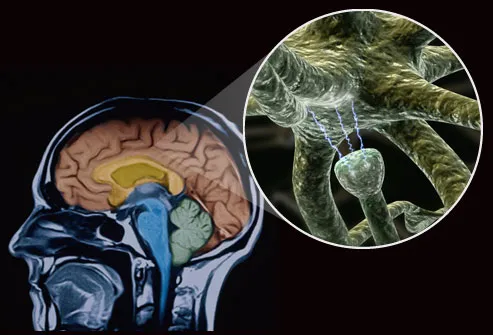
As I mentioned in The Bad Pill Kept Me from the Good Pill, Prozac helps to sustain my brain chemistry at healthy levels. Here’s a more scientific description of how it works from WebMD:

HOW ANTIDEPRESSANTS WORK

Most antidepressants work by changing the balance of brain chemicals called neurotransmitters. In people with depression, these chemicals are not used properly by the brain. Antidepressants make the chemicals more available to brain cells like the one shown on the right side of this slide:

Photo Composite of Neurotransmitters at Work

Antidepressants can be prescribed by primary care physicians, but people with severe symptoms are usually referred to a psychiatrist.

REALISTIC EXPECTATIONS

In general, antidepressants are highly effective, especially when used along with psychotherapy. (The combination has proven to be the most effective treatment for depression.) Most people on antidepressants report eventual improvements in symptoms such as sadness, loss of interest, and hopelessness.

But these drugs do not work right away. It may take one to three weeks before you start to feel better and even longer before you feel the full benefit.

I’m convinced the drug would NOT have worked as well for me had it not been for all the intense therapy I had first. Developing the coping mechanisms had to come first.

I’ve also learned that the medication must be monitored and managed carefully. The levels have to be adjusted at certain times of year — for me, anyway.
Last year, I found myself managing my moods a lot better than in years past. I still went through periods of depression, but I saw it for what it was and was and kept it from dragging me down more often than not.
I’m hoping to do better than that this time around. I’ll keep you posted.

How To Talk To A Liar Who’s Been Caught

A reader who recently found the two posts I wrote on addicts as compulsive liars had a sad story to share. Her husband, a compulsive spender, gambler and drinker, lies to her all the time. He apparently sucks at it. She always finds out.

Mood music:

How, she asked me, does she deal with a person like this? She still loves him, and in many respects he’s still the great guy. But lies are a cancer on even the most tried and true relationships.

It’s a hard question for me to answer. For one thing, it’s self-serving of me to tell a person like you how to talk to a person like me. My instinct will naturally be to tell you to go easy on him and calmly talk it through. It is true that yelling at a liar won’t make him stop. In fact, it will probably compel him to lie even more, convinced that any shred of honesty will result in a verbal beating every time.

This part has been especially challenging for me over the years. I grew up in a family where there was constant yelling. Because of that, I react to yelling like one might react to gunshots. I instinctively avoid it at all costs, and that has led to lies.

But if your significant other is stealing money behind your back to buy drugs, a friendly, smiling reminder to him that grownups aren’t supposed to behave this way won’t work either. The liar will simply thank God that he got off the hook that time.

You just can’t win with a liar.

I lied all the time about all the binge eating and the money I spent on it. I’m guilty of the lie of omission when it comes to smoking. And in moments where I felt like I was in trouble, I lied about something without meaning to. The instinct just kicked in and a second later I was smacking myself in the head over it.

Here’s where there’s hope:

Lies tire a soul out. It weighs you down after awhile like big bags of sand on your shoulders. Guilt eats you alive. That’s how it’s been with me in the past.

If you’re like that and there are any shards of good within you, you eventually come clean because you want to. Remember that lying is part of two larger diseases: Addiction and mental illness. Nobody wants to be sick.

But while some who get sick wallow in it and make everyone around them miserable, others are decidedly more stoic about it and try to do the best they can with the odds they’re dealt.

I was a miserable sick man but eventually, through spiritual growth, I tried to become a more bearable sick man. That meant dealing with the roots (addiction and OCD) and the side effects (lying).

I still fall on my face. But I work it hard and seem to have gotten much better than I used to be.

I credit Erin for a lot of this. She could have either thrown me out or thrown up her arms and turned a blind eye to my self destruction. But somehow, she has found a middle ground in dealing with me. It hasn’t always been pretty. But we’ve had our victories along the way.

You want to know how to talk to a liar who’s been caught? You’re better off asking her than me.

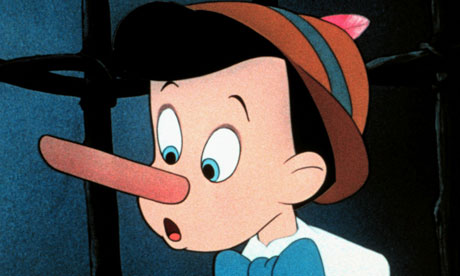
pinocchio

The Way Of The Broken Soul

I went to see “The Way” with Erin and saw a lot of myself in the characters. You’d see a lot of yourself, too.

Mood music:

The summary of the film is this (stolen from IMDb): Tom is an American doctor who goes to France following the death of his adult son, killed in the Pyrenees during a storm while walking The Camino de Santiago, also known as The Way of St. James. Tom’s purpose is initially to retrieve his son’s body. However, in a combination of grief and homage to his son, Tom decides to journey on this path of pilgrims. While walking The Camino, Tom meets others from around the world, all broken and looking for greater meaning in their lives, and discovers the difference between the life we live and the life we choose.

I don’t identify with Tom as much as I do his walking companions, especially a Dutchman named Joost and an Irish writer named Jack.

Joost tells Tom he’s making the journey because he needs to lose some weight to fit into his suit for an upcoming wedding. Jack is on the journey because he thinks there might be a book in the experience, and he’s trying to break his writer’s block.

If you rolled these two guys into one, that would be something close to me.

Despite the official reason Joost is there, he proceeds to eat his way across Spain. For much of the movie, he’s comforting himself with food. Jack is a blowhard who likes to talk about living like a real pilgrim, living off the land for survival and such. But he uses his company-issued credit cards to enjoy all the comforts of the local culture.

At one point, after a lot of wine, Tom interrupts Jack’s latest verbal tirade, calling him a bore who thinks he’s better than everyone else because he’s writing a book. The truth is that for all his talk, Jack’s carrying a lot of spiritual pain. It reminded me of some of my own bluster and hypocrisy. But it also reminded me of the healing power of writing, and how important it is to me. Not that I needed the reminder.

The scene that really hit me hard, though, is one where Joost is in his hotel room, about to tear into the feast he’s ordered from room service.

He’s wearing an open bathrobe, staring at himself — and his bloated belly — in the mirror with disgust. He stares at the tray of food and goes to take the first bite, and it’s there that you see the shame and pain in his eyes. The truth eventually comes out that his wife won’t sleep with him anymore because he’s too fat. He wants to please her, but he can’t stop himself from eating and popping pills.

All my past binge eating, wine guzzling and obsessive pain pill popping came back to me, as clear and awful as if I had just done it all the day before. I really felt bad for Joost at that moment.

By film’s end, Jack seems to have had a spiritual re-awakening and Joost seems to accept who he is, saying he’s just going to buy a new suit.

The recovered binge eater in me wasn’t particularly satisfied with that outcome, but it’s clear by film’s end that each of the characters came a long way in mending their broken souls.

For most of my life I’ve been an avid walker. As a kid I walked the full length of Revere Beach every day. In my 20s and 30s, I’d go out almost daily and take long walks. For all my recovery from addiction, the walking is something I haven’t gotten back into as much as I should. This movie has me rethinking that one. It reminded me that I walked for a spiritual lift as much as it was for weight control. In fact, a lot of my walking life was done in the midst of binge eating.

I’ve been able to control my weight in recent years without all the walking. But I think I need to get back to the walking anyway.

A good walk can help me set my mind and soul right. It doesn’t have to be a walk across Spain.

In fact, I’d much rather walk Revere Beach or the hilly terrain where I live now.

The Way Poster