Fear and Resentment. Resentment and Fear

For mental defects like me, a lot of what goes wrong is driven by fear. One thing I’ve learned in a 12-Step program for addiction is that the root of many fears is resentment.

Mood music:

You don’t have to be an addict to have resentments, of course. Most typical families, work environments and fellowships come packed with people you’re inevitably going to clash with. The more you disagree with someone, the more you’ll resent them.

Then, whenever you face situations where the one or more people you resent are present, you’ll be filled with fear: Fear about potential arguments, fear over whether you’ll look “normal” enough to avoid their ridicule, fear over how you’ll perform in public.

I have plenty of my own examples.

–Fear of arguments when dealing with my mother got so bad I had to put the relationship on ice for the sake of my sanity.

–Fear of Erin leaving me kept me from saying what I needed to say when we’d have the arguments that are part of every marriage.

–Fear of getting jumped and kicked around kept me from continuing my walks along Revere Beach in my early 20s, after the October 1991 incident.

–Though I’ve gotten very close to my stepmom in recent years, we used to clash all the time, which gave me a fear of any family event that required me to be in her presence.

Those fears filled me with all kinds of resentment toward those people and situations. In response, I plunged into addictive behavior with ultra-reckless abandon.

Fear and resentment are what keeps the hole in your soul from closing up. Until you deal with it at the roots, you will never truly be free or sane. That’s why as part of working the 12 steps, we’re supposed to write down all our resentments and work to make amends whenever and wherever possible.

Chapter 5 of the AA big book covers this extensively. Here’s an excerpt, along with an illustration about resentments:

—————-

Resentment is the “number one” offender. It destroys more alcoholics than anything else. From it stem all forms of spiritual disease, for we have been not only mentally and physically ill, we have been spiritually sick. When the spiritual malady is overcome, we straighten out mentally and physically. In dealing with resentments, we set them on paper. We listed people, institutions or principle with who we were angry. We asked ourselves why we were angry. In most cases it was found that our self- esteem, our pocketbooks, our ambitions, our personal relationships, (including sex) were hurt or threatened. So we were sore. We were “burned up.” On our grudge list we set opposite each name our injuries. Was it our self-esteem, our security, our ambi tions, our personal, or sex relations, which had been interfered with? We were usually as definite as this example:

I’m resentful at: The Cause Affects my:
Mr. Brown His attention to my wife.Told my wife of my mistress.Brown may get my job at the office. Sex relations
Self-esteem (fear)
Sex-relations
Self-esteem (fear)
Security
Self-Esteem (fear)
Mrs Jones She’s a nut – she snubbed me.
She committed her husband for drinking.
He’s my friend.
She’s a gossip.
Personal relationship.
Self-esteem (fear)
My employer Unreasonable – Unjust – Overbearing –
Threatens to fire me for drinking and padding my expense account.
Self-esteem (fear)
Security.
My wife Misunderstands and nags.
Likes Brown.
Wants house put in her name.
Pride – personal sex relations – Security (fear)

We went back through our lives. Nothing counted but thoroughness and honesty. When we were finished we considered it carefully. The first thing apparent was that this world and its people were often quite wrong. To conclude that others were wrong w as as far as most of us ever got. The usual outcome was that people continued to wrong us and we stayed sore. Sometimes it was remorse and then we were sore at ourselves. But the more we fought and tried to have our own way, the worse matters got. As i n war, the victor only seemed to win. Our moments of triumph were short-lived.

It is plain that a life which includes deep resentment leads only to futility and unhappiness. To the precise extent that we permit these, do we squander the hours that might have been worth while. But with the alcoholic, whose hope is the maintenanc e and growth of a spiritual experience, this business of resentment is infinitely grave. We found that it is fatal. For when harboring such feeling we shut ourselves off from the sunlight of the Spirit. The insanity of alcohol returns and we drink again. And with us, to drink is to die.

If we were to live, we had to be free of anger. The grouch and the brainstorm were not for us. They may be the dubious luxury of normal men, but for alcoholics these things are poison.

We turned back to the list, for it held the key to the future. We were prepared to look for it from an entirely different angle. We began to see that the world and its people really dominated us. In that state, the wrong-doing of others, fancied or real, had power to actually kill. How could we escape? We saw that these resentments must be mastered, but how? We could not wish them away any more than alcohol.

This was our course: We realized that the people who wronged us were perhaps spiritually sick. Though we did not like their symptoms and the way these disturbed us, they, like ourselves, were sick too. We asked God to help us show them the same tole rance, pity, and patience that we would cheerfully grant a sick friend. When a person offended we said to ourselves, “This is a sick man. How can I be helpful to him? God save me from being angry. Thy will be done.”

We avoid retaliation or argument. We wouldn’t treat sick people that way. If we do, we destroy our chance of being helpful. We cannot be helpful to all people, but at least God will show us how to take a kindly and tolerant view of each and every one.

Referring to our list again. Putting out of our minds the wrongs others had done, we resolutely looked for our own mistakes. Where had we been selfish, dishonest, self-seeking and frightened? Though a situation had not been entirely our fault, we tr ied to disregard the other person involved entirely. Where were we to blame? The inventory was ours, not the other man’s. When we saw our faults we listed them. We placed them before us in black and white. We admitted our wrongs honestly and were willing to set these matters straight.

———————

I’ve done a lot of work to overcome my resentments and, at the very least, keeping those resentments from destroying me.

I’ve been able to path up a lot of relationships with old friends I had lost touch with after one petty falling out or another. I’ve worked at being a better arguer with my wife, though she’ll tell you — and I know — that i still have a lot of work to do. And I’ve done specific things to overcome fear: Getting on planes, walking alone in areas I had feared.

You know the saying: Face your fears.

The issue with my mother is one of the few left unresolved at this point.

Fear hasn’t left me. But it no longer controls me.

I owe much of that to strong support from my wife and children, friends and that 12 step program.

OCD Diaries

Shove That Golf Club Where The Sun Don’t Shine

I’m in a self-righteous lather after reading a column on CNN from Jeff Pearlman, a columnist for SI.com called “A Father’s Day Wish: Dad’s, Wake The Hell Up.”

Jeff is a stay-at-home dad who has heard the stories from moms in his community about how their husbands would never change a diaper or wake their children up for school or clean up their puke.

Mood music:

An excerpt:

The woman started crying.

I didn’t expect this, because, well, why would I? We were two adults, standing in a preschool auditorium, waiting for the year-end musical gala to begin, talking summer plans and Twitter and junk fiction and all things mindless parents talk at mindless events. Then — tears.

“My husband,” she said, “doesn’t care.”

“Uh, about what?” I asked.

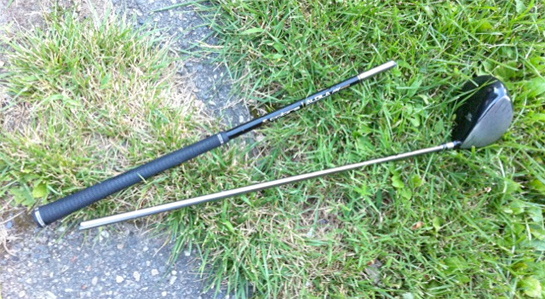
The floodgates now open, she told me her husband works from home. But he never drops their daughter off at preschool. He never picks their daughter up at preschool. He never wakes up with their daughter, never puts her to bed, never takes her to a movie or a carnival or a ball game; never comes up with fun daddy-daughter activities. “All he worries about is golf,” the mother said. “Sometimes he’ll take her to the driving range for an hour. But that’s it. …”

Two days later, by mere coincidence, a different mother cornered me. I was sitting in a pizzeria with my son, Emmett, and daughter, Casey, gnawing on a calzone. The woman, another preschool regular who always seems to be dragging around her kids with the worn look of a chain gang inmate, glanced my way and muttered, “My husband would never do that.”

“Do what?” I asked.

“Be out alone with both of the kids at once,” she said. “Never.”

Never?

That dads would carry on this way is of no surprise to me. But hearing about it still makes me angry.

Because it’s like looking in a mirror.

I’ve always been a hands-on dad. I clean up the throw up, bandage the scrapes and read to them daily until they started to read on their own. I still make the lunches, and while I don’t work from home every day, most weeks I get them up, dressed, fed and off to school a couple days a week as a matter of routine.

But when my OCD and addictions were slowly eating my brain, all I wanted to do was lay on the couch and watch TV. I didn’t want to talk. I sure as hell didn’t want to play.

Being a better dad has taken a lot of work. I still have a ways to go. I still get tired and lose my patience with them. I still have moments when I just want to be a vegetable. I’m not as good at watching my mouth around them as I used to be. Sometimes I have a hard time looking up from the computer when they’re trying to tell me something.

But I will never, ever choose golf over my kids.

Nothing against dads who like to have their golf outings. But to prefer golf all the time over family, well.

Fuck you.

We dads must do better than that.

All the blog posts I run Sunday will be about my kids and my father. Not to celebrate me, but to celebrate them.

Because Father’s Day is about them more than about us.

broken_golf_club

Shit Happens When Two OCD Cases Work Together

Let me take you back about 13 years, when two guys with clinical OCD worked together in the same office. I was one of ’em. The other was an old friend named Steve Repsys.

Mood music:

Neither of us knew at the time that we had OCD. It would be many years before we were diagnosed. In the meantime, we worked together for a small weekly newspaper in an office in Chelmsford, Mass. I was the boss and I acted like it.

I was always stressed about just getting the paper done on deadline. Quality didn’t really matter to me. OCD will do that to you: Getting the task done always takes priority over doing it right. Steve was the whipping boy, the sole reporter. I pushed him hard, nearly to the breaking point. He never let me down. But along the way, he would work so hard that his mind would go into loops. One loop involved a worry about finding an apartment. Another was about whether he would get a promotion. All normal things to worry about, except that he was clinically unable to shut up about it.

I carried on the same way about other things. Whenever the going got tough, we would both bitch about everyone who made it possible.

During the small windows of downtime, we would convene in my apartment a few steps away from the office and play Star Wars Trivial Pursuit. Star Wars was very important to us back then.

He eventually went on to another role in the company, and I went to The Eagle-Tribune.

We both got married and had kids. And in recent years, from different states, we’ve come to grips with our mental disease.

Steve and I have been going back and forth sharing our struggles of late, and he recently embarked on a hard-core program to understand his quirks and develop the necessary coping tools. And he was kind enough to write down his experiences to share with you.

So allow me to step back and let Steve take over for the rest of this post:

If you broke your leg, wouldn’t you want to get it treated? Chances are you would get help immediately. Why is it that when it comes to mental illness we let ourselves suffer?

Maybe it’s because in many cases a mental illness isn’t as “obvious” as a broken leg. Maybe it’s embarrassment to admit there might be something not quite right about ourselves. Maybe it’s because the term mental illness conjures up someone in a straightjacket. Whatever the case, mental illness is nothing to fool around with.

I should know. I suffer from OCD.

Most of my life I’ve considered dwelling on things and keeping myself up at night worrying about the future as part of my being. However, after nearly four decades on this earth, I realize I don’t have to live like that anymore. How do I know this? Thanks to strong persuasion from my wife Kara, I recently enrolled in a partial hospitalization program (PHP) to treat mental illness.

All along, the warning signs were there for my OCD. The trouble breathing, difficulty keeping focused, and even chest pains should have alerted me that something was not quite right. When a perceived or a real crisis occurred, I would go into “shut down” mode. Most often I would deal with my problems by trying to sleep hoping they would magically disappear when I woke up.

My obsessive worrying about my family’s finances was gradually driving a wedge between me and my wife. Instead of coming home from work wanting to be a husband to Kara and a dad to my two little girls, I would dwell on the negative. Looking back, I can see why my wife wanted me to get help. At the time, it was hard to see and I thought worrying was something I was supposed to do. I even saw worrying as a badge of honor. The more I worried, the more I thought it proved how much I loved my family.

When my wife first told me about PHP, I thought I didn’t need any help. However, the more I thought about and looked at myself honestly, I realized that maybe I did need help. Worrying was truly running my life.

To no great surprise, an evaluation confirmed that I had OCD. I started PHP immediately. PHP met 9:30 a.m. to 3 p.m. five days a week for three weeks and covered a wide range of topics including medication, support systems, spirituality, music therapy, and cognitive distortions in a small-group setting.

One of the most important realizations about myself came on my third day at PHP. Looking at the sheet for the day, I remember seeing there was a discussion entitled “Victim/Survivor.” I wasn’t looking forward to it, thinking that it dealt with someone who was sexually or physically abused. The discussion did pertain to victims and survivors, but not in the way I thought.

To my surprise, I felt like this talk was made especially for me. We talked about how survivors are proactive and victims are reactive. Survivors display an “I-can-handle this” mentality while victims cop an “it’s-not-fair-and-this-isn’t-shouldn’t be- happening-to me” attitude. I realized that almost all my life I walked around thinking of myself as a victim. “It’s not fair that we pay more in day care than our mortgage,” and “I can’t handle things” were just some of my more constantly consuming thoughts.

This was probably one of the biggest “a-ha” moments in my life. It dawned on me like a ton of bricks that my way of thinking was not productive for me or my family. I don’t know why it took at that particularly moment to come to the conclusion that instead of being an ostrich that puts his head in the sand, I needed to be a problem solver. I’m just glad it did.

Even while I was at PHP my thinking was put to the test. I noticed that I began thinking more in “survivor” terms. During my stint at PHP, my cell phone was going to be shut off for nonpayment. Instead of getting upset about it and thinking how “unfair” it was, I got into problem solver mode. I called up the cell phone company and told them I got paid in a few days and I would be happy to settle the bill when my check went into the bank. Lo and behold, my carrier agreed and the problem was solved.

While that may seem like a small thing, it’s a big deal to me. Prior to PHP, I would have avoided dealing with the situation or even would have asked my wife to take care of it for me. I can’t guarantee that I won’t fall apart in the future if something doesn’t go as planned, but at least I have new found coping skills at my disposal.

The three-week program greatly helped me in other ways as well. During my time at PHP I learned how important goals are (in fact we started the day off by making daily goals) and that I benefit when I have structure in my life.

In addition, I realize that it’s important to know what triggers my OCD. Now that I know what sets me off (my finances), I can pull out some of the tricks I learned at PHP to extinguish my OCD thinking.

After attending PHP, I realize that I’m not miraculously “cured” from my OCD thinking. I realize that OCD will always be with me, but I don’t need to be a slave to it. I now have a toolbox that’s filled with many instruments to keep my OCD at bay.

PHP showed me that life is always going to be filled with obstacles and problems but I hold the keys to controlling my life.

Readings From The Book Of Crap, Volume 2

I’ve been observing amazing acts of stupidity in recent weeks.

Mood music:

When I do, my first instinct is to keep it to myself. Nobody likes a whiner, and I’m no exception. But when the poop pile gets too high and starts to stink up the room for everyone else, I need to kick open the door and vent the fumes.

So please indulge me as I tell a few unnamed people how they’re making the world a harder place for the rest of us.

This isn’t meant to hurt feelings, though I’m sure it will anyway. It IS meant to knock some sense into people who are capable of doing good but waste time on petty bullshit.

–To the parent among those in my children’s school and scout community who thinks it’s perfectly fine to use his friends as weapons against his ex in divorce proceedings, stop it. You’re making the other grown-ups uneasy and making some of them feel betrayed that you would use them like bullets. This makes the rest of us leery about being your friend. When all you’re friends are gone, you’re all done.

–To the folks who quibble over whether the street walker they pick on is a deranged Vietnam Vet or just a well-to-do guy who lives on the sidewalk for fun, stop it. You’re stupid to think it even matters if he got his mental illness in a war zone or not. The guy has a mental illness and deserves compassion. Instead, you “liked” a Facebook page dedicated to making fun of him.

–To the health insurers who label mental health care as a luxury instead of a necessity, cutting sufferers off from the things that can make them well again: The only way to describe what you do is evil. This is partly why people with mental illnesses can’t get better.

–To those who suffer from mental illness and do nothing about it: You are also contributing to the stigma. When you don’t do your job and you hide from people who love you, you are hurting everyone around you more than yourself. I know because I used to be just like you. It’s time to take a leap of faith and do something that scares you.

–To the fellow church-goers who think themselves more morally pure than everyone else and are quick to judge others, you are missing the whole point of your faith. Go back to Sunday school and get it right.

–To the folks who go on Facebook and Twitter to bitch about how mean the boss is or how unfair a family member is, stop. For one thing, your boss is probably on Facebook too, and they will fire you over your public airing of grievances.

–To those who dismiss all addicts as idiots who either need sense knocked into them or need to be locked away. Sometimes they do. But addiction is a disease, not an attitude problem. The only attitude problem I’m noticing is yours.

–To those who write off suicides as damned souls: True, suicide is a mortal sin. But those who do it are often so mentally ill that they’re not doing it in a moment of sanity or clarity. They have fallen to a disease. When you oversimplify their actions as the stuff of quitters or sinners, you do more harm than good to those who need help for mental illness, not ridicule. You’re also forgetting that you sin with the best and worst of ’em.

I feel better now. And since I didn’t name names, nobody got hurt. If you noticed yourself in here and you are hurt, don’t blame me. You got some work to do.

Marital Differences in Style, Part 2

Last week, my wife Erin and I shared some dirty laundry about our differences in writing styles. We’re back for round two. This week isn’t as removed from my usual subject matter as last week, because my approach to writing today is far different from the days when my OCD ran out of control. See Erin’s full post on her blog, “The Writing Resource.”

Mood music (“Right Write Now,” Van Halen):

Like last week, I’m pulling out parts of Erin’s post, which you can find on her blog, “The Writing Resource.” Her parts are in italics.

4. Outline your idea.

I know, outlines are tedious. Outlines are what your sixth grade English teacher made you do for your essay assignment. At this point, though, you should have tons of notes on your idea. If you start writing now, you might quickly get lost in the process: Which idea is most important? What do you think about this point or that argument? What do I really think about what I’ve learned?

I’m pretty sure Bill would say he doesn’t use outlines. Writing one or more stories a day, you train yourself to organize your ideas quickly in your head. It may not be something he writes down, but you’d better believe he’s got some idea of how he’s going to tell his story before he starts writing it.

Five years ago I was a relentless outline writer. I would approach them like a draftsman would approach the design for a house. I would rewrite the outline two to four times. I would send my editors each version, to the point where their eyes probably glazed over.

I’m not sure when I stopped doing outlines, but I’m a lot happier as a result.

Today, when I have an idea or the research and reporting to put a story together, I dive right in. Call it the “ready, fire, aim” approach or the “shoot first, ask questions later” tactic, but that’s how I roll.

I type furiously, heavy metal music grinding away at my ears (I always have the headphones on when I write). Then I go back and see if I left behind any typos and other mistakes. I clean those up and that’s that.

It’s not that I see outlines as a useless exercise. I don’t. It’s that I no longer see the need to write out the outlines. Once I’m ready to write, I already know what my lead paragraph is, and the rest flows from there.

It may be that outlining was a compulsion that went away as I got a grip on the OCD. Or it could simply be that I’ve been doing this for 17 years and I can pretty much write in my sleep.

5. Write your first draft

If you’ve been following this process so far, you’ll actually be writing the fifth draft of your idea. See how far you’ve come in your writing already?

 The more work you put into the first four steps, the easier this step will be. Again, you may not use everything in your outline. You may go back and grab something from your notes. You may discover a hole you hadn’t seen before, and do more research. All of that is fine. Writing can be circular sometimes.

For me, once I’m writing a draft, I try to write it all at once, making notes of where I need to go back if necessary. Everything’s fresh in my mind, ready to jump onto the page. This is where I get really irritated if I’m interrupted. Yet if I’ve got a good outline and I do have to break away from the writing, I’m fine. It might take me a little bit to reorient myself, but I’ve got the road map to get me where I’m going.

Erin and I aren’t that much at odds here. The differences is that once I start writing, I don’t approach it as a draft. I’m going for the kill. I’m writing what I expect to be the final version.

Obviously it doesn’t always work that way, because on the first read back I see things to fix. But most of the time, particularly with hard news stories, there’s a formula that’s etched inside my skull: There’s the lead, the nut graph and the rule from there is that every paragraph that follows must relate back to the nut graph, which the more academic among you might call the thesis paragraph.

6. Read through and rewrite.

Don’t think that because you now have sentences and paragraphs that you’re done. If you can let your draft sit for a day or even an hour, do so. Taking a break will help you see your draft with fresh eyes.

 Read through your draft, and then start rewriting. This is where the art comes is and is what most people think of as writing. Sharpen your focus, tighten copy, play with word choices, question whether you need a comma here or there, think about sentence breaks. Put your words into their best clothes, wash their faces, comb their hair.

How much should you rewrite? Until you’re satisfied with it or until you run out of time. Deadlines can be a great motivator for getting the work done, and they can also tell you when you’re done.

Actually, if I have sentences and paragraphs I am pretty much done. As Erin says, deadlines can be a great motivator and I’ve been living with deadlines since the beginning. Even when there isn’t a real deadline, I write as if there were. When I set a time limit for myself, I’m more likely to bang out cleaner copy the first time around.

There’s no science to this. It’s simply how it works for me.

I do engage in a little rewriting. Typically it involves scouring for basic typos and finding passive sentences to turn into the active voice. But that’s it.

Once it’s out of my head, it’s done.

That either makes me freakishly polished as a writer or just plain reckless.

Writing is a lot of work, and what most people think of as writing is just a small part of it. If you go straight from the idea to rewriting, you’ll end up frustrated and with nothing to show for it. Dig in and do the work, and you’ll be much happier with the results.

It is a lot of work, but the notion that you’ll end up with zero if you go straight from the idea to rewriting doesn’t work for me. I do agree you have to dig in and do the work. You have to do your homework on the subject matter before you write.

If you start writing based on an idea that’s not backed up with solid research, you won’t have much worth reading.

Fear and Duct Tape

I was an anxious, jumpy, panicky little bastard when I was younger. Fear made me do the damnedest things. My sister Stacey loves to repeat the story of one of my more embarrassing moments. It used to piss me off. Now I can sit back and laugh with everyone else.

So fuck it. Let’s review the morning a hurricane was coming and I went bat-shit crazy.

Mood music:

[spotify:track:6KfzBFMXEOs7LgBcG4ZxyT]

First, some history. I’ve explained this before, so no need to stick around if you’ve heard it:

Before I got my OCD under control, I was always full of fear and anxiety. It robbed me of a life that could have been better lived. I hid indoors a lot. I favored the fantasy land of TV over the real, scary world. And when the weather got hairy, I over-reacted in ways that are more amusing in hindsight.

I blame the Blizzard of 1978 for that. When you watch the Atlantic Ocean rip apart a beach wall like it’s melted ice cream and head straight for your house, bad things go through your mind when you’re 8 years old. In later years, when comparisons of that blizzard go hand in hand with every new storm warning, the fear flames over everything else in life until your sanity is reduced to a pile of ashes.

So there we were, in August 1991. The news was already full of reports about a military coup in Russia, which was scary because that meant the overthrow of Mikhail Gorbachev. He would be back in power before the week was out, but take the early hours of that crisis and mix it with reports that a hurricane called Bob is coming straight at us, and here’s what you get:

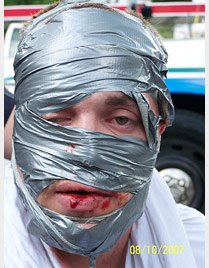
Me running around the house with duct tape, slathering reams of it on every window I could find.

I ran into Stacey’s basement bedroom and proceeded to tape her window. One of her friends was sleeping over, and got to see me in all my crazy glory.

“Get up, a hurricane is coming!” I bellowed. Stacey and her friend remained in the bed, not a care in the world.

“Come on, you idiots!” I yelled. “This aint no fucking Hurricane Gloria.”

Hurricane Gloria was a storm that hit Massachusetts in 1985. It was supposed to be a devastating event, but it passed over us with more of a whimper than a bang. Hurricane Bob was going to be much worse, the weather people were telling us.

They started comparing the expected storm surge with that of the Blizzard of 1978. Panic.

That storm turned out to be almost as anti-climactic as Gloria.

That Halloween, a much more devastating storm hit, and flooded out the neighborhood almost as badly as in 1978. Ours was one of the only houses not to get flooded.

Go figure.

Cooking With Dad

It was one of those rare occasions where all the Brenner siblings were in one room. We were at the hospital awaiting word on some emergency surgery my father was having. We started trading stories about some of Dad’s antics, especially his eating habits.

Mood music:

I’ve mentioned before how I inherited my binge eating addiction from family, and how a lot of it came from my father. I’ve also given examples of my own binges. Last night’s conversation was about some of Dad’s more colorful efforts to down massive quantities of junk.

The discussion started with my younger brother, Brian. He’s the professional chef in the family, and I’m always awed by his ability to not only explain how to cook something, but also how to tell you the history of certain dishes and how you harvest various things, like bananas. Shira, the youngest, started that line of talk because she’s done that one. She has traveled extensively, and has done all kinds of weird but awesome things.

From there, Brian said he had a lot of great memories of Dad and food. There was the freezer full of Hostess Snowballs (the pink ones), the frozen blueberry blintzes, the bags of chocolate-covered raisins. Stacey remembered the boxes of frozen pizza and I remembered the massive trays of stuffed cabbage, which my father could down in one sitting.

Brian never cared for the stuffed cabbage. Shira said it was good with ketchup. Brian then told us about the history of ketchup.

I often lament about how I inherited the eating problems from my parents. But the insidious behaviors have their amusing side. Last night was a time to celebrate that part.

The good news: The longer we discussed Dad’s eating habits, the more grossed out I became. My food program is pretty strict today. It has to be that way for my survival. No flour. No sugar. Everything I eat goes on the scale for portion control. And I control it with a 12-Step program, just like a drunk does AA.

When discussing Dad’s eating habits makes me feel sick instead of wanting to go binge, that’s progress.

Dad will never control his eating that way. He’s not the type. That’s partly why he’s in the dire straights he’s in.

But I’m not going to cuss about that. He’s a great guy, and last night we celebrated that.

A Recovery Under Pressure

The coming days and weeks are going to put my recovery program to the test like nothing I’ve experienced since getting the OCD under control and bringing my binge-eating addiction to heel.

That’s not a complaint, or a cry for sympathy. It’s simply the way it is. It’s life. By being honest with myself about what’s coming, I stand a better chance of holding it together.

Yesterday I visited my father, who’s been in the hospital since having a stroke two weeks ago. As is the case with stroke patients, recovery is a long road with a lot of ups and downs.

This past weekend he sounded more lucid than he had in a long time. That was an up. The ups fill you with a lot more hope than you should have when the best thing to do is take things one day at a time. Such hope makes it all the more devastating when a down day comes.

Yesterday was a down day.

He was seeing and talking about things that weren’t there. He kept telling us he wanted to go to the Beth Israel where he needed to be, not really buying the reality that he was already there.

He kept reaching out to us to hand us his keys. Of course, he had no keys.

He kept telling me to take a folder from his hand and put it on the table next to him. I pretended to take the folder that wasn’t really there. Then I was pissed with myself for playing along. But when I’d tell him the truth — that the things he saw weren’t really there, he grew agitated. The IV bags full of various liquids above him became hazardous chemicals in his mind, and he started pulling at the chords.

In that scenario, the only thing you can feel is helpless.

Physically he seems OK. The blood pressure is up and down, but his breathing and heart rate appear good. For him, the big crisis is in the brain.

I’m used to mental illness. I have a lot of personal experience there. But this is different. This is something that was sparked by a stroke, whereas my issues were the much more gradual result of disjointed brain chemistry and rough experiences growing up.

That’s my territory, and from that perspective I can give a person advice until hell freezes over. But the thing with my father is out of my league.

When something is out of my league, I feel out of control. When you have OCD, control is something you desperately crave, especially when the going gets tough.

I’m not feeling the urge to give in to my addictions, which is usually what this state of mind leads to.

But I know it’s coming.

That’s the test in front of me.

Now that I’ve acknowledged it, I feel more ready to keep it all together.

I have my tools: An OA sponsor, a network of friends and family, a food plan that’ll keep me out of trouble as long as I cling tight to it, and my faith. Whatever happens, Jesus has my back.

I just have to remember that.

I also have to remember that, as Mister Roger’s mother once told him, in times of trauma always look for the helpers, because they are always there.

At the same time, I need to be one of the helpers, because others will need that from me.

I’m still trying to figure out the best way to be a helper.

I figure God will lead me in the right direction.

When Things Don’t Go As Planned…

Saturday, things did not go as planned. It was the day of Sean’s Scout camp out, and the forecast was for fair skies a few days before. Naturally, it poured the whole time. But it was a lesson in making the best of a bad situation.

Mood music:

We had a great day despite the torrents of water falling down on us. Kids love getting wet and muddy — for a little while, at least. The scout leader cooked up a storm under the big tent using nothing but cast-iron pots and charcoal heated in the camp fire. That I considered it a good day shows just how much I’ve changed in recent years.

When all your awesome plans get washed out, it can be frustrating when your brain works the way it’s supposed to. But when the traffic in your skull doesn’t flow properly — which is usually the case when you have OCD — a day that suddenly changes shape will spark a serious case of crazy.

In my case, that means high anxiety, followed by multiple temper tantrums, followed by addictive behavior — binge eating in my case — and then a migraine with the urge to throw up. Not necessarily in that order, but usually in that order.

A flight gets delayed or canceled? Bad reaction. Car breaks down? Bad reaction. A carefully constructed schedule ripped apart by shifting winds? Catasrophic reaction.

But I’ve put a lot of effort into controlling the OCD behavior and changing my overall outlook on life.

Saturday I benefited from that. Instead of focusing on the bad things (the rain and mud, the cold) I was able to focus on the good stuff (watching the kids have a good time, sitting in my over-sized lounge chair under the big tent, drinking coffee and writing down a ton of ideas for future blog posts.

Despite the deluge we were able to keep the fire burning all day, and that fire was much appreciated for those of us who don’t like to be cold.

The gray and wet also couldn’t take away the spectacular view where we were, atop Seven Sisters Road in Haverhill, one of the highest elevations in the city. You could see the Merrimack River for miles around.

A few years ago, this kind of day would have sent my OCD into overdrive. I would have felt like a caged animal. The laughter from the kids would have sounded like gunshots, and I would have cowered from the rain as if it were falling lava laced with every deadly disease on Earth.

I would have panicked at the sight of any mosquitoes and, in the bigger picture, I would have sat there feeling every bit like a victim. In this case, a victim of nature.

Like I said, the fact that I could instead enjoy a day like that — even taking inspiration from it — was almost freaky.

Because of the ongoing rain, the Scout leaders decided to send Sean’s group home at 8 p.m. They know how kids get when they wake up drenched the next morning, and didn’t want their first big camp out to be a souring experience. I was a bit bummed out by this, and found myself surprised by that for all the reasons I mentioned above.

So we went home to our warm beds.

The next day, we paid for our day of fun. I opened my eyes Sunday morning to a headache that stuck with me for much of the day, and I was full of crankiness and snark.

I just wanted to stay under the covers, but life doesn’t work that way when you’re a responsible grown up.

It took me a long time to peel myself off the living room chair, and I was rude to pretty much everyone in church.

But as the day progressed, my mood improved. It always does.

It was good to be able to have a better attitude when things didn’t break my way. But next time, I’ll want my sunshine back.