The Best Laugh I’ve Had All Week

My office colleague John Gallant sent me a video that made the coffee shoot from my nose. “Vegan Death Metal Chef.” It’s good; even better than the Muppets performing Slayer songs.

Given the ups and downs of the last two weeks, I needed a good laugh, so thanks, John.

Here it is. All music and video is made by the Vegan Black Metal Chef (Brian Manowitz). Enjoy:

The ‘Woe Is Me’ Disease

Funny thing about us OCD-addict types: When the going gets tough, we blame it on someone else. Call it the Woe Is Me Disease, where the sufferer is an eternal victim, forever screwed by everyone but his or her self.

Mood music:

http://youtu.be/-q-MorIES5I

It used to be that it was impossible for me to see the problems as my own. It was always the result of something someone else did to me or failed to do for me. Eventually my disease settled into a pattern where I blamed myself for everything, to the point where I just kept beating myself instead of doing what was necessary to move on with life.

My Mom, who passed many of her OCD tendencies on to me, is a textbook example of victim-based OCD. This isn’t meant as an insult or criticism. It’s simply the way the problem manifests itself in her.

She lacks the ability to see things she doesn’t like as the simple way of life. Nothing is ever her fault. It’s always someone else’s fault. She is the perfect victim. In her own mind, anyway.

Seeing yourself as a victim every time the going gets tough is probably one of the worst things you can do. It holds you back, keeps you from improving yourself and makes you look pathetic in the eyes of people who don’t understand where the emotion comes from.

I’m reminded of this after getting a message the other day from an old friend who has been fighting his own battle with OCD. I won’t tell you who he is, but I’ll share what he wrote to me, because he is choosing to do something about his problem:

I recently finished my PHP for my OCD. It was a great program and glad my wife recommended that I enroll. So many things helped me change my way of thinking. One of the most important things I learned was to find ways to be proactive and a problem solver (where before I would be reactive and put my head in the sand).

Additionally, I realized that I suffer from “victim” type of thinking (such as this is not fair, I can’t handle this, etc…) and I need to think more like a “survivor” (I can handle this). I could go on and on about what I learned. I still plan on writing a “guest” column about my experience. I haven’t had much time to put my thoughts down on paper and it’s really important to me to do justice to describing my PHP experience.

I have a huge folder of handouts that I need to organize. I do know that just because I went through the program doesn’t mean I’m miraculously cured. From here I on out, I have many “tools” in my toolbox to handle whatever life throws at me.

I’m looking forward to that guest column.

He’s also right that people like us are never miraculously cured. We simply gather up a series of coping tools and pull them out when we need the help.

As a result, we stop being victims and become, as he put it, survivors.

Marital Differences in Style

I interrupt the usual theme of this blog for a little discussion on writing style and technique. To make things more interesting, my wife, Erin, is coming along for the ride.

Mood music (“You Know You’re Right Write” by Nirvana):

http://youtu.be/QhpdR-vgKVs

It’s appropriate that we do this now, because it’s been a year since I wrote about why writing is so important to my sanity and survival.

Now, Erin and I have our differences like every couple. One is about writing and editing. We’ve decided to do what any good couple should do to iron out differences. We’re going to talk it out. Or, in this case, write it out.

Call it a marital point-counterpoint.

We’ll do this in two parts — or four actually, since we’re each doing two posts apiece. Her take on writing and editing appears today in her blog, “The Writing Resource.” Follow the link I just gave you to see what she has to say, then read the rest of mine. Or vice versa.

The technician and the bull in a writing shop

We have enormous respect for each others’ writing and editing abilities. But on certain matters, we just don’t see eye to eye.

Example:

I’m looking over the draft of the blog post Erin has written for this project. I like what I see, except for one thing, which I share:

“My blog title is in all caps: THE OCD DIARIES,” I tell her in the calmest tone I can muster.

“You can’t be serious,” she responds in the tone she uses whenever I’ve done something stupid.

“Of course I’m serious, and you have to follow the style of the publication,” I tell her.

“I don’t think so,” she says. “I go by The Chicago Manual of Style.” Then, she sneers, “All caps. That’s so pretentious.”

I bristle. Not because she just called me pretentious, but because she’s throwing her style book around.

That’s probably the first difference: She’s deadly serious about following whatever style guide a particular project calls for. I toss the style books to the ground and stomp on them in self-righteous fury. I put dashes and hyphens wherever the hell I want them. I love the occasional all caps statement. I’m as loud in style as I am in the mood music I put at the top of almost every post.

Now, I know what you’re probably thinking by now: She’s the sensible one, the type of sensible editor the world needs to tame bull-in-a-china-shop writers like me.

Here’s a surprise for you: I agree.

I may have a looser, more rebellious style of writing, but Erin and I agree on the fundamentals. Let’s go deeper. The stuff in italics is what I blatantly ripped from Erin’s post. It’s her thoughts, followed by my responses.

1. Bam! You get an idea.

You’re a writer, and your job is to communicate something to your readers. Maybe you get an assignment, maybe you have a story you just have to tell. Either way, you have to have an idea. It swirls around your brain, demanding to be let out.

I approach this part differently between this blog and the writing I do in my day job for CSOonline.com. For the work stuff, my company has a special style guide we’re required to follow. It’s in the personal blog where I choose to throw style to the wind.

But the brainstorming process is about the same. I might be in the shower or driving to the office. An idea comes to me and I start to get revved up. I can’t contain myself and need to get to the computer. or, as Erin notes in her post, I’ll write ideas down on whatever is available (the inside of a package of cold medicine, in the case she mentions).

2. Brainstorm your idea.

So you have this idea. What are you going to do about it? That’s the next step: brainstorming, prewriting, gathering, call it what you will, it’s all about putting everything you know about your idea onto paper.

What do you have to say about your idea? Who will you say it to? What else do you need to know to say what you want? You’re starting to plan what you want to say and who you want to say it to. Check out Purdue University’s Online Writing Lab for more questions to help you define your audience and the scope of your idea.

For work, I know who my audience is: The information security professional, from the top-level execs to the hackers working away in their basements.

For THE OCD DIARIES, my audience doesn’t fit any one demographic. The common cause of my readers is that they, like me, live a life full of struggles, and they come to see what my take is on those struggles.

In the latter case, I don’t dwell on who I’m writing for. I guess that’s because I’m writing for myself in the end. People will relate, but the posts deal with all the things I’m experiencing and feeling.

I don’t have time to ponder who the audience will be. Priority one is to get what I’m feeling onto the page.

3. Research and develop your idea.

At this point you should have a fair idea of what you want to write about, what you know about it, and who your audience is. Now it’s time to build on your knowledge. What else do you need to know to grow that iceberg toward the surface?

For example, for this post I knew the steps I use for writing, but I wanted to know how other writers approached the process. I looked to other writers who write or talk about writing. I took lots of notes about the writing process as understood by others. Most of what I learned is still in my notes, building on the base of the iceberg I’m creating. Some of it will end up above the water, where you can see it shimmer in the sunlight, such as this thought from columnist John Clayton: “It’s better to over-research and write from abundance. Then you can leave out the less-interesting stuff.”

Even if everything you research doesn’t end up in the final product, what you learn will affect what you have to say.

I pretty much agree with this, especially that last point. You can’t write about something with any credibility if you don’t know what the hell you’re talking about.

When I write about information security, I do constant research and interview many, many security professionals.

But when I blog for CSOonline, the style calls for more attitude and opinion based on personal experience in covering the topic.

In that case, I just fire away. I tell people what I think about a particular security matter based on several years of covering the news and talking to the people in the trenches. In this blog,  the research is my life’s experience with OCD, addictions and all the drama that goes with it. I do some research along the way, and present much of what I find verbatim, naming the source and linking to it.

The rest of the time, I make it clear to people that I’m not a doctor. I’m just sharing personal experiences that are sure to be quite different from the next person’s experiences.

I call this the fire-away model.

Next week: Erin and I trade views on doing outlines, writings drafts, and doing rewrites.

Hospital Phobia

During visits to my father in the hospital, I find myself jittery and all-around uncomfortable. It’s not the sight of my father, who is starting the long road to recovery after a stroke. Sure, he’s looked better. But you could say that of anyone stuck in a hospital bed.

Mood music:

http://youtu.be/C6LCttYOO9Q

The discomfort, I’m starting to realize, has to do with the hospital itself.

He’s at one of the best hospitals in Boston, and the staff I’ve talked to are friendly and compassionate. He’s definitely in good hands.

But the sights and smells get to me. The machinery and the sounds they make unsettle me. I had forgotten these things.

It’s a phobia of sorts, the kind that always kept me from visiting my grandparents whenever they were in the hospital, which was a lot. I regret not visiting them as much as I should have, but there’s something about walking into those places that makes you take a hard stare at your own mortality.

I find it odd that I would have this problem, considering I was a frequent resident of Children’s Hospital as a kid.

I figure that should have desensitized me a long time ago. Yet here I am, confronting this reality.

I noticed my father had a swollen hand when I walked in his room. The sight would freak some people out, but I immediately knew what it was: The swelling you get when an IV needle has been in your vein for too long. It used to happen to me all the time. Could it be that it’s not really a phobia, but something even more unsettling — the discomfort of looking at the machines, beds and gray-beige walls and floors and feeling, in an odd sort of way, like I’m home?

Most of us feel the periodic pull of our old neighborhoods. We like to visit the places where we grew up. Even if we had a bad childhood, we feel the need to revisit the scene of the crime. I often do, and can never fully explain why. Maybe I should go visit my old floor at Children’s Hospital. Maybe it’ll break the spell.

Yeah, probably not.

Whatever is behind the uneasiness, I’m not staying away this time.

For one thing, I can’t let something so stupid keep me from doing the right thing.

Also, it’s what a good son should do.

A Letter to Addie, a Child Fighting OCD

This is an open letter to a girl named Addie. She is fighting OCD and the anxiety that goes with it, and her mom has been blogging about it. I suggest you read her blog. Meantime, I want to share some experiences with Addie…

Mood music:

Hi, Addie,

My name’s Bill, and I know a thing or two about what you are going through. It’s gonna be rough at times, but let me tell you why everything will be fine — better than fine.

Anxiety is a nasty thing to live with. I spent the better part of my 20s and early 30s hunkered down in my house because of it. I saw guys looking for a fight around every corner.

Whenever I had to get on a plane, I’d have visions of the plane going down in flames. If I had to make a stand or take a test in school or turn in a big project at work, my mind would spin violently with every negative thought one could have. I would fear for the worst, but never hold out hope for the best.

I worked myself into a stupor over the safety of my wife and children. I had an obsession with cleanliness, which was interesting since depression always meant my personal hygiene took a dive. I was terrified of world events.

Yet I got through each one of those moments.

One day I woke up and realized the fear and anxiety had to go. It took a long time, but through good therapy, medication and a deepening faith in God, those things did go away.

The first thing to remember is that you have a mom and dad who love you and will do anything for you. They will be your biggest allies. There will be others who will help you through it. Many, many others. Their support is much, much bigger than the things your anxiety has made you fear.

When my children were younger, they watched a show called “Veggie Tales.” One episode focused on a boy afraid of the boogie man. He learned a song called “God is Bigger Than the Boogie Man” and that made his fear much smaller. In time, it went away. God is bigger than anxiety, too. The fears you get from the anxiety are over things that aren’t real. The only thing that is real is the here and now, and what you do with it.

You ever watch Mister Roger’s Neighborhood on PBS? After the Sept. 11, 2001 terrorist attacks, he did a wonderful show about getting through bad times. He said:

When I was a boy and I would see scary things in the news, my mother would say, “Look for the helpers. You will always find people who are helping.” To this day, especially in times of disaster, I remember my mother’s words, and I am always comforted by realizing that there are still so many helpers–so many caring people in this world.

Mr. Rogers learned a powerful lesson from his mother. I wish I had it in my head to focus on the helpers growing up. In hindsight, they were always there:

–The doctors and nurses who saved me from brutal bouts of Crohn’s Disease.

–The therapists who guided me through a diagnosis of OCD and showed me how to manage it.

–My family, especially my wife, and also my father and even my mother. My relations with the latter are in mothballs right now, but I think she tried to do her best for me. The help Erin has been to me is way too big to be measured here.

–My friends, who have always helped me make sense of things, made me laugh and done all the other things a person needs to get through the day.

–Many of the people in my faith community, who showed me how to accept God’s Grace, even if I still suck at returning the favor.

So that’s one of the big lessons: Always look for the helpers. You will always find them.

The other piece of advice is to never, ever let yourself believe that you can’t live life to the fullest because you have OCD.

Have you ever heard of Winston Churchill? He was Prime Minister of Britain during the darkest days of World War II. He often suffered from depression — he called it his Black Dog — and yet he led his country to victory over evil. He had a saying that I think of every day when the going gets tough: “Some people see a calamity in every opportunity. Others see an opportunity in every calamity.”

Do you like music? I find that music — rock and roll, specifically — soothes my soul in times of difficulty and gives me the strength to press on. There’s a band called Def Leppard that has an inspiring story of success despite bad things that could have stopped them cold. The drummer, Rick Allen, had an arm ripped off in a car wreck. A lot of people thought his career was over. Twenty-six years later, he’s still drumming. The example applies to people like us. OCD can only defeat us if we let it.

I’m not about to let that happen. I’ll bet you feel the same way.

I have a final and important piece of advice for you:

Even if you get rid of your anxiety — and I know you will — you will still have plenty of OCD moments. I still check my laptop bag several times to make sure I didn’t forget my computer. I still go on a cleaning tear through my house if too many things are out of order.

That’s perfectly OK. As long as you learn to beat down the part where your mind spins with worry about things beyond your control, the other habits are fine. Since I’m open about my OCD, people don’t look at me funny when I have those “OCD moments.” They’ve learned to see beyond the habits and see me for who I am.

And sometimes, the OCD moment can be put to good use. If you have a big project, the OCD can push you to get it done and done right. It may seem strange, but if you learn to manage it, it can be very useful.

Some of our repetitive motions do look silly at times. Don’t worry about it. Learn to laugh at it instead.

Life is tough. But it’s supposed to be. It’s how we discover who we are and what we are capable of. I bet you are capable of a lot.

Take care of yourself, and keep the faith.

Yours truly,

Bill Brenner

crohns_disease_affected_area

A Boy’s Life on Prednisone: A Class Photo History

I’ve mentioned before that I had to take a lot of this nasty drug called Prednisone as a kid, and how the side effects were almost as bad as the Crohn’s Disease flare-ups the drug was meant to snuff out.

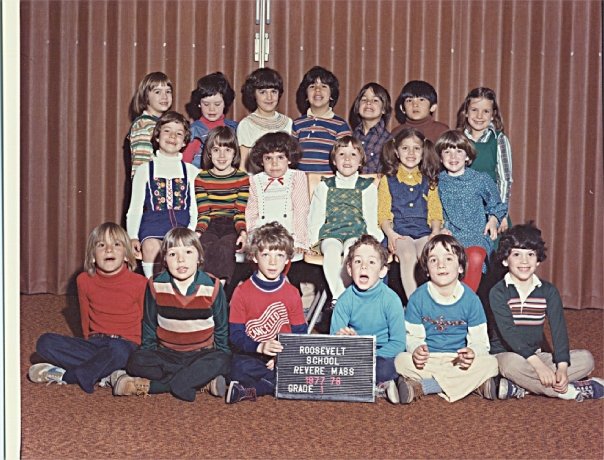
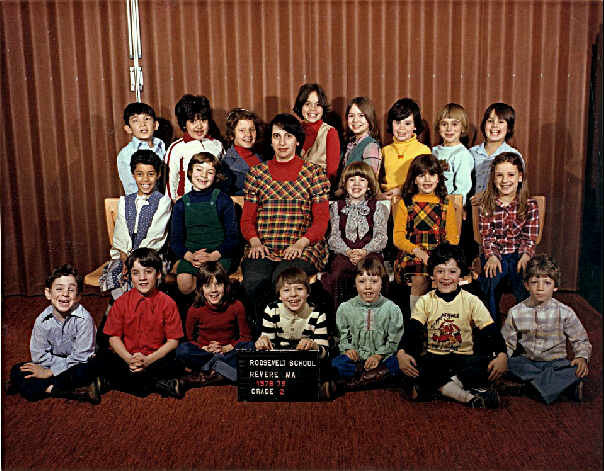
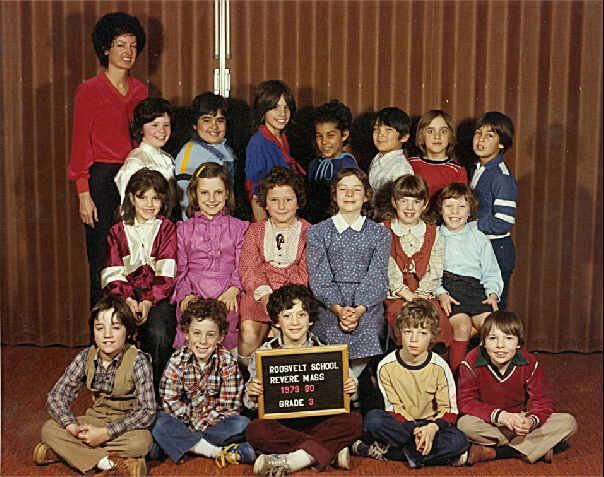
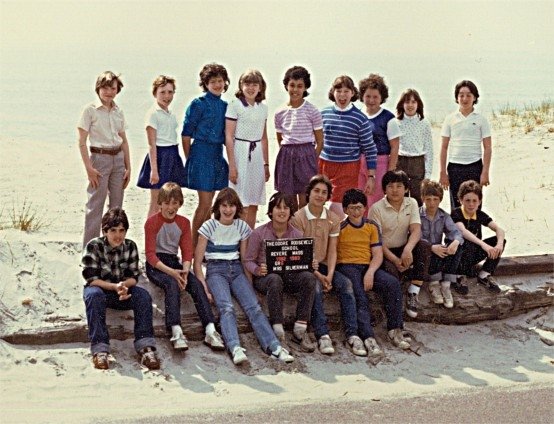
Well, my old elementary school friend Myles Lynch posted some class pics on Facebook that show the physical impact. Looking at them brings back memories good and bad.

Let’s start with first grade, before the disease surfaced. I’m dead-center in the back row, looking like a normal kid:

2200_1068435840811_6597_n

By the time the second-grade class photo is taken, I’ve been diagnosed with Crohn’s Disease and I’ve spent six weeks in the hospital. The results of the Prednisone on my face are pretty clear. I’m second from left in the back row:

648_1068081391950_656_n

By the time the third-grade pic is taken, I’ve been through my second flare-up and six-week hospital stay. I’m in the back row, two kids to the right of the teacher, Ms. Cole:

648_1068081831961_374_n

I’m not in the fourth-grade class picture, because as the photo is being taken, I’m in the middle of a third six-week hospital stay for another flare-up. The disease usually struck sometime between Halloween and Thanksgiving. This time, it waited until spring.

By sixth grade I’ve been off Prednisone for a while. You can see it in my face, front row, far left:

2200_1068435800810_6378_n

The other kids in these pictures have had their own challenges and joys in life. I’ve kept in touch with some of them. But here’s the important thing: Back then, when we were a small, close-knit community, before the puberty-driven bullying of middle school, these kids did all they could to make me feel better. When I was in the hospital they would send hand-made get-well cards. When I’d get out of the hospital, they would give me a warm, cheerful welcome back.

Those acts of kindness are something I will never forget.

The pictures also remind me a lot of what life was like in the hospital. Those hospital wards were like little communities, where the young patients would try to find ways to pass the time. We shared each other’s toys and watched the same TV shows. I always seemed to be the only Crohn’s patient on a floor full of kids with Cystic Fibrosis. Treatment for that disease was nothing like it is today, and many of the friends I made in the hospital died before they got to adulthood.

I lost a lot of blood back then, because I had a colon full of holes. But compared to my lost friends, I got off lucky.

I owe that to God and all the helpers he put in my path.

Whenever I’m having a bad day and I start to get cranky and impatient with people, I try to think back to those days. Doing so makes me remember how blessed I am, and how I should stop wasting time on hard feelings and earn that blessing by spending my life as one of those helpers.

I’ve been walking past Children’s Hospital these days on the way into the neighboring hospital my father has been in since suffering a stroke last week, and the memories come flooding back of the time when I was a frequent resident there. And seeing my father, with his eye patch and slackened mouth, makes me remember the things he used to do to keep me going.

During one stay, I was obsessed with getting a talking View-Master, where you put in these paper disks and look through a view lens at the scenes that blow up larger than life on a screen inside the gadget. The taking variety was all the rage in 1979, and I bellowed about it like the spoiled brat I was. You get very spoiled and miserable to be around when everyone is tending to your every need.

My father got me the talking View-Master, and bought me a new Star Wars action figure each week, followed by a trip to Friendly’s for ice cream on those occasions where I was allowed to have it.

The more emotional variety of affection was something he always struggled with, though in his way, he was doing all he could to show his love.

Amazing, the things that come back to you after looking at a few childhood pictures.

I’m Getting Too Old For This, But It’s Worth it

Erin and I drove 90 minutes north yesterday to see The Avett Brothers perform in Portland, Maine. By the end of the night, we realized we just don’t have the concert-going energy we had in our early 20s.

Mood music:

http://youtu.be/2L6XJOjCaAE

The band didn’t begin until 9, and we were surrounded by people in their 20s and early 30s. The smell of pot hung in the air, giving us headaches. It used to be the smell didn’t bother me, especially when I was using the stuff. But then I stopped smoking it in the early 1990s.

The Avett Brothers is a folk rock act, one of those middle-of-the-road sounds both of us like (Erin likes mostly folk and bluegrass, while I’m a metal head.) I used to go to metal concerts all the time, seeing Metallica five times in 1988-89 alone. I’d get home at 3 in the morning, then be up and at ’em by 6 a.m. as if nothing was out of the ordinary. Back then, I guess that was normal for a 20-year-old.

Now, getting by on three hours of sleep destroys me. But there’s no sleeping in when there’s a job to do and two kids to get off to school. I’ll pay for this for days. But it was worth it. I’d also do it again.

But now that I’m in this 40-year-old body, maybe I’ll take a long afternoon nap beforehand.

Some people look at getting older with dread. Not me. After my childhood illness and the craziness of my young adulthood, it’s a blessing that I’m here at all. So even when my knees ache and my back is about to collapse, I still feel every inch of the good life.

Erin doesn’t seem to mind getting older, either. Aches and pains aside, she remains healthy, knock on wood.

As we watched the young pups party it up last night, we both chuckled, because we were in the seats section with other older folks, and we weren’t bothered by that one bit.

Despite being tired and not as full of pep as we used to be, we still showed up for the concert and drove 90 minutes to boot.

Since the goal for someone like me, with a history of depression and addictive behavior, is to show up for life, it’s hard to see it as anything other than a victory.

We came. We enjoyed. We went home.

We may need a couple bottles of ibuprofen and a bath tub full of caffeine to reach the finish line, but we have plenty of that stuff lying around. That’s how we roll.

We just roll a little more slowly than we used to.

The Perfect Gift For The OCD Chef In Your Life

Though OCD is no laughing matter for the sufferer, I personally like a good gag that pokes fun at my disorder. If you can’t laugh at the problem, you’re going to have a much tougher time getting a handle on things.

But it has to be a gag that’s cleverly done.

My friend Andrea Holbrook found just the thing for the OCD case in your life who likes to cook, on the Perpetual Kid website:

THE OCD CHEFI don’t like cooking all that much, but maybe I’d do the meal prep some more if I had one of these.

The Perpetual Kid site also sells one of my prized possessions, the OCD hand sanitizer:

Got any more OCD gag gifts? Send them my way and I’ll post ’em here.

Soundtrack For The Pissed Off

As I mentioned in an earlier post, I’m in an uneasy state. Fortunately for me, music is the perfect coping drug. Since my uneasiness is mixed with a feeling of being pissed off, I’m turning to my prescription of heavier, louder fare:

http://youtu.be/Yxa3li_Zjgk

http://youtu.be/TP06kxW_M3I

This stuff won’t send me to a happy, shiny place, but it will keep me from punching someone in the face.

For now, that’s all I need.

Morning After The Twisters

This is one of those mornings where I wake up uneasy. Several tornadoes tore through our state yesterday, but that’s not it.

Mood music:

I used to panic at the sight of a yellow-green sky, because that’s usually a sign of imminent tornadoes and hurricanes. But as I looked out the window, all I could muster was a “meh.” I guess that’s progress.

But then I had other things on my mind.

Yesterday I visited my father in the hospital, where he’s been since Sunday night. He suffered a stroke, and looked like it. His mind was clear, but one eye was covered with gauze and the other was drifting off to the side.

I left the hospital to go back to work and drove right into an hour-long traffic jam. It turns out the Red Sox were playing. When that happens, the area around Fenway Park becomes a sea of humanity and a graveyard for drivers trying to get from points A to B.

On the plus side, I didn’t erupt into a white-hot temper tantrum like I used to when getting stuck in traffic. I wasn’t happy. The F-word escaped my mouth a half dozen times, but I didn’t beat on the steering wheel and scream like I used to. More progress.

Still, it left me in a bad mood for the rest of the day. My mood sunk even further when I learned that Dad has some breathing difficulties AFTER I left.

I’m still in a bad mood, but at the same time I have hope. This stuff always works itself out, because God sends us helpers.

I mentioned this in a recent post about Mister Rogers:

Mr. Rogers learned a powerful lesson from his mother. I wish I had it in my head to focus on the helpers growing up. In hindsight, they were always there:

–The doctors and nurses who saved me from brutal bouts of Crohn’s Disease.

–The therapists who guided me through a diagnosis of OCD and showed me how to manage it.

–My family, especially my wife, and also my father and even my mother. My relations with the latter are in mothballs right now, but I think she tried to do her best for me. The help Erin has been to me is way too big to be measured here.

–My friends, who have always helped me make sense of things, made me laugh and done all the other things a person needs to get through the day.

–Many of the people in my faith community, who showed me how to accept God’s Grace, even if I still suck at returning the favor.

Fast-forward to the present. I’m uneasy, but I know that in the end, somehow, things will be alright.

My prayers are with those in the state that lost property and people in the tornadoes.

My prayers are obviously with my father.

The helpers are always around us, and they will help us through it all.