Let Gays Join the Boy Scouts

As the father of two Boy Scouts, I’ve been following this one with great interest: A movement is afoot to pressure the Boy Scouts of America into abandoning its anti-gay policy. I say it’s time to drop this stupid ban.

Mood music:

[spotify:track:7iWYgEFFarAhSroaWK6oKA]

In this discussion I see a lot of the same comments:

  • Having gays sharing tents with straight kids would have a damaging effect on both parties.
  • Gay kids lack the moral fiber to be good Scouts.
  • Gays would erode moral.

We’ve seen these same arguments made in recent decades over gays in the military. In 2013, gays are serving in the military, and doing so with distinction. The bunking arrangements have been worked out, and ours remains one of the finest fighting forces on Earth. The things that worked for the military could be applied to the Scouts.

For me, though, the reason to let gays in is much bigger than those issues.

Being Scouts has made a huge difference for my sons. They’re learning survival skills that will carry them through life; skills that would have served me well in my younger years had I not been so stubbornly opposed to joining. They’re learning how to be law-abiding citizens who contribute to society.

As Scouts, Duncan and Sean have gotten to see the inner workings of their local police and fire departments and had a taste of of our region’s special place in history with trips to the Charlestown Naval Yard and Battleship Cove, where they spent a night camping in the bunks aboard the USS Massachusetts.

These experiences should be open to all kids, gay or straight.

My opinion is also influenced by the fact that I have several family members who are gay. They work their asses off, pay their taxes and work jobs that have benefited the greater good. They have been there for family. Their only crime, according to some seriously outdated thinking, is that their hormones and sexual orientation developed differently than those of the rest of us. Some people still foolishly believe that a person wakes up one morning and decides this is going to be their lifestyle choice. They’re forced to conceal their true nature to fit in with society, and the results are often damaging. People I love have been driven to severe depression, substance abuse and worse because they weren’t allowed to be true to themselves.

My attitude: An organization like the Boy Scouts is there to help people build moral and mental character. That opportunity should be open to everyone.

If such an organization can help us become better citizens, why on Earth would be want to exclude anyone?

I say all this as a Catholic who prays to God every day and who didn’t have to be gay to fall into a life of sin. I fight my demons daily and get my strength from my faith. Some think that’s strange. But then some think being gay is strange. I know many of my faith won’t share my position here. Some may even unfriend me on Facebook over it. So be it.

Homosexuals are not going anywhere. They’ve been part of humanity since the dawn of time. It’s time we started giving them a fair shake.

I hear the Scouts have considered leaving the question of gay membership up to local councils and the institutions that host packs and troops. That’s as unworkable as “Don’t Ask, Don’t Tell” was in the military. It’s also cowardly.

We’re more than a decade into the 21st Century. Let’s start acting like it.

Drop the ban nation-wide.

boy scouts

Chris Christie’s Obesity Isn’t the Issue

This morning I caught MSNBC’s Morning Joe, which was looking at N.J. governor Chris Christie’s obesity and whether it makes him unqualified to be president someday.

Mood music:

[spotify:track:7j0eQhCrpbOwucAolLJ0t8]

I’ve struggled with obesity in the past. Some of the struggle was the result of being on Prednisone, which stretched my appetite to horrific levels. I would work out to try to control the weight gain, but it wouldn’t last long. I have friends who are far more disciplined with their workout regimens than I could ever be. They tend to hold the belief that there are few legitimate excuses for being fat, that most of the typically given reasons are the talk of lazy people who need to grow a set of balls.

Most of my struggle, though, was because I was a binge eater who lusted after junk food as an alcoholic does vodka and whiskey. Eventually I had to quit flour and sugar to deal with the problem.

My personal experience makes me prickly toward those who criticize someone’s weight problem. I don’t see the subject as black and white. In my own case, there have been periods where my weight ballooned because I was simply stuffing myself with junk all the time. But there have been other times when the complications of Crohn’s Disease, a bad back and other maladies forced me to derail my fitness program.

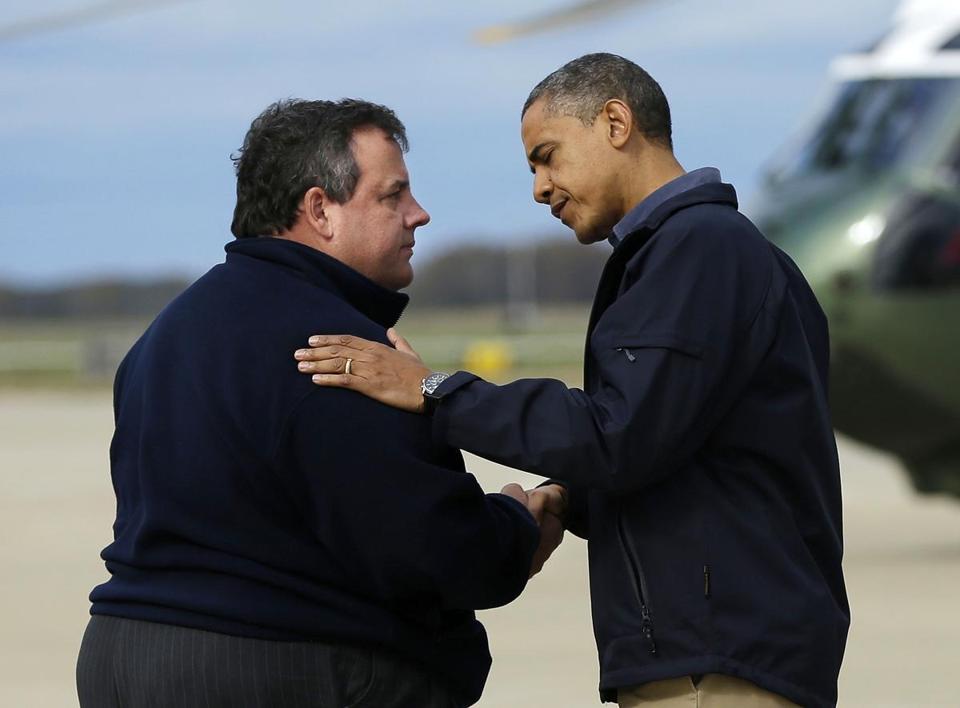
Let’s look at the governor for a moment: That he’s obese is not debatable. Pictures of him standing next to a fit President Obama in the aftermath of Superstorm Sandy are almost freakish looking, though when you put a fat person next to a thin one, the watcher’s perception is knocked off balance. Do I think he’d live longer if he lost weight? Sure.

But I don’t believe for a second that people should judge a candidate on his or her girth.

Being overweight comes with health risks, but so does being underweight. The diseased and incapacitated come in all shapes and sizes, as do the more sturdy among us. The dumbest and smartest among us are fat, thin and in-between.

We’ve had presidents who were obese. William Howard Taft and Grover Cleveland come to mind. History has handed both men a mixed assessment. We’ve had physically fit presidents with mixed records, too. George W. Bush was and still is a fitness fanatic. JFK looked glamorous and healthy, but he was sick most of his life and landed on death’s doorstep more than once before he was president. Addison’s disease gave his skin an odd, bronze color that he managed to pass off as a healthy tan. Then there was Teddy Roosevelt, who was both an athlete and advocate of “the strenuous life” but was also a glutton with some serious girth. Despite his health problems, including the weight and serious childhood asthma, he managed to do pretty much everything and carved a lasting legacy.

The point is that a person’s physical appearance and imperfect health should not disqualify them from anything, including public service.

I admire and am inspired by friends who have lost weight after embracing intense workout regimens. They also happen to have razor-sharp minds. But I don’t know if I’d vote for them if they ran for the White House.

I’ve accomplished much during periods of obesity and have failed during times of top physical form, when I would walk four miles a day no matter how dangerous the weather was at the time. I’ve also had successes as a thinner guy and failures as a fat guy.

We tend to oversimplify things when the talk turns to weight. We do so at our peril.

Christie

To My New Nephew

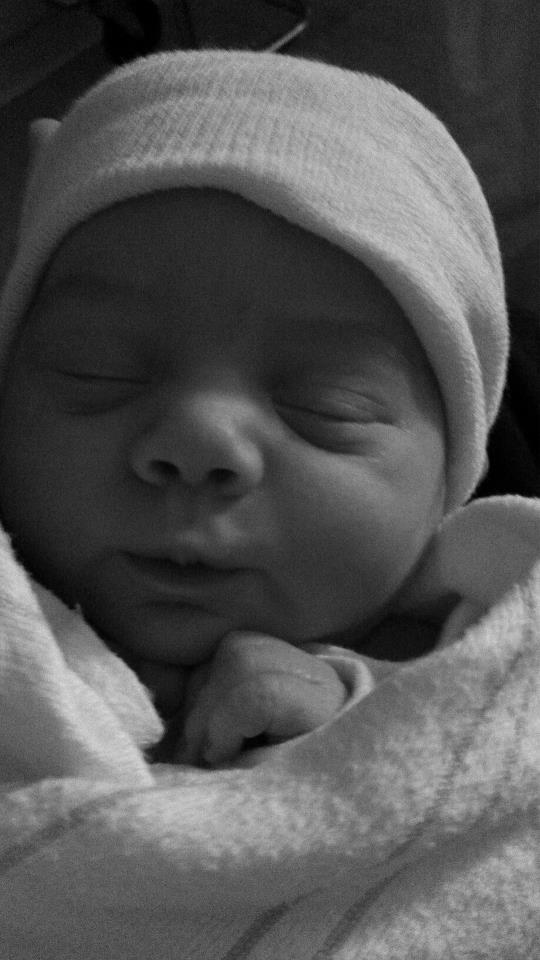
The family has been blessed with a new addition: Hunter Wild Anderson, born Saturday to my step-brother Brian and sister-in-law Sharane.

Mood music:

[spotify:track:7q36HE7sjosbeD8AHoOjRL]

Hi, Hunter.

I’m you’re Uncle Bill, the one who’s going to show affection by teasing you a lot. I’ll do my best not to go too far. I listen to really loud, offensive music. I can’t wait to expose you to that.

Your cousins have been eagerly awaiting your arrival. Sean and Duncan, Lilly and Chase are going to love having you around. It won’t be long before you join them, racing around your grandparents’ condo, making forts out of the couch pillows and getting food on the floor.

You’re blessed with easygoing parents. Your mom knows how to laugh and make others laugh. Your dad has been through more than his fair share of adversity but has managed to stay positive and keep his humor. Together, your parents are a lot of fun. They’ll surely pass those traits on to you, and thank God for that.

Life is hard, and humor is one of the most important survival tools you can have. Your dad is also a professional chef. This makes you incredibly lucky, because high-end cooks are hard to come by in this family. You’ll figure that out the first time I cook something for you.

You have grandparents who will dote on you and love you unconditionally. You also have some fabulous aunts, uncles and cousins. Aunt Shira is one of the most serene and talented people I know. She’ll teach you how to dance and, when you’re being difficult as we all can be, she’ll respond with endless patience. Aunt Stacey, Uncle Sean and Lilly and Chase are very loving, generous souls, and that’s going to rub off on you, too. Aunt Wendi will give you a special appreciation for music and, along with Aunt Dee, will pass on a love of animals. Their house has enough dogs and cats to fill Noah’s Arc. You’ll enjoy that.

Life won’t be easy. You’ll go through plenty of ups and downs. But let me share a little secret with you: The key to getting through the down periods with your overall happiness intact is to simply recognize that life is supposed to be hard. It’s what helps us grow. And there’s no such thing as never having a care in the world. Some folks still reach for that state of mind, and they’re almost always crushed when reality fails to meet their expectations.

If you want, I can help you navigate through that stuff. I’ve developed some coping skills along the way. You’re going to screw up. Don’t worry about it. We all do. Screwing up makes us stronger when we’re willing to learn from our mistakes.

One more thing, my young friend: If you ever want to do something big in life and those around you tell you it can’t be done, ignore them. You can accomplish anything if you put your mind to it. That’s a cliché of a statement, but it’s the truth.

As I write this you’re only a couple days old. Sean, Duncan, Aunt Erin and I can’t wait to meet you.

You’re going to be great, kid. Welcome home.

—Uncle Bill
Hunter Wild Anderson

My Current State of Mind

Please indulge me as I share my current state of mind with you. Oh, yes, I have all kinds of things floating around in this brain of mine this morning.

Mood music:

[spotify:track:0dzqA1tqLjh0jpakWZb505]

  • I’ve often been asked if the anti-depressants I take have any unpleasant side effects. Not really, but I’ve discovered the hard way that if you don’t chase the pills down with enough liquid and they get stuck in your throat, the result is the worst heartburn you’ll ever experience.
  • Today’s my mother’s birthday, and while we haven’t talked in a long time, I’d like to wish her a happy birthday. Happy birthday, Ma.
  • I loved winter and cold weather as a kid. As I get older, I appreciate the freezing temperatures less and less. March 21 can’t come fast enough, though around here, the cold will last well beyond that. As it stands, I’m having quite a fist-fight with Winter Bill, and I’m getting sore and bloody. All the same, I expect to finish winter still standing.
  • I’m getting increasingly addicted to playing guitar, and I’m not the least bit sorry for it. Truth be told, there are days when guitar practice is the only think keeping me sane. Last night I learned the fine art of hammer ons and pull offs and the intro to Van Halen’s “Ain’t Talkin’ ‘Bout Love.” My head is still spinning. But it beats the hell out of drinking, binge eating and OCD overdrive.

Overall, I’d say I’m doing fine this Friday. Off to face the busy day.

Big Cup of Coffee

My Crohn’s Disease Is Doing Push-Ups

Recovering addicts have a saying: “My disease is doing push-ups in the parking lot.” The meaning is that you can be years into sobriety, but you’re never cured. The disease is ready to beat you down as soon as your guard slips.

I’ve learned that Crohn’s Disease does the same thing.

Mood music:

[spotify:track:6nDqFWB9MtQ9rTjmm3gDAD]

As violent and damaging as my childhood Crohn’s Disease was, I haven’t had a full-blown attack since 1986. It would be easy to grow complacent and consider myself cured, but the disease sends me the occasional sign that it’s still there.

From the Resources section: Websites for dealing with Crohn’s Disease

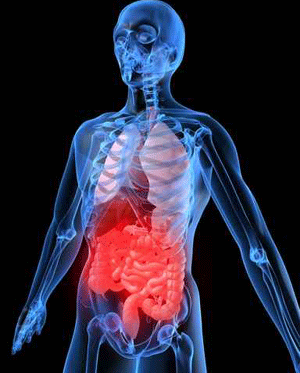
What would otherwise be a minor stomach bug turns into full-blown inflammation. Not an attack with the blood, aching joints and an abdomen that feels like it’s on fire, but one that leaves me feeling bloated and off-balance, dogged by a dull soreness in the middle and sudden urges to make a bathroom run. I’m not sure urges is the best word, either. It’s a rushing discomfort that comes on suddenly.

I started feeling it yesterday, and it helped ensure a lousy night’s sleep.

I’ve been asked if I fear another full-blown attack like those that left me hospitalized and jacked up on Prednisone as a kid. I’m not.

I know I’m not cured, so I expect that one of these days, another attack will materialize. I’d rather it didn’t, of course. But I’ve developed a stoic attitude about it. If it comes, I’ll deal with it. I’ll accept the treatment and do what I must to shut it down, even if it means taking Prednisone — a drug I still blame for unleashing the chemical imbalance in my brain that has led to OCD, bouts of depression and a history of binge eating. I figure the drug can’t do much more to me on that score, though it would certainly give me a temporary bad attitude.

In a way, the little bouts of inflammation like the one I have now are a gift. They keep me aware of the disease that lives inside of me and what it can really do to me.

And they remind me to take care.

Inflamed Intestines

My Score on the Yale-Brown Obsessive Compulsive Scale

The Yale-Brown Obsessive Compulsive Scale (Y-BOCS) is yet another of those quick self-tests to see if you have OCD.

While I’m not medically trained, I do have OCD, so I see myself as a good subject for these types of tests. If the test matches my diagnosis, maybe it can shed some light on what’s going on in your head, too.

Mood music:

[spotify:track:4PSnQLK4uSmFfuZYEcXNUp]

The scale rates the magnitude of symptoms in OCD patients based on a series of multiple-choice questions. Half the questions focus on obsessions and the other half on compulsions. Here’s how the site defines the two:

Obsessions are unwelcome and distressing ideas, thoughts, images or impulses that repeatedly enter your mind. They may seem to occur against your will. They may be repugnant to you, you may are often senseless, and they may not fit your personality. For example, the recurrent thought or impulse to do harm to your children, even though you never would.

Compulsions are behaviors or acts that you feel driven to perform, even though you may recognize them as senseless or excessive. At times, you may try to resist doing them, but this may prove difficult. You may experience anxiety that does not diminish until the behavior is completed.

From personal experience, I’d say those are accurate descriptions.

Here are some of the questions:

  • How much do your obsessive thoughts interfere with functioning in your social, work, or other roles?
  • How much distress do your obsessive thoughts cause you?
  • How anxious would you become if you were prevented from performing your complusive behaviors?
  • How much control do you have over the compulsions?

The higher you score, the more of a basket case you are. I scored 17 out of a possible 40. The number was lower than I expected, but it makes sense. At just below 20, I’m less than half of a full basket case.

Were the questions valid? I’d say so. The test is set up to measure the degree in which obsessive or compulsive behavior has control over the person. It gives you a good sense of whether you have mild OCD, which I define as OCD the sufferer is able to manage and even make use of, or the severe variety that destroys your ability to get through the normal challenges of a day.

On the surface, my score tells me that the OCD is there, but I’ve learned to control it and keep the symptoms to a manageable level. I say on the surface because I answered the questions as honestly as I could, but I realize that some of my answers could be off. I took it during a moment of calm. Had I taken it in a more agitated or depressed state, the score probably would have been higher. Overall, though, I found it to be a handy measuring stick, better than some of the others I’ve taken.

So what should you do if you got a high score? As the site’s disclaimer notes, the people behind the site are not medical professionals and your score is not a medical diagnosis. But if you’ve been wondering if you have OCD and your score on this test makes you wonder all the more, a good next step is talking to a medical professional about your concerns. Start with your primary care physician or a licensed counselor.

You can also check out more online resources for OCD on our Help for Obsessive-Compulsive Disorder page.

Living with Obsessive-Compulisve Disorder

When We Can’t Hibernate, We Become Bears

Erin recently noted that things tend to get ridiculously busy in January, during a period of winter when our bodies scream at us to slow down. On the work side we both have several big projects coming due. At school and in the Scouts, the kids’ schedules are crammed with one activity after the next.

Mood music:

[spotify:track:4n89Z82pA4kJYmctUeyCbt]

In winter, we’re not all that different from animals that hibernate. It’s hard to get out of bed when it’s frigid and dark outside. Because we humans must get up and get moving anyway, it causes us to get easily depressed, which leads to eating too much or too little. We tend to be more forgetful and we snap at each other more easily.

When you’re already given to depression, mental disorders like OCD and ADHD, and unbalanced eating, all that you suffer from gets amplified. Instead of mild depression, there’s deep depression. Things that aren’t really a big deal become huge calamities. Our responses to normal everyday pressures become exaggerated. Spouses tend to argue more. Kids tend to have more outbursts.

A friend who teaches kindergarten noted one day last week that three kids were put in timeouts and two others got sick, all at once. I chuckled, because I remember the same stuff happening when Sean and Duncan were kindergartners. Kids are simply brutal in the dead of winter. Why? Because the academics and special activities ramp up when their little brains are least able to take it.

We seem to experience similar behavior in the summer, but the difference is that activities slow down that time of year. Spring and fall are when we’re most productive and agreeable.

I don’t have any solutions to the problem. I don’t even know if what I and others have observed has any scientific research to back it up. But I do have a suggestion.

If those you work with and live with seem like jerks lately and you want to bite their heads off, take a breath and note that you’re just as bad. Then engage in small acts of kindness. Hold the doors open for people. Remember to say good morning. Smile even if you don’t feel like it.

When we do these things any time of year, we become better people. In winter, it may well be the key to our survival.

Roaring Bear

Cancer’s Silver Lining

These days it’s sobering for me to think of all the cancer patients I know personally. I’ve written about my aunt and one of my hometown friends. I’ve known others, as well. I’ve never had cancer, but it’s become a source of anxiety in my life.

 Mood music:

[spotify:track:2ql32BJPN3hnyboml4JfER]

Along with knowing many who battle it, I’m at a higher risk of developing colon cancer one of these days, thanks to nearly a lifetime of Crohn’s Disease. I have to get a colonoscopy every couple of years to keep an eye on things, which gives me confidence that if it ever arrives, we’ll catch it early. But it’s given me a somewhat fatalistic outlook: I assume it’s coming eventually.

NPR recommends asking these two questions of your doctor before having your colonoscopy.

That said, I’ve seen a silver lining around this disease. Simply put, it tends to bring out the best in those who suffer from it.

I never hear the people I know with cancer grousing about it. There’s no “woe is me” going on. No bitterness. Just gratitude. They seem to appreciate what they have a lot more and spread that gratefulness around. I have no doubt they still experience plenty of anxiety and awful feelings out of public view. But that’s what makes their public face so inspiring. They can still show us how to be strong, even though they are exhausted and in a hundred kinds of pain.

I’m thinking about this because my Haverhill friend announced on Facebook that she’s decided to get hospice care. Renee Pelletier Costa often posts her messages from bed, because all the chemo and radiation saps her energy. But everything she posts is about how lucky she is and how much support and love she has.

Her battle is getting tougher, and she has decided on hospice care not because she sees the end in sight, but because the services offered will allow her to cast aside the chemo treatments and focus on healthier daily living. She wants to be able to do more for her family and get more quality from the time she spends with them, and this is how she can do that.

“I have no plans of dying anytime soon,” she wrote on Facebook. “Only God knows.”

Indeed, it’s not about dying. It’s about living. It’s more useful to focus on the latter, because when you get down to it, none of us really knows how much time we have.

Thanks for the lesson, Renee.

Related links:

A Tale Of Two C-Words

Beyond Boing Boing: Xeni Jardin Inspires Me

I Don’t Care About Your Bra Color, Where You Put Your Purse Or Where You’re Going for 15 Months

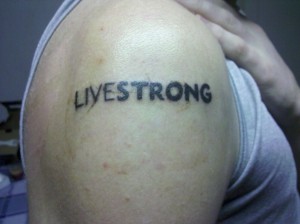
Livestrong Tatoo

Lessons From the Hemingway Curse

I’ve always been drawn to Ernest Hemingway and his family, not because of his writings or his antics, but because of the deep stain mental illness has left on the Hemingway legacy.

Mood music:

[spotify:track:3dqpehdO04w6T38WB97sOF]

I remember an English teacher talking about Hemingway’s 1961 suicide. The teacher suggested Hemingway was an asshole, that he was too macho to accept that he was getting too old to seek out adventure and thus gave up. I accepted that answer for a long time, and when my best friend killed himself in 1996 the Hemingway perception colored how I dealt with my own loss.

Hemingway was an asshole for doing what he did, the teacher had suggested. Therefore, my friend was an asshole for doing what he did.

It’s too bad I saw it that way. If I knew the truth about mental illness back then, I would have had a healthier outlook on what had happened in my life. I still would have grieved, of course. But maybe I wouldn’t have been so haunted for so long. I’m not bitter about that. I ultimately learned my lessons and was able to make peace with the past. But my awareness has drawn me to other suicide cases, including those of the Hemingways.

Besides the famous author, actress Margaux Hemingway ended her life in 1996, the same year as my friend. All told, seven members of Ernest’s family have died by taking their own lives, according to CNN.

It makes sense. Depression runs in families and so can the coping tools for dealing with that depression.

Looking for resources to manage your depression? Check out our Coping with Depression, Fear and Anxiety page.

The CNN story mainly discusses the so-called Hemingway curse and how actress Mariel Hemingway, sister of Margaux and granddaughter of Ernest, has dealt with it. From the article:

Every family, even famous ones, have secrets. The Hemingways are no different. “We were, sort of, the other American family that had this horrible curse,” says Mariel Hemingway. She compared her family to the Kennedys — but the Hemingway curse, she said, is mental illness. Hemingway explores the troubled history of her family in “Running from Crazy,” a documentary that premiered at the Sundance Film Festival. “Knowing that there’s so much suicide and so much mental illness in my family, I’ve always kind of been ‘running from crazy,’ worried that one day I’d wake up and be in the same position,” Mariel Hemingway, 51, said at a support group for families of suicide, as shown in the film.

Making the film must have been a liberating experience for her. By pulling all those family skeletons from the closet, she’s freed herself from some of the haunting and educated a lot of people in the process. That’s always been one of my main motivations in doing this blog.

If blogs like mine and documentaries like hers can bring a few people some peace of mind and detonate the stigmas around mental illness, it will have been worth it.

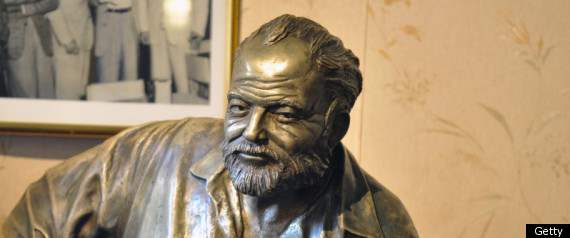
Ernest Hemingway

Bullet-proof Backpacks, Whiteboards: Logical Or Lunacy?

After what happened at Sandy Hook Elementary School, would you buy your child a bullet-proof backpack? If you’re a teacher, would you want to have a bullet-proof whiteboard? A couple companies think so.

Mood music:

[spotify:track:76dynyoXf52MiEsr3Pi06e]

A friend who happens to be a teacher brought these to my attention yesterday, and my first reaction was to balk and say, “Here we go again with businesses trying to cash in on our fear.” After a few hours of research, I’m not balking anymore. In fact, I’m still not sure what to think.

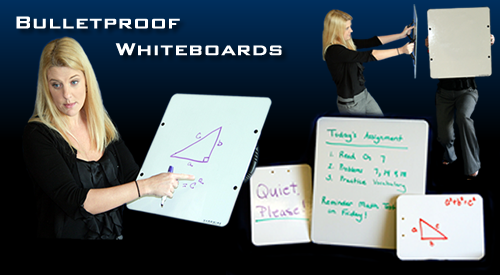
The whiteboard idea comes from Maryland’s Pocomoke City-based Hardwire. It developed a hand-held whiteboard teachers could use as a shield if necessary. The company says the shield can stop bullets fired from a handgun at pointblank range. The backpacks are sold by a number of companies, and sales have gone through the roof since Dec. 14, the day of the Sandy Hook massacre.

What to make of it? On the surface it makes perfect sense. Our children live in a seemingly more dangerous world than the one we grew up in. I used to walk to and from school and hang out under the bridge without much fear for my safety other than the occasional threat from bullies. We can’t let our kids do that today. When I drop my kids at school, I don’t drive away until I’ve watched both enter the school.

With all these school shootings, it’s hard to even feel safe when they get in the building.

But my attitude has also changed in recent years in that I don’t think we should overprotect our kids. As scary as the thought may be, they need a taste of the tough stuff so they can grow tougher themselves.

My attitude is also influenced by my past suffering with fear and anxiety. A decade ago I would have obsessed about acquiring extra shielding for my children. I probably would have spent money we didn’t have to get it. Since bringing that fear to heel, I’ve been steadfast in my belief that you have to face what scares you in the eyes and make it blink.

Believing that as I do, my natural instinct is to dismiss these bullet-proof products as a waste. It’s just more security theater, where you may feel safer but you’re not. If a gunman enters a school with an assault rifle, the backpacks will be hanging on hooks out of the kids’ reach, which wouldn’t do any good. And in the confusing first moments of gunfire, will a teacher be quick enough to pull the whiteboard off the wall?

Part of me says life is too short to waste time on such calculations.

But the part of me that writes about security for a living thinks these defenses might just make the difference for a few people in that moment of danger.

I try to end these posts with a proposed way forward. In this case, since I admittedly don’t have answers to propose, I’d like to open the floor for discussion.

In the comments section, tell me if you would buy these things for your classroom and your kids.

whiteboard