From Beyonce To The Tragic Manipulation Of Milli Vanilli

Revelations that Beyonce Knowles lip-synched “The Star Spangled Banner” at the inauguration this week remind me of how shallow people can be. Shallow in their expectations of others. Shallow in their need to rip others apart instead of putting themselves back together.

Mood music:

[spotify:track:4xP6YtLiFJpRUrKwqDPXka]

I’ve always found it silly how people explode when a performer is caught lip-synching. We have this idealistic picture of how musicians should carry on when they perform in front of an audience. They’re expected to hit every note while running around the stage. We forget they are entertainers, often going on stage night after night, enduring travel schedules that are not for the faint of heart. They get sick on the road and their vocal chords are rubbed raw.

I’ve seen singers perform live and wished that they HAD lip-synched. Motley Crue’s Vince Neil comes to mind. I care more about whether they perform on their albums. If musicians need some onstage help to reproduce sounds they made in the recording studio, I have no problem with that.

But to me there’s a bigger issue in all this.

When a performer is caught lip-synching or using recorded background tracks, we pounce on them because it’s always easier to tear someone else down than to deal with our own imperfections. It’s easier still because since they are stars and the rest of us are not, we’ll never stare them in the face. It’s easier to verbally decimate someone when they’re not in front of you. We do it to athletes, too.

I remember hating  Milli Vanilli and taking great joy in their downfall. To me the outrage was justified because they didn’t even sing on the album that won them a Grammy.

In hindsight, I feel badly for Milli Vanilli. Those poor bastards were manipulated by the entertainment machine. The whole package was created by Frank Farian, who felt his hand-picked vocalists for the album lacked a marketable image. So he brought in  Robert Pilatus and Fabrice Morvan, two younger model/dancers he found in a dance club. The duo fell for the intoxication of stardom as many of us would have. They received a huge advance and continued to be manipulated by Farian. They sold themselves into slavery and he was their master.

When the truth came out, the duo was ruined. Pilatus eventually died of an overdose.

Of course, the case of Milli Vanilli was a bigger deal than most of the lip-synching controversies we hear about these days. People bought their albums thinking Pilatus and Morvan sang on them. We can forgive on-stage trickery. But when it comes to the recorded work, not so much.

It was a much different scenario from the one Beyonce is currently getting tarred and feathered over. But there is one important, common element: We’re eagerly ripping splinters from the eyes of people we don’t know while conveniently ignoring the big chunks of wood in our own eyes. We judge people without having the whole story. And we often do it out of jealousy because they have the mansions and we don’t.

Beyonce has proven time and again that she can sing. Her music is not my cup of tea, but I respect what she’s accomplished.

Should she be dragged through the mud for lip-synching at a presidential inauguration — one of the most choreographed events on the planet?

I prefer not to.

BeyonceObama_620_012113


The Snow Day Has Been Cancelled

Weather forecasters said we’d get a lot of snow, but only a dusting fell around here. School is on after all, and the kids will surely be disappointed. It goes to show that sometimes life doesn’t work out as planned.

Mood music:

[spotify:track:4wLjdZD9khhahbzhb3RxtJ]

As a man with OCD, I’ve learned this lesson the hard way. When you have a brain that never stops thinking, you tend to expect certain things out of your day. When the expectation is a bad one and isn’t fulfilled, it’s a huge weight off the shoulders. Expect to be told that you have cancer and then learn it’s just a benign lump is freeing.

But when you expect something good and it doesn’t happen — a snow day, a night out, a promotion at work — the sudden change of events can be devastating to a guy like me.

I know the disappointment Sean and Duncan will feel when they wake up to a day of school after all. I experienced that let-down often enough as a kid. Many of us have. One time in fourth grade, I was so upset that a snow day didn’t materialize as expected that I made myself sick. I got to stay home that day after all, but I spent it throwing up and cowering under the assault of a migraine. It was a sign of things to come.

As I’ve gotten older and gained more control over my OCD, I’ve gotten a lot better at managing the expectation game. At the least, I’m able to proceed with my day and make the necessary adjustments without the old sense of dread and the feeling that maybe God hated me.

But I still get thrown for a loop sometimes when expectations don’t pan out. A couple of weeks ago, I was gleefully anticipating a Saturday night out with Erin watching friends’ bands play. Because of illness things didn’t work out and I was bitterly disappointed. I carried a bad mood into the next day.

It can happen to all of us once in a while. But when you have something like OCD, every emotion is exaggerated.

I’m glad I’m better at getting over it. Hopefully, my kids will get better at it, too.

School Bus in the Snow

Friends Of The Gifted Need To Learn Suicide Intervention Tactics

One thing I’ve learned over the years: Some super-smart, super-gifted, ahead-of-their-time people often battle with depression and eventually lose their war. So it was for my best friend who took his life 16 years ago. So it has been for far too many of my industry peers.

Mood music:

I’m thinking of them and for those who continue to struggle with depression daily. I’m grateful, particularly in my industry, for those who have stepped up to support those who need help.

A few years ago, one friend suggested creating a suicide intervention tactics workshop at security cons, focusing specifically on gifted tech folks who are particularly vulnerable. That idea has led to a lot of great content that has no doubt saved lives.

If there’s one thing I’ve learned since starting this blog, it’s that depression and anxiety run high in the information security industry. I’ve had many discussions with people who have battled their own demons. All of them were brilliant, innovative and downright gifted.

They remind me of my long-dead friend. I often think about how his intelligence made him hyper-aware of the world around him. He had moments of extreme joy and extreme pain. You could say he knew too much to be happy.

If there’s one thing I wish I had back then, it would be the skills to see where he was headed and the tactics to help him back off the ledge.

To Amber’s point, friends and colleagues of the sufferers in our industry need to learn tactics to make a difference.

I don’t consider myself gifted, but in the last several years I’ve found tools to cope with my own depressed feelings. I’ve learned to use music, humor, writing and counseling as weapons against the dark. Medication alone is never enough. Sometimes, it makes things worse.

Those tools are essential, as are tactics we could all use to help those who can’t seem to help themselves. Putting those things on display at tech conferences (virtual and, eventually, in-person again) could be as important as the technology on display.

I’ll keep trying to do my part to make it happen.

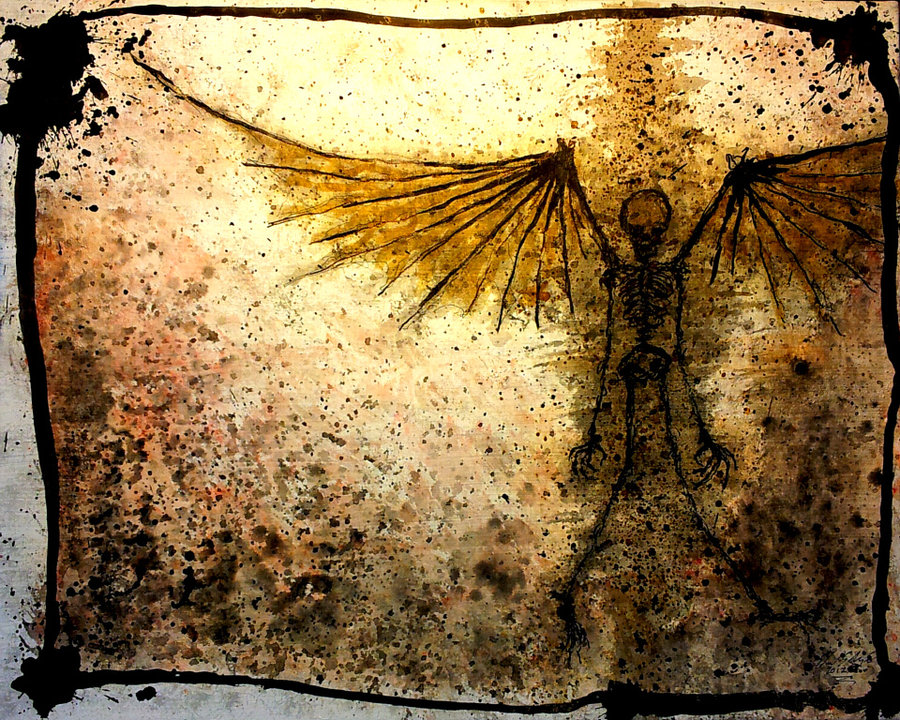
Skeleton in Pain

When Conspiracy Theorists Become Bullies

Conspiracy theorists usually don’t bother me. Hell, I even subscribe to the notion that Lee Harvey Oswald had help assassinating JFK. But a new breed of conspiracy theorist has emerged in recent years. They make threats and act like the schoolyard bully, and they make my skin crawl.

Mood music:

[spotify:track:0JhAglbb3Ca9Cp2OflPKPi]

The clowns who argued that 9/11 was an inside job are one example, though to my knowledge they never actually threatened anyone. Now there’s the Sandy Hook truther movement, a band of conspiracy theorists who believe the government secretly orchestrated the murder of 20 children and 6 adults at Sandy Hook Elementary School in Newtown, CT, so the public would support efforts to gut the Second Amendment. They take things in a dangerous, cruel direction.

They are the bullies in the schoolyard, the thugs hiding in the alley waiting to pounce.

One of their victims is Gene Rosen, a man who took in six little survivors of Sandy Hook the morning of the massacre. Rosen lives close enough to the school that he heard the gunshots. He found the children at the end of his driveway, and they told him they couldn’t go back to school because their teacher was dead.

He took the children into his home, gave them food, juice and toys, and called their parents. He sat with them as they described the horrible events.

He became a target of the Sandy Hook truther gang because he had been interviewed by the media. The truther thugs believe the government is paying actors to pose as eyewitnesses.

The Salon website describes how Rosen has suffered at the hands of this group:

“I don’t know what to do,” sighed Gene Rosen. “I’m getting hang-up calls, I’m getting some calls, I’m getting emails with, not direct threats, but accusations that I’m lying, that I’m a crisis actor, ‘how much am I being paid?’” Someone posted a photo of his house online. There have been phony Google+ and YouTube accounts created in his name, messages on white supremacist message boards ridiculing the “emotional Jewish guy,” and dozens of blog posts and videos “exposing” him as a fraud. One email purporting to be a business inquiry taunted: “How are all those little students doing? You know, the ones that showed up at your house after the ‘shooting’. What is the going rate for getting involved in a gov’t sponsored hoax anyway?”

As I said, I generally have no problem with conspiracy theorists. Most share their beliefs without hurting anyone. And there’s no question that the US government has engaged in conspiracies and illegal activity. Did the government orchestrate this massacre? Although you never know, I think there are people out there who hate Obama so much that they’ll believe just about any theory where the president is cast as a brutal dictator.

If we ever see evidence that the truther gang is right, Americans will show the same outpouring of anger that has led to the downfall of many a government official.

But whether they’re right or wrong, conspiracy theorists have no right to threaten or harass anyone. If you think the government is behind something terrible, speak out and search for evidence. That’s your right as an American citizen.

But when you limit others’ rights in favor of your own, you become just as evil as the empire you’re fighting against.

Below: Gene Rosen (Credit: AP/Mary Altaffer)

gene_rosen

I Was Wrong About Lance Armstrong

A few months ago I wrote a post called “Lance Armstrong Was Robbed,” in which I opined that he didn’t deserve to be stripped of his seven Tour de France titles. I’m back to tell you I was wrong.

Like most Americans, I’m a sucker for stories about people who overcome serious adversity to achieve great things. Those stories have given me the extra push I needed over the years to bring my own demons to heel. That Armstrong won seven titles didn’t matter to me as much as the fact that he did it after beating testicular cancer. I also argued that the use of performance-enhancing drugs was beside the point; that without the raw talent and drive, all the drugs on Earth wouldn’t have pushed him to seven victories. Rightly or wrongly, I still believe that.

But I’ve had a change of heart about him being robbed after reading about his interview with Oprah Winfrey, in which he admitted to the doping. In fact, he reportedly told her that he started using performance-enhancing drugs to gain an edge in cycling in the mid-1990s — before he was diagnosed with cancer. USA Today reveals that Armstrong engaged in a cover-up that involved “attacking anyone who implicated him.”

According to the article, Armstrong’s admission that he started doping in the mid-1990s is consistent with the evidence revealed in October by the US Anti-Doping Agency.

Nobody likes to be wrong. But admitting you were wrong is better than attacking those who question you, especially when it becomes painfully clear to everyone that you’re covering something up.

I’d rather be a rational human being who can have a change of heart in the face of facts than a stubborn person whose pride won’t allow him to see the truth.

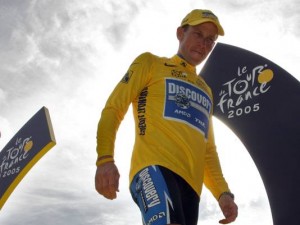
Lance Armstrong, 2005 Tour de France
Photo Credit: Joel Saget, AFP/Getty Images

Aaron Swartz and How to Deal With Suicide

I read many articles this weekend about the suicide of Internet prodigy and activist Aaron Swartz. Most were about how we should view his legacy in the face of charges that he used MIT’s computers to gain illegal access to millions of scholarly papers kept by JSTOR, a subscription-only service for distributing scientific and literary journals.

Mood music:

[spotify:track:2UaBnTuNF4pSBHZDRhzvMy]

Some call Swartz a hero who stood up for Internet freedoms. Others point out that he broke the law and had to be punished.

All that is beside today’s main point: The 26-year-old, co-creator of RSS and Reddit, was a tortured soul, the victim of a horrible illness many still fail to comprehend. It’s an illness I suffer from, and it claimed the life of my best friend 16-plus years ago.

Swartz, a man I never met, was open about his depression. Like other sufferers — like me — he wanted people to understand that it was a true illness, as dangerous to the body and the brain as cancer is when left unchecked.

Now he’s another tragic statistic, and those left behind have to come to terms with the nature of his death.

In the years since my friend’s death, I developed a code of conduct that allowed me to stop wallowing over that evil day in November 1996:

  • Don’t blame yourself; it’s pointless. No matter how many times you replay events in your mind, the fact is that it’s not your fault. For one thing, it’s impossible to get into the head of someone who is contemplating suicide. Sure, there are signs, but since we all get the blues sometimes, it’s very easy to dismiss the signs as a normal bout of depression. When someone loudly contemplates suicide, it’s usually a cry for help. When they say nothing and even appear OK, it’s usually because they’ve made their decision and are in the quiet, planning stages.
  • Don’t blame others; it’s equally pointless. Take it from me: Nerves in your circle of family and friends are so raw right now that it won’t take much for relationships to break apart. A week after my friend’s death I wrote a column about it, revealing what, in hindsight, was too much detail. His family was furious and most of them haven’t talked to me since. They feel I was exploiting his death to advance my writing career and get attention. What I’ve learned, and this is tough to admit, is that you’re going to have to let it go when the finger pointing starts. It’s better not to engage the other side. Nobody is in their right mind at this point, so go easy on each other. Give people space to make their errors in judgment and learn from them.
  • Don’t demonize the dead. When a friend takes their life, one thing that can gnaw at survivors is the notion that if they believe in Heaven and Hell, they believe those who kill themselves are doomed to the latter. I’m a devout Catholic, so you can bet your ass this one has gone through my mind. What I’ve learned, though, is that depression is a clinical disease. A person suffering from depression who then kills themselves isn’t in control of their actions, and Catholics, at least, don’t believe God punishes them for that.

    Even if you don’t believe in an afterlife, you might feel angry at your loved one for intentionally leaving you just when they did. It comes to the same thing: that person was sick and couldn’t make good decisions. My practice today is to simply pray that those souls will be redeemed and that they will know peace. It’s really the best you can do.
  • Break the stigma. One of the friends Swartz left behind has already done something that honors him: She went on Facebook and directed people toward the American Association of Suicidology website, specifically the page on knowing the warning signs. That’s a great example of doing something to honor your friend’s memory instead of sitting around second-guessing yourself. The best thing to do now is to educate people on the disease so that sufferers can help themselves and friends and family can really be of service.
  • Get on with your life. Nobody will blame you for not being yourself for a while. You have, after all, just experienced one of the worst tragedies there is. But try not to let it paralyze you. Life must go on. You have to get on with your work and be there for those around you.

Life can be brutal. But it is a beautiful thing. Seize it.

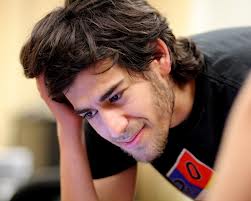
Aaron Swartz

Why Do Americans Die Sooner?

CNN reports that despite spending more per person on healthcare than any other country, Americans are getting sicker and dying younger than our international peers.

Why is this? Because Americans are too high strung and overworked. You could say the stress is killing us.

Mood music, ironically sung by a couple of Brits:

[spotify:track:45Zo6ftGzq6wRckCUrMoBJ]

Here’s the takeaway from CNN:

Data from 2007 show Americans’ life expectancy is 3.7 years shorter for men and 5.2 years shorter for women than in the leading nations — Switzerland for men and Japan for women.

As of 2011, 27 countries had higher life expectancies at birth than the United States.

“The tragedy is not that the United States is losing a contest with other countries,” the report states, “but that Americans are dying and suffering from illness and injury at rates that are demonstrably unnecessary.”

I’ve had conversations about this with friends from Europe, and they always go on about how crazy we Americans are. We respond to job stress by putting in even more hours, trying to keep up with the ever-growing demands of our corporate masters. Some of us now work holidays like Thanksgiving and Christmas. We seek solace from the stress in all the things that are bad for us: Overeating, drinking, pills.

When Erin and I got married, we spent our honeymoon traveling around Ireland. The slower pace of life floored us. They took the first Monday of every month off for a “bank holiday.” In restaurants, people weren’t in a rush to put their orders in. Waitresses would talk for several minutes with patrons before taking down their orders. Accustomed to faster service, Erin and I didn’t like that much. We are, after all, Americans. Rushing ourselves and others is in the blood.

At the time, I was working at least 60 hours a week in a job that paid $28,000 a year. I was a ball of tension, and I comforted myself with food binges. I was 280 pounds on that trip.

I still put a lot into my work today, but it’s different because I love what I do. I’ve also spent a lot of time building a relationship with God, taking a mindfulness class heavy on meditation techniques, and playing guitar. I’ve slowly learned to enjoy life and not rush through it to the next pressure. But I still have a long, long way to go.

I’m not a unique case. Americans put ridiculous amounts of pressure on themselves over trivial things.

To be fair, I know a lot of Europeans who have bad habits and bad health. Americans are simply destroying themselves a little bit faster.

But I also have a lot of American friends who have fought back. One friend is a passionate weight lifter. Another friend does jujitsu. Many of them are now doing yoga. They’ve made radical and necessary changes to their diets. This gives me hope.

We may be dying faster, but in never giving up and trying to better ourselves, we have a pretty good shot at learning to live longer.

Man under job stress

Comparing Politicians to Hitler Is Stupid

The debate over firearms is bringing out extreme levels of stupidity in people. Right-wingers who think gun control means taking away everyone’s right to bear arms are comparing President Obama to Adolf Hitler. Left-wingers did the same to President Bush over his war policies.

It’s the lowest common denominator; the dumbest of the dumb.

Mood music:

[spotify:track:4AlIvHv7kHmhi8aDvn2ctK]

On the Drudge Report, Obama’s picture was lumped in with images of Hitler and Soviet dictator Josef Stalin next to a story about Vice President Biden’s suggestion that Obama will target guns through an executive order. The Hitler comparisons have actually been going on since Obama’s administration began four years ago:

hitlerOBAMA_2

When George W. Bush was in the Oval Office and debate raged over the wars in Iraq and Afghanistan, the left put out the same suggestions:

bush-hitler1

So if you disagree with the president, Republican or Democrat, it’s OK to compare them to a man who sent millions of innocent people to the gas chamber. Wanting to put controls on the type of weapon American citizens can access is suddenly on par with genocide. The logic seems to be that if Obama “takes away” your guns, he is going to invade a bunch of countries next.

I can’t say that I haven’t used the same tactics. Back during the first Gulf War, I used a writing assignment in my college poetry class to compare the first President Bush to Hitler. My professor, who was a lot further to the left than I was at the time, suggested in red marker that I was taking things too far.

When we get angry with our leaders, this is what happens. We go to the extreme.

Frankly, I think both sides oversimplify things. In moments of anger, we turn off the part of the brain that controls reason.

I’ve done a lot of stupid things in my life when my anger turned off that switch. I made a lot of extreme statements about our political leaders. But somewhere along the way, I made an effort to grow up and not let my fear and anger override my reason.

I suggest the folks comparing Obama to Hitler do the same.

Two-Alarm Fire at My High School

There was a two-alarm fire last night at Northeast Metro Tech, the place where I attended high school. Back in my day, it was called Northeast Regional Vocational High School or, as most of us called it, the Voke.

Mood music:

[spotify:track:0oO29Ht2H9AiENqRsq3zIT]

I have good and bad memories of the place. It’s where I:

  • Grew my hair long and cemented my love affair with metal music.
  • Truly started to understand, for the first time, that I could be capable of doing meaningful things in life if I would just fill in the deep chips on my shoulders.
  • Studied drafting and design. I didn’t become an architect, but I use the skills I learned there every day in my writing.
  • Swallowed a worm in the courtyard for a pack of cigarettes. Not surprisingly, you can’t smoke there any more.
  • Tortured and later befriended a kid everyone called Stiffy. I still shudder when I think of how mean I was to that kid.
  • Cut classes and smoked weed in the woods of Breakheart, the reservation that school sits at the edge of.

My time in the Voke included my last serious bout with Crohn’s Disease in 1986, during my sophomore year. I wasn’t hospitalized that time, but I pretty much lived on the living room couch. On that couch, I read “Helter Skelter” twice. I also got daily visits from a childhood friend who went on to become a thrice-convicted child molester.

I remember the teachers putting down the kids all the time. The jocks and nerds were embraced and nurtured. Everyone else was pretty much written off as damaged goods. This was especially the case in my shop.

A couple of years ago, my friend Kevin Littlefield coaxed me into a field trip to the Voke. It was my first time back in about 20 years, and it gave me more than a little hope for the future. The kids in our old shop that day were polite and appeared to work well together — nothing like the way we carried on in the 1980s. The big drafting boards had long since been replaced by flat-screen computers.

We also met some kids we graduated with who now teach there. One former classmate is the dean of students. Another, John Spagnola, is a teacher. Seeing him as a teacher was a trip. The kids really seem to connect with him. and his humor is as sharp as ever.

Back in our day it seemed like most teachers were always complaining that Generation X would never make it, that we were far to self-absorbed, spoiled and weak to carry the future. The teachers were right that we were a generation unprepared for the big challenges ahead. But many of us grew up. We got stronger. We learned to love people other than ourselves.

Now some of our children are going to that school, and they seem to be doing great. Generation X turned out fine, and our kids are going to do even better.

A few flames and a damaged building won’t prevent that.

Northeast_Metro_Regional_Vocational_School,_Wakefield_MA

Stop Whining and Learn From Your Pain

In my early 20s, I adored the Pretty Hate Machine and Broken albums from Nine Inch Nails. I still listen to them on occasion, but for the most part I grew tired of them because all Trent Reznor’s screaming about pain, loneliness, depression and rage got old. He never told us how to go from hopelessness to wisdom and personal growth.

Mood music:

[spotify:track:5ttpMaPCxRceWlR1kziBDZ]

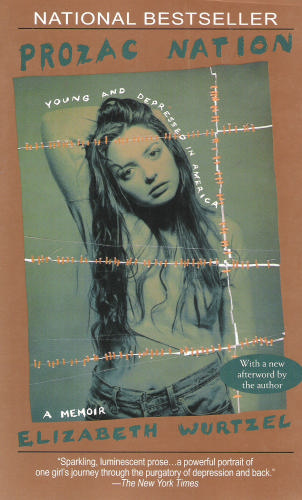
That’s how Kerry Cohen, an author I’ve come to admire, feels about Elizabeth Wurtzel, author of Prozac Nation. In her latest Huffington Post blog entry, Cohen explains how important that Wurtzel book was to her at a fragile time in her life:

Wurtzel named a truth for us that psychology wouldn’t touch. We were a generation of depressives, of borderlines, of personality disorders. We were Generation Empty. I loved Wurtzel for how she made me feel less alone, seen.

But Cohen reached an impasse with Wurtzel:

My editor for Loose Girl summed it up when she said, “America loves a redemption story.” We wouldn’t settle anymore for emptiness that goes nowhere. People wanted to know how to get better. … There are times I wish I could call Wurtzel on the phone and tell her how much her work meant to me. … But until she has something new to say, something that is still truly about our generation, I wish she would stop.

I’ve never read Prozac Nation. I haven’t read Cohen’s books in their entirety, either, though I’ve dug into parts of Loose Girl and Seeing Ezra. I’ve mostly become a fan of her work through her blog posts and  what she shares on Facebook and Twitter. This latest post hits my core.

In my early 20s, I reveled in my depression. I filled notebooks full of poetry about my emptiness. I somehow thought it made me cool. I hit upon something that I felt “normal” people couldn’t experience. This somehow made me smarter, better. I was just stupid. I’ve searched everywhere for those notebooks. Not because I think I’ll find some brilliant spark from the past to feed my creativity today, but because I think I’d get some cheap laughs from it.

I remember going on a date in 1989 and spending the whole dinner telling the young lady about how bitter I was toward my parents and how dark I saw the world. That relationship didn’t survive the first date.

Eventually, I realized that the pain wasn’t going to send me anywhere in life unless I used it to gain a better understanding of who I was and what kind of good I was capable of. The ancient Greek scribe Aeschylus described the need to use suffering for personal growth this way:

In our sleep, pain which cannot forget

falls drop by drop upon the heart

until, in our own despair, against our will,

comes wisdom through the awful grace of God.

Robert F. Kennedy, who recited that poem to a shocked and angry crowd the day MLK was assassinated, understood all too well.  I’ve tried hard to take those words to heart. In this blog, I’ve tried to always explain how, in my personal experience, things get better. If all I did here was complain, this blog would go nowhere. I must always remember that.

Thanks for the reminder, Kerry.

ProzacNationBook